



Ask a data analyst, a marketer, an accountant, or a logistics coordinator what worries them most about the next five years, and a familiar question comes up: is artificial intelligence coming for their job? That anxiety has quietly become one of the more interesting recruiting forces in franchising, not because franchising promises to outrun AI, but because it offers something a salaried job rarely does: ownership of something that can be handed down.
Dan Rowe has spent three decades building franchise systems at Fransmart, the company behind brands including HB Protein Smoothies and Konala. In a recent conversation about how those brands are putting AI to work, Rowe made a case that runs counter to a lot of the current conversation around artificial intelligence and jobs. Franchise ownership, in his telling, isn’t a hedge against automation. It’s a structural advantage, because a franchise system with enough units can turn AI into something an individual operator never could: a learning engine that gets smarter every time a new location opens, a region tests a new product, or an owner finds a pricing or staffing tweak that moves the needle.
That idea, that a network of businesses sharing data compounds its advantage in a way one owner working alone can’t, runs through everything Rowe described, from how Fransmart chooses which brands to back to how HB Protein Smoothies picked a site in Arizona and how Konala ended up next to a high-performing Chipotle in New Jersey.
A Different Kind of Career Question
Rowe sees the AI anxiety firsthand in the franchisees walking through Fransmart’s door. Many are first-time owners re-evaluating a career they once thought was safe, wondering how long their job will last and whether it still has an upward trajectory. But he points to a second, quieter motivation that shows up just as often: the realization that a job, no matter how secure, rarely translates into something that can be passed down.
“When you work for someone else, you’re not really building a legacy,” Rowe said.

That distinction, between income and inheritance, shows up in a trend Rowe has watched build over the past several years: parents starting franchise businesses specifically to build alongside their children, rather than pushing them toward a traditional four-year path. “There’s a lot of people that are applying for franchises now that want to build businesses with their kids because the kids are not interested in college and then a career starting at the bottom of a company and moving up,” he said. Some of those applicants, Rowe added, are already established, successful franchisees bringing a second generation into the business rather than newcomers testing the waters for the first time.
Ownership, in other words, is becoming less about escaping a career and more about building one that survives past a single working lifetime. That reframing sets up the more practical half of Rowe’s argument. AI rewards businesses that can share what they learn, and a franchise system, built from the ground up to spread lessons across many locations, is structured to do exactly that in a way a single, independent business never could.
Betting on Trends Years Before They Peak
Fransmart’s approach to choosing which brands to back long predates its current AI conversation, and it explains why HB Protein Smoothies and Konala were in the portfolio before “health forward” became a well-known category. Rowe described the company’s method plainly: track where consumer behavior is heading, then commit years before a trend becomes obvious. “We’re always looking at what we think is the next big thing, and we want to get into them as early as we can,” he said.
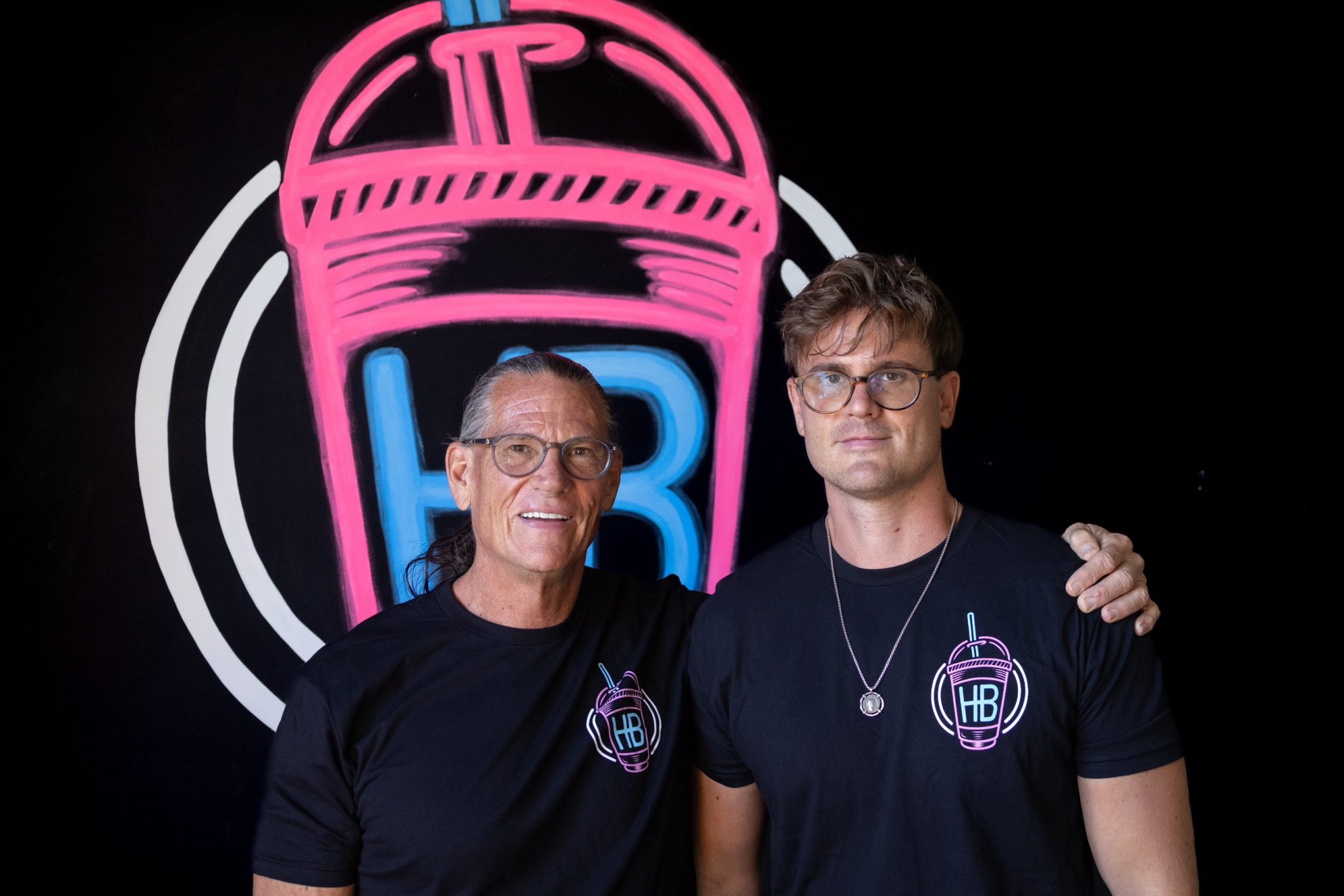
Health and high protein happened to be that next big thing, and Rowe pointed to the popularity of GLP-1 medications as evidence that restaurants built around nutrient-dense food were positioned to benefit while traditional concepts struggled. Konala built its case around drive-through protein bowls under founder Trace Miller, and HB Protein Smoothies built its case around a father-and-son formula perfected by Daniel and Ethan Boone in Scottsdale. Both brands fit a thesis Rowe has held for years: chase what will matter in four, five, or seven years, not what happens to be hot this year.

That patience comes with a filter. Rowe said Fransmart regularly turns away pitches for trend-chasing concepts, chicken and burger brands mostly, because the category is already crowded with entrenched, well-capitalized leaders. Over three decades, that discipline has helped Fransmart sell about 5,000 franchises and grow roughly a dozen brands from a single location into networks of more than 100, some now counting thousands of units, by his account.
Franchise Systems as Compounding Learning Machines
Picking the right brand is only the setup. The part of Rowe’s thinking that connects most directly to AI is what happens after a brand starts growing, and how a franchise system can turn dozens or hundreds of individual locations into something closer to a shared brain. He contrasted that model with the old way franchise systems trained new owners: three-ring binders handed to every new location, rarely updated, with no mechanism for one franchisee’s lessons to reach another.
AI changes that math because it makes it possible to track and share performance data across an entire system in real time rather than in retrospect. Rowe described a future already underway inside brands like HB, where every franchisee’s P&L sits next to every other franchisee’s P&L, where KPIs are shared openly, and where a system can flag which new locations are likely to stay on schedule and which are likely to fall behind before it happens. “AI gives people compounded learning,” he said, comparing the effect to the compounded returns investors chase in the market.

That work happens well above the level of any single location. “We’re using it everywhere,” Rowe said, describing how Fransmart and its brands absorb the cost of testing new AI tools and running implementation scenarios before a franchisee ever has to touch one. That investment then pays dividends across the entire system rather than staying locked inside one owner’s operation. A franchise owner in any industry inherits pricing models, marketing playbooks, and operational fixes that other locations have already tested at scale. An independent owner running a similar business alone has to build that expertise from scratch, usually while also running the business day to day, splitting time between staying current on the technology and actually serving customers.
That compounding effect is also why Rowe is blunt about what happens to people who ignore it. He does not think AI itself is the threat to most careers. “I don’t know that AI is gonna replace your job, but someone who knows how to use AI is probably gonna replace your job,” he said. Applied to franchising, the same logic favors systems that build AI into daily operations over owners piecing together tools on their own.
Turning Data Into Real Estate
Nowhere does that compounding show up more concretely than in how Fransmart’s brands pick locations, a decision that used to rely heavily on instinct and a broker’s local knowledge. Rowe described feeding a market into an AI-powered mapping tool and getting back, in his words, “data in minutes, like minutes,” the kind of analysis that used to take a real estate team weeks to assemble by hand.
Two Brands, Two Different Maps
For HB Protein Smoothies’ expansion into Arizona, Rowe described plotting every healthy eating and fitness destination across the state, from juice bars to boutique gyms, then asking the tool a more pointed question. “Draw a circle around the 5 best areas in the entire state of Arizona where healthy concepts seem to outperform,” he said, describing the kind of prompt that turns a general map into a shortlist. During a separate site tour in Florida, the same approach surfaced a pricing gap the team hadn’t expected. “Everybody in this trading area was 20% or more above our price,” Rowe said, a finding that gave HB room to raise prices while still landing below the rest of the market nearby.

Konala’s expansion followed a similar logic but landed on a different kind of proof point. Rather than picking a site in isolation, founder Trace Miller’s team used the same data-driven approach to land next to a high-performing Chipotle in New Jersey, sharing a pad with a neighbor whose traffic patterns were already proven. “We didn’t just open anywhere,” Rowe said. “We opened right next to a Chipotle.” For a drive-through, protein-forward concept built to serve a similar health-conscious customer, the co-tenancy wasn’t an accident. It was the output of a question asked correctly.
How to Tell the Real Tools From the Noise
For a prospective franchisee trying to evaluate whether a brand’s AI claims are substantive or just marketing language, Rowe’s advice sidesteps the technology entirely and points back to people. “Talk to users, talk to references. You just got to talk to people,” he said, describing a habit of leaning on peer networks of other franchise executives to compare notes on what’s actually working.
Rowe was specific about what those conversations should actually cover. Rather than asking whether a franchisee uses a given AI tool, he suggests asking what it has actually done for them. “What do you use it for? Has it made you money? Has it saved you money? What do you pay for it?” he said, treating those questions as the real test of whether a tool is delivering or just generating enthusiasm. A brand that can point a prospective owner to references who answer clearly, in dollars and hours rather than buzzwords, is a brand actually using the technology it talks about.
Rowe’s caution here comes from experience, not theory. He traces it back to his years in software, when products that never delivered on their promise earned a specific label: shelfware, bought on a good pitch and then left unused because they didn’t work as advertised. He has had a version of that lesson recently, too. Fransmart invested in an AI tool built to help run day-to-day operations inside its brands’ kitchens, and the company behind it ran out of money before the idea could fully pay off. “It was still a good idea,” Rowe said, treating the loss as a cost of being early rather than a reason to slow down.
That openness cuts across generations, too. Rowe said some of his most useful conversations about AI have come not from young operators assumed to be digital natives, but from franchise executives decades into their careers. “The most I’ve learned, I’ve learned from people that are in their 60s and 70s that are using AI,” he said. His practical advice for anyone unsure where to begin: start, then build a peer group right away, since the quickest way to separate a genuinely useful tool from an expensive experiment is to hear directly from someone already using it.
The Next 30 Years
Rowe’s confidence about where this is headed isn’t rooted in a single tool or a single brand. It’s rooted in three decades of watching franchise systems evolve, and a belief that AI is about to make that evolution faster than the previous three decades combined. He described a coming shift where systems increasingly surface the right question before an owner even thinks to ask it, functioning less like software and more like a coach with access to every location’s outcomes at once.
For an industry built on the idea that a proven business can be repeated with fewer unknowns, that shift plays directly to franchising’s strengths. It also circles back to where the conversation started: for someone weighing whether to build a business from scratch, buy an existing one, or step into a franchise system, the systems already building AI into daily operations, not just marketing it, offer something an individual operator would struggle to replicate alone. Rowe isn’t approaching the next chapter cautiously. “I’ve been doing this 30 years,” he said. “I’m more excited about the next 30 years than the last 30 years.” Franchising has spent decades perfecting the art of turning one good idea into a repeatable system, and that same instinct is exactly what AI rewards.
