


Franchise operators have spent years talking about technology as a way to speed up service, reduce costs and create more consistent customer experiences. Now, that conversation is becoming more practical, and more urgent.
In quick-service restaurants and retail franchises, the pressure points are familiar: labor costs continue to rise, managers are stretched across shifts, customers expect faster service, and franchisees need tighter control over margins. The next wave of franchise technology may not simply help operators look back at what happened. It may help them understand what is happening inside stores in real time.
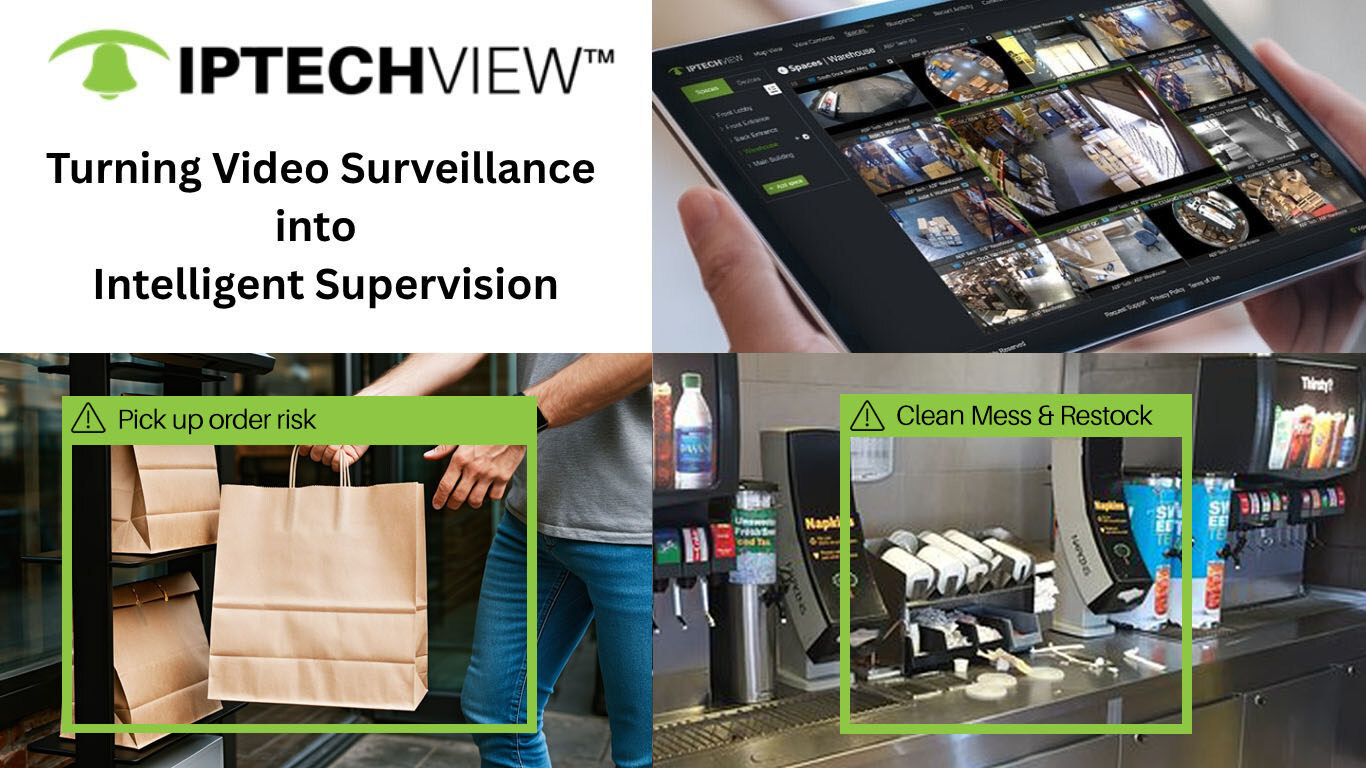
That is the promise behind a growing category of AI-powered operational tools, including IPTECHVIEW’s newly announced “Virtual Shift Lead” AI suite, which the company says is designed for QSR and retail franchise environments. The Dallas-based company introduced enterprise-grade, cloud-based video management and AI-powered supervision tools, positioning the technology as a way for multi-unit operators to manage speed of service, compliance, loss prevention, and store-level consistency without relying solely on on-site managers.
The broader idea is worth examining beyond any single platform. AI is beginning to shift how franchisors and franchisees think about labor. Not as a simple replacement for people, but as a management layer that could change which tasks humans handle, which tasks machines monitor, and how quickly operators respond when something goes wrong.
From Passive Cameras to Active Operations
For decades, store cameras largely served one purpose: documentation. Operators reviewed footage after an incident, a complaint or a suspected theft. In that model, video was reactive.
AI changes the role of the camera. When paired with cloud software and analytics, cameras can become operational sensors. They can flag long drive-thru wait times, detect queue buildup, identify a propped-open back door, monitor traffic patterns, and alert teams when a station needs attention.
IPTECHVIEW describes its approach as “Cloud-Direct Video,” built around a “Just Cameras and Cloud™” model that removes the need for on-site servers such as NVRs and DVRs. For franchisees managing several locations, that type of setup speaks to a real operational pain point: the more stores an owner opens, the harder it becomes to maintain separate hardware systems, review footage manually, and keep every location aligned.
“Franchise operators don’t just need to see what happened yesterday; they need to know what is happening across all stores right now to ensure Franchise Compliance Automation,” said Robert Messer, CEO of IPTECHVIEW. “Our AI Orchestrator transforms cameras into proactive supervisors that provide the Multi-Unit Oversight necessary to catch issues such as drive-thru bottlenecks or safety non-compliance before they impact the bottom line.”
That quote captures the core shift taking place in franchise operations. The future of store supervision may rely less on sporadic visits, end-of-day reports and gut instinct, and more on continuous signals from systems already sitting inside the business.
Labor Will Still Matter, But the Work May Change
The labor conversation in franchising often becomes too binary. Some see AI as a threat to jobs. Others present it as a cure-all for staffing shortages. The reality will likely land somewhere in between.
Franchise businesses still need people. They need employees who can greet customers, solve problems, prepare food, clean dining rooms, manage rushes and deliver the kind of hospitality that technology cannot replicate. But AI may reduce the amount of time managers spend on repetitive oversight.
A district manager overseeing 10, 20 or 50 locations cannot be everywhere. A store manager working a lunch rush cannot watch every station, every customer queue, and every back-of-house compliance issue at once. AI supervision tools could act as a second set of eyes, helping leaders focus on coaching, problem-solving, and customer recovery instead of constantly searching for issues.
That matters because many franchisees are not just trying to fill jobs. They are trying to make better use of the teams they already have. A system that alerts staff when a pickup order sits too long, a counter line grows too deep, or a beverage station needs restocking could improve the rhythm of a shift without adding another person to the schedule.
“Franchise owners are facing a perfect storm of rising wages and shrinking margins,” continued Robert. “We aren’t just selling cameras; we’re providing a digital management layer. Our AI Orchestrator acts as a 24/7 supervisor that never takes a break, ensuring that every drive-thru second is captured and every safety protocol is met.”
The phrase “digital management layer” may become increasingly important in franchising. It suggests a future where technology does not sit outside operations. It becomes woven into daily decision-making.
Efficiency Is Becoming a Margin Strategy
For many franchisees, efficiency is no longer just about convenience. It is becoming a survival strategy.
IPTECHVIEW’s announcement points to restaurant profit margins hovering between 3% and 5%, with the company framing “operational leakage” as a major concern for operators. Whether that leakage comes from slow service, wasted labor, theft, missed compliance steps, or lost customers, small inefficiencies can add up quickly across a multi-unit portfolio.
AI tools may help franchisees identify patterns that would otherwise stay hidden. For example, a drive-thru may only slow down at certain times of day. A retail store may lose shoppers when checkout lines stretch beyond a certain point. A restaurant may see recurring restocking issues at the same beverage station. A franchisee may not notice these problems from a weekly report, but real-time alerts and trend data could make them harder to ignore.
This is where the technology becomes more than surveillance. Used thoughtfully, AI-powered video intelligence could become a planning tool. Franchisees could use it to refine staffing, adjust training, redesign layouts, improve pickup shelves, and reduce friction points that affect both workers and guests.
The keyword is thoughtfully. Operators will need to avoid turning every alert into pressure on employees. The best use of AI may come when it helps teams work smarter, not when it creates a culture of constant suspicion.
Customer Experience Could Become More Predictive
The customer experience in franchising depends on consistency. A guest expects the same speed, cleanliness and service whether they visit a location in Dallas, Tampa or Phoenix. That consistency becomes harder to maintain as franchise systems grow.
AI may give franchisors and franchisees a new way to measure experience in the moment. Instead of waiting for a negative review, a complaint, or a sales dip, operators could see signs of trouble earlier. A long line, a delayed pickup order, a messy self-serve area, or a drive-thru bottleneck could trigger a response while the customer is still on site.
That could create a more predictive model of customer service. A manager might receive an alert before guests walk away. A team member might restock before the next rush. A franchisee might spot a training issue before it becomes a brand problem.
For franchisors, this could also influence brand standards. Traditional compliance checks often rely on field visits and audits. AI-enabled tools could provide more frequent visibility, though franchise systems will need to balance oversight with trust. Franchisees may welcome tools that help them run better stores, but they may resist systems that feel punitive or one-sided.
The winners will likely be brands that use AI to support operators, not just monitor them.
The Future Franchise Store May Be More Connected
A future franchise location could look familiar to the customer but operate very differently behind the scenes. Cameras could connect with point-of-sale systems. Labor platforms could receive signals from real-time demand. Managers could see store health across a dashboard rather than waiting for scattered reports. AI could flag transaction anomalies, back-door risks, safety issues and service delays within the same operating environment.
IPTECHVIEW’s announcement mentions POS integration, shrink detection, heat mapping, drive-thru monitoring, perimeter security, and vendor-agnostic cloud video management that works with camera brands such as AXIS and MOBOTIX. Those features reflect a larger industry direction: franchise technology stacks are converging.
The long-term opportunity is not just more data. It is better timing. Information delivered after the fact has limited value. Information delivered at the right moment can change the outcome.
Still, franchise leaders will have important questions to answer. How transparent should operators be with employees about AI monitoring? Who owns the data? How long should footage and alerts be stored? How do brands prevent false positives from creating unnecessary stress? How do franchisees ensure technology improves hospitality rather than distracting from it?
Those questions will shape adoption as much as the software itself.
AI Will Not Replace Good Operators
The future of franchising will not belong to technology alone. It will belong to operators who know how to combine people, systems, and judgment.
AI can count cars in a drive-thru. It can flag a long queue. It can spot patterns across locations. But it cannot understand every nuance of a difficult shift, a new employee’s learning curve, or a customer who needs a human response.
That is why tools like IPTECHVIEW’s Virtual Shift Lead should be viewed as part of a broader operational evolution. They may help franchisees protect margins, improve efficiency, and create more consistent service. But their real value will depend on how owners and franchisors use the insights.
In the best-case future, AI gives managers more time to lead, employees clearer signals during busy shifts, and customers a smoother experience. It helps franchisees see problems sooner and solve them faster. It turns scattered store activity into actionable intelligence.
For an industry built on repeatable systems, that could be a meaningful next chapter.
