


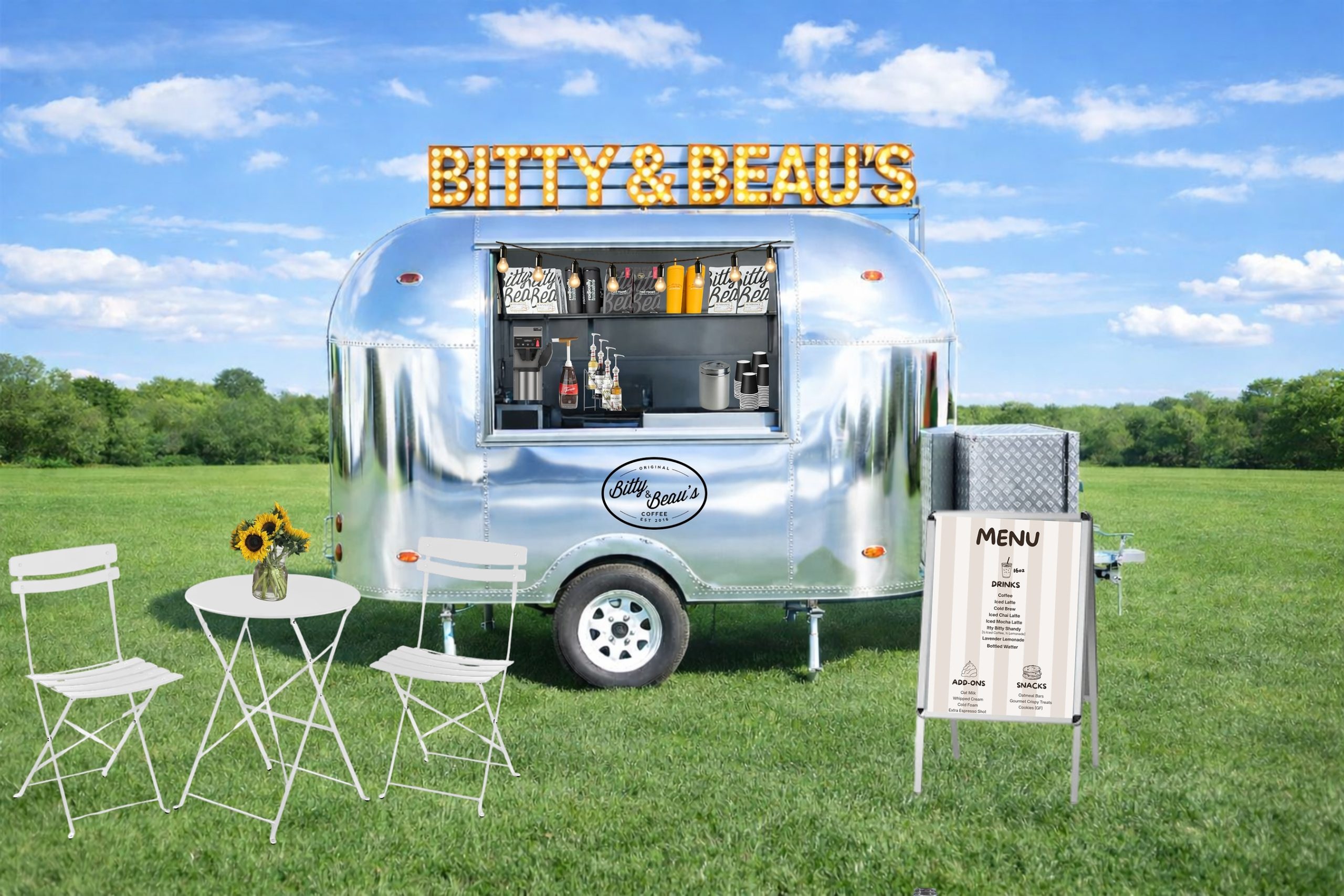
The franchise industry has entered a new era, one shaped by a growing appetite for lower-investment concepts, leaner operations, and more flexible paths to ownership. For many aspiring entrepreneurs, the appeal is clear. They want the structure, support, and brand recognition of franchising, but they also want a model that does not require the same level of capital, build-out timeline, or real estate commitment often tied to a traditional storefront.
Bitty & Beau’s Coffee offered a timely example this June, when the Wilmington, North Carolina-based coffee brand announced the launch of its Mini Cruiser Franchise, a compact mobile coffee trailer designed to bring the company’s mission-driven coffee experience to events, schools, churches, sporting events, corporate campuses, farmers’ markets, and private gatherings.
The launch arrives as franchising continues to show steady growth. The International Franchise Association’s 2026 Franchising Economic Outlook projects franchise output will rise to $921.4 billion this year, while the number of franchise establishments is expected to grow to 845,000 units. Franchise employment is also projected to reach nearly 8.9 million jobs.
Why Lower-Investment Franchise Models Fit Today’s Market
Lower-investment franchise concepts speak to a practical reality in today’s business environment. Real estate costs, construction expenses, labor pressures, and financing hurdles can make traditional brick-and-mortar ownership feel out of reach for many first-time operators. A mobile model can reduce some of those barriers by shifting the business away from a fixed storefront and toward a more nimble, event-based operation.
That does not mean lower investment equals low effort. Mobile owners still need strong sales instincts, disciplined operations, and the ability to build local relationships. But the model can lower the front-end burden, especially for entrepreneurs who want to test demand in their community, operate around events or build a business with a smaller physical footprint.
Bitty & Beau’s Coffee positions the Mini Cruiser as its most accessible entry point into the system. According to the company’s franchise information, the Mini Coffee Cruiser carries an estimated initial investment range of $68,250 to $83,450, compared with $456,500 to $845,250 for its brick-and-mortar shops. The company lists a $20,000 franchise fee and a $29,000 fully built and branded trailer as part of the Mini Cruiser model.
That comparison shows the central advantage of the lower-investment era. A mobile concept can open the door to candidates who may not yet be ready, financially or operationally, for a full-scale storefront. It can also give franchisors another way to grow brand visibility in markets where a permanent location may not yet make sense.
Bitty & Beau’s Coffee Puts Purpose on Wheels
Bitty & Beau’s Coffee has built its brand around meaningful employment opportunities for people with disabilities. Since opening its first coffee shop in Wilmington, the company says it has grown to 25 locations across the United States and employs more than 500 people with disabilities throughout its system.
The Mini Cruiser expands that mission into a mobile format. Rather than waiting for customers to walk into a café, the trailer brings the brand into high-traffic community spaces, where coffee service can become both a business opportunity and a conversation starter.
“We’ve always believed that changing the world begins with creating opportunities for people to belong,” said Amy and Ben Wright, founders of Bitty & Beau’s Coffee. “The Mini Cruiser allows more entrepreneurs to join our mission while bringing meaningful employment and powerful human connection to communities everywhere.”
That mission-forward positioning matters. Today’s franchise candidates often look beyond unit economics alone. Many want a business that reflects their values, connects them to their community, and offers a clear story they can share with customers. Bitty & Beau’s Coffee’s mobile model gives owners a way to serve coffee while also introducing new audiences to the company’s message of inclusion.
How Mobile Franchising Compares With Brick-and-Mortar Ownership
A brick-and-mortar café can serve as a community anchor. It offers seating, atmosphere, routine traffic, and a permanent neighborhood presence. For the right operator and market, that model can create strong local loyalty.
A mobile franchise works differently. It can follow demand rather than relying on customers to come to a single address. Owners can build schedules around festivals, school events, corporate gatherings, farmers’ markets, and private bookings. The model also allows operators to adjust locations, hours, and event strategy based on seasonality and local opportunity.
Bitty & Beau’s Coffee says the Mini Cruiser features a streamlined menu, simplified daily operations, protected territories, training, and ongoing support. The company’s franchise page describes the model as focused on high-volume drink service, flexible scheduling, and easier day-to-day operations than a larger physical location.
For franchise brands, that flexibility can support market expansion without immediately committing to expensive leases and construction. For owners, it can create a more accessible first step into franchising. For communities, it can bring a recognizable brand and its mission to places where a full storefront might not yet exist.
“Every Mini Cruiser that hits the road expands our ability to create jobs, spark conversations, and remind people that everyone deserves to be seen, valued, and included,” said Ben Wright. “This is much more than coffee. It’s a movement on wheels.”
A Broader Shift Toward Accessible Entrepreneurship
The rise of lower-investment concepts also reflects a generational shift. More younger entrepreneurs are exploring franchising because it offers a structured path to ownership, with training, systems, and brand support already in place. Recent reporting from Business Insider noted growing interest from Gen Z and millennial franchisees, who often cite independence, flexibility, and the support of an established model as reasons for entering franchising.
That trend does not replace traditional franchise growth. Brick-and-mortar restaurants, cafés, fitness studios, service centers, and retail locations remain important parts of the industry. But lower-investment formats such as mobile units, kiosks, carts, home-based services, and compact footprints are helping broaden who can realistically consider franchise ownership.
For Bitty & Beau’s Coffee, the Mini Cruiser is not just a smaller version of the brand. It is a strategic extension of a mission that already depends on visibility, human connection, and community participation. By putting the brand on wheels, the company can meet people where they gather and give more entrepreneurs a way to participate in its inclusive employment model.
In today’s franchise landscape, accessibility has become more than a talking point. It now shapes how brands design growth, how candidates evaluate opportunity, and how communities experience franchise businesses. The Mini Cruiser shows how a lower-cost concept can carry a big idea, one cup of coffee, and one local event at a time.
