


For decades, getting a pizza followed a familiar routine. Customers either walked into the restaurant, picked up an order at the counter, or waited for a delivery driver connected directly to the brand.
That experience has changed considerably. Mobile ordering brought pizza pickup into the digital age. Third-party platforms such as DoorDash and Uber Eats gave customers another way to have meals delivered. Restaurants introduced designated mobile pickup areas to help separate digital orders from traditional counter traffic.
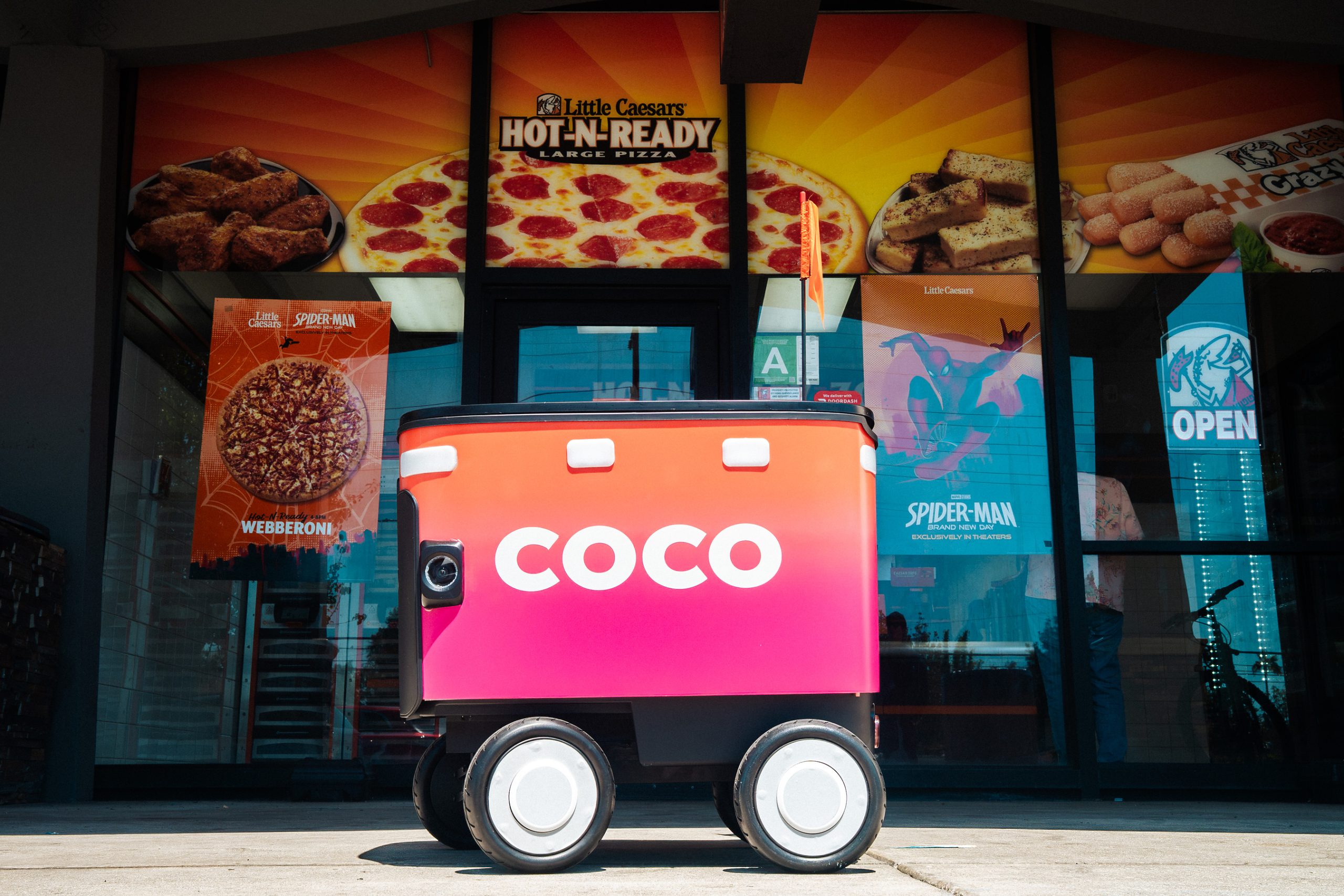
Now, for some Little Caesars customers, the next person, or machine, bringing pizza to the door may be a robot. Little Caesars is working with Coco Robotics to provide autonomous pizza deliveries from participating locations in Los Angeles, Chicago and Miami. The companies also plan to introduce the service in downtown San Jose as Coco expands operations there.
The collaboration illustrates how pizza delivery continues to evolve as restaurant brands look for new ways to move orders from the kitchen to customers more efficiently.
Pizza Delivery and Robots
Orders placed through participating Little Caesars restaurants on DoorDash and Uber Eats may now be fulfilled by a Coco delivery robot. Coco integrates with the ordering systems already used by both platforms, which means restaurant employees do not need to manually enter a separate autonomous delivery order.
Once the pizza is prepared, the order can move from the kitchen to the curb, where a Coco robot handles the final portion of the delivery.
“This partnership is about delivering more value and convenience to our guests,” said Trish Heusel, VP of Innovation at Little Caesars. “By integrating Coco’s autonomous robots, we can deliver hot, delicious pizza in record time to more customers. With Coco, we’re now able to make deliveries even more quickly. Automating deliveries also reduces congestion in our stores and helps get orders out faster during peak periods.”
The arrangement creates a delivery experience that combines several generations of restaurant technology. Customers can order through familiar third-party apps, restaurant teams can prepare orders through existing systems, and an autonomous vehicle can complete the final trip.
Autonomous Delivery Moves Into Everyday Restaurant Operations
Delivery robots have increasingly become part of the conversation around last-mile restaurant logistics, particularly in urban markets where short-distance orders can place additional pressure on restaurant staff and delivery networks.
For Little Caesars, the Coco rollout is positioned as an operational tool as much as a customer convenience. The collaboration has already received recognition through the 2026 Franchise Innovation Awards. Little Caesars received Innovator of the Year for Operations & Technology and Most Innovative Use of Technology for the Coco delivery initiative.
“We’re proud to partner with Little Caesars, an iconic brand known for its dedication to speed and value,” said Melissa Fahs, VP, Enterprise at Coco Robotics. “By integrating our robots into Little Caesars operations, we’re showing how autonomous deliveries can enhance the guest experience at scale, making ultra-fast, sustainable delivery a reality for millions of pizza lovers.”
Coco Robotics, founded in 2020, develops autonomous delivery technology for urban environments. According to the company, its robots have completed more than 500,000 zero-emission deliveries across the United States and Europe.
The company uses data gathered from real-world operations to help its fleet adapt to different cities and delivery environments. Its technology focuses on short-distance, last-mile deliveries, a portion of the restaurant transaction that has attracted growing attention as digital ordering becomes more deeply integrated into everyday operations.
The Pizza Delivery Journey Keeps Changing
For customers, the evolution of pizza delivery may feel gradual because each new system builds on habits that already exist. First came the familiar restaurant counter and brand-employed delivery driver. Then online ordering and mobile apps reduced the need to place orders by phone. Third-party delivery marketplaces widened the number of ways customers could receive a meal. Mobile pickup areas made digital orders easier to retrieve without waiting in the traditional line. Autonomous delivery represents another possible chapter.
The customer still orders a favorite pizza. The restaurant still prepares it. The biggest change comes during the final stretch between the store and the customer. For franchise operators and restaurant teams, that shift could also influence how stores manage busy periods, digital orders and delivery traffic. Little Caesars said autonomous delivery can help reduce congestion inside restaurants and move completed orders out more quickly during peak times.
The technology remains limited to participating locations and selected markets, but its integration with major delivery platforms shows how autonomous delivery may increasingly operate alongside, rather than separately from, the restaurant systems customers already use.
Pizza delivery has always centered on one straightforward goal: getting a hot meal from the restaurant to the customer. What continues to change is how that journey happens. The delivery driver did not disappear when mobile ordering arrived, and third-party platforms did not eliminate restaurant pickup. Instead, each new option expanded the ways customers could receive their orders.
With Coco robots now joining the mix at participating Little Caesars restaurants, the familiar pizza delivery experience is gaining another route from oven to doorstep.
