


Ask a real estate investor what actually kills a good deal, and the answer is rarely the property itself. More often it’s hesitation, a bad guess on repair costs, or a decision made from the gut instead of the data. New Again Houses, a franchise built around buying distressed, inherited, and financially burdened homes and turning them into move-in ready properties, has spent years trying to close that gap. In a recent conversation with Franchise Brief, Franchise Onboarding Coach and Franchise Development Manager Chad Arnold and Marketing Director Amber Bolton described how the Bristol, Tennessee-based brand has drawn a clear boundary around where artificial intelligence adds value, and where it deliberately steps aside.
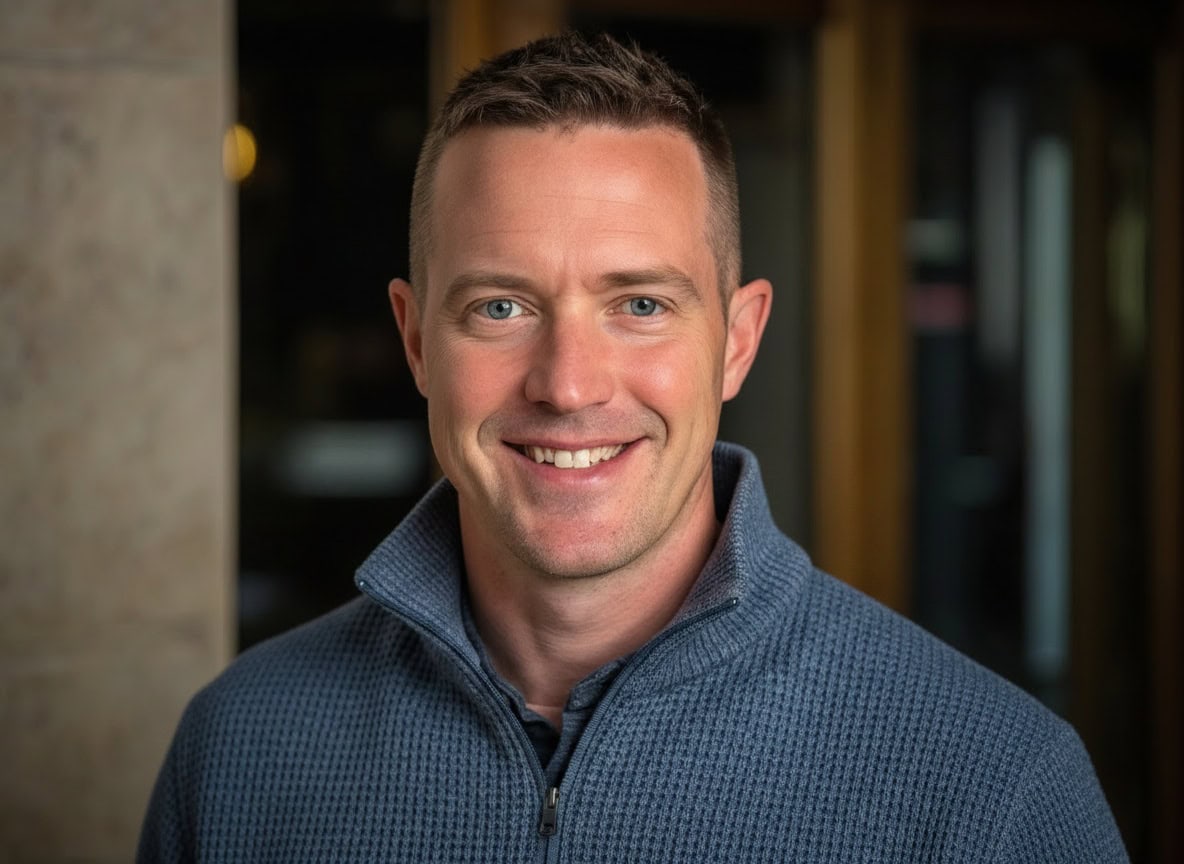

New Again Houses has been buying and renovating homes in Bristol since 2008. The company’s proprietary software platform, MasterSuite™, and a newer AI-assisted approach sits at the center of that model, but neither replaces the phone calls, coaching relationships, and honest conversations that Arnold and Bolton say still define the brand.
From Multi-Location Retail to Renovated Homes
Chad Arnold joined New Again Houses in early 2022, a little over four years ago, arriving with a background that had little to do with real estate on the surface. He spent about 15 years in multi-location retail before making the jump, drawn to the company in the years after the pandemic reshaped his sense of what came next. His first role inside New Again Houses was onboarding, helping new franchise owners get their businesses off the ground and coaching them through their first year.
That early experience shaped how Arnold approaches franchise development today. Rather than handing a new owner off to a different department after a franchise is awarded, he stays involved from the first conversation through the first year of operations, teaching virtual training cohorts along the way. “Our core values are innovation, extreme ownership, and win-win relationships,” Arnold said, and that combination shows up in how the company both buys homes and builds its franchise network.
New Again Houses gives every new owner a structured way to run that same business in their own market, backed by the same proprietary technology and risk assessment process the company has relied on for years. That structure is what makes the brand’s model repeatable from one franchise territory to the next.
The Path to Ownership
New franchise prospects move through what Arnold calls the Path to Ownership. “It’s a four-to-six-week process in which we have them meet many of the different faces here at New Again Houses, which helps them figure out if this is something that they see themselves doing,” he said. This includes the team at the office, capital partners, and existing franchise owners.
By the time a prospect finishes that process, Arnold has usually already built a relationship with them, which changes the tone of everything that follows. Because he stays connected through onboarding and coaching, that early relationship carries directly into training instead of resetting with a new point of contact. It keeps one familiar voice in the process from first phone call through first year in business.
Where MasterSuite™ Fits In
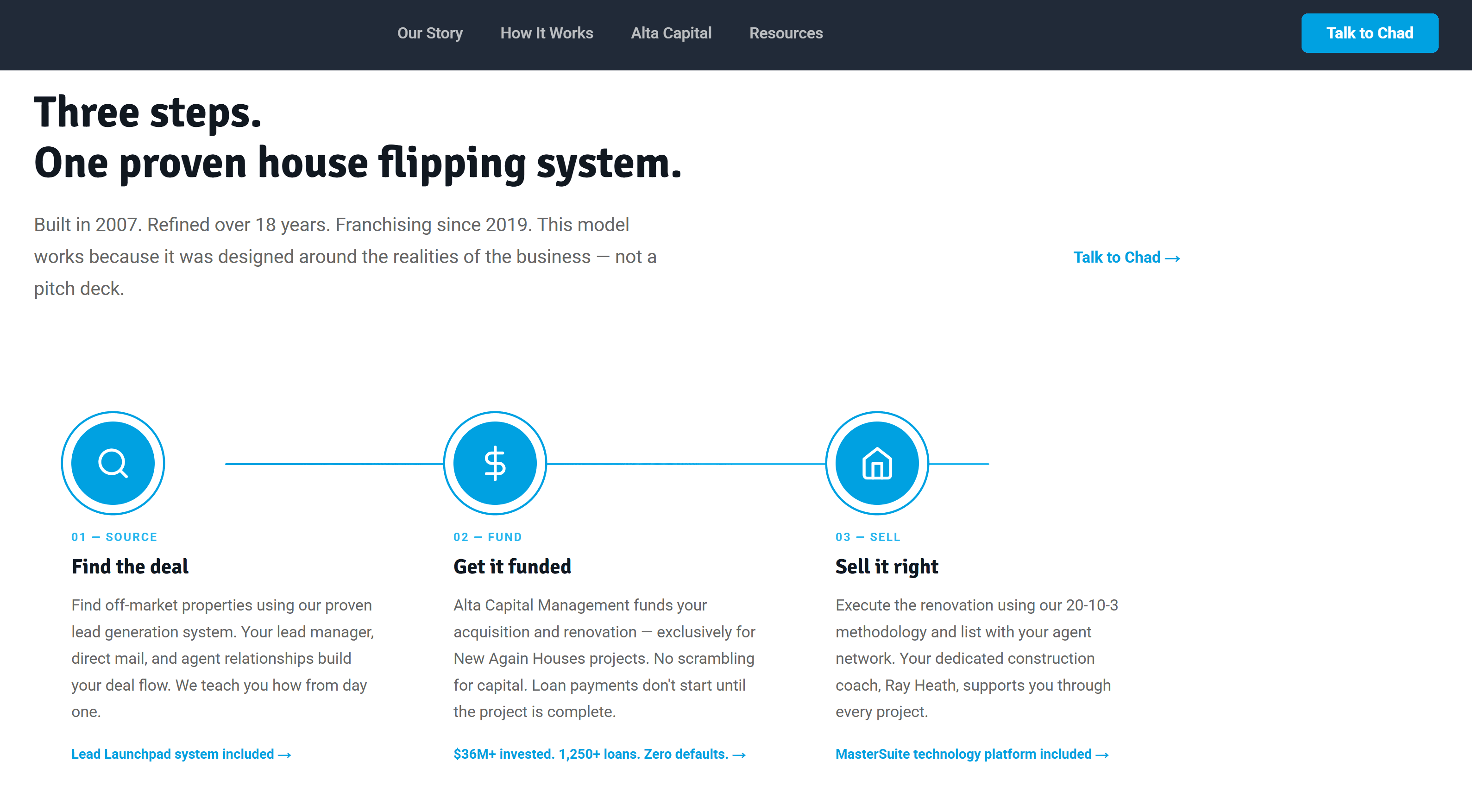
After the Path to Ownership and initial training a franchise owner is up and running. The daily work comes down to evaluating properties quickly and accurately, and that’s where New Again Houses’ proprietary software, MasterSuite™, does its heaviest lifting. MasterSuite™ is built to assess risk, pulling comparable sales, weighing the condition of a property’s foundation and systems, and helping an owner land on a fair offer before too much time or emotion gets invested in a bad one.
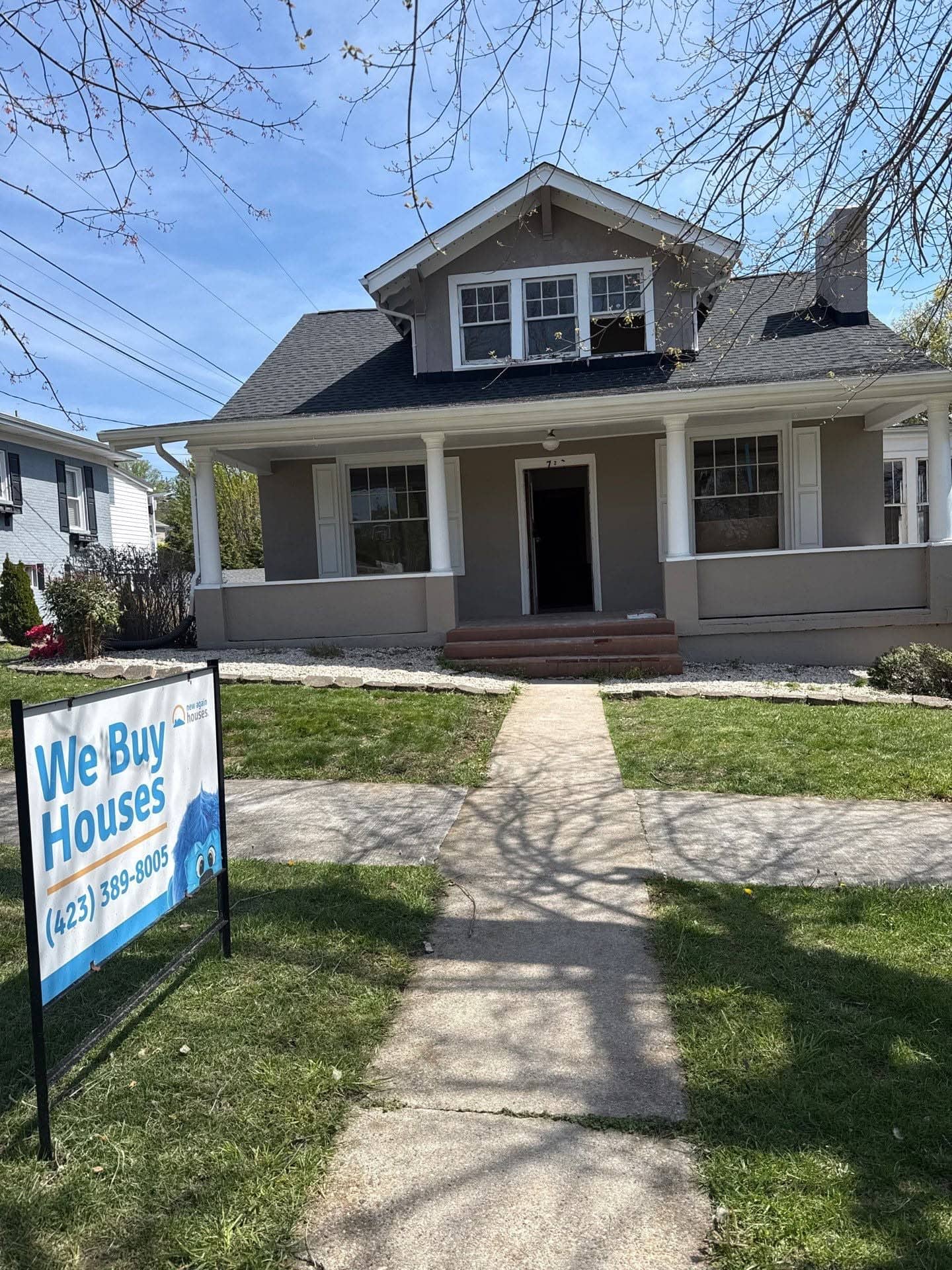
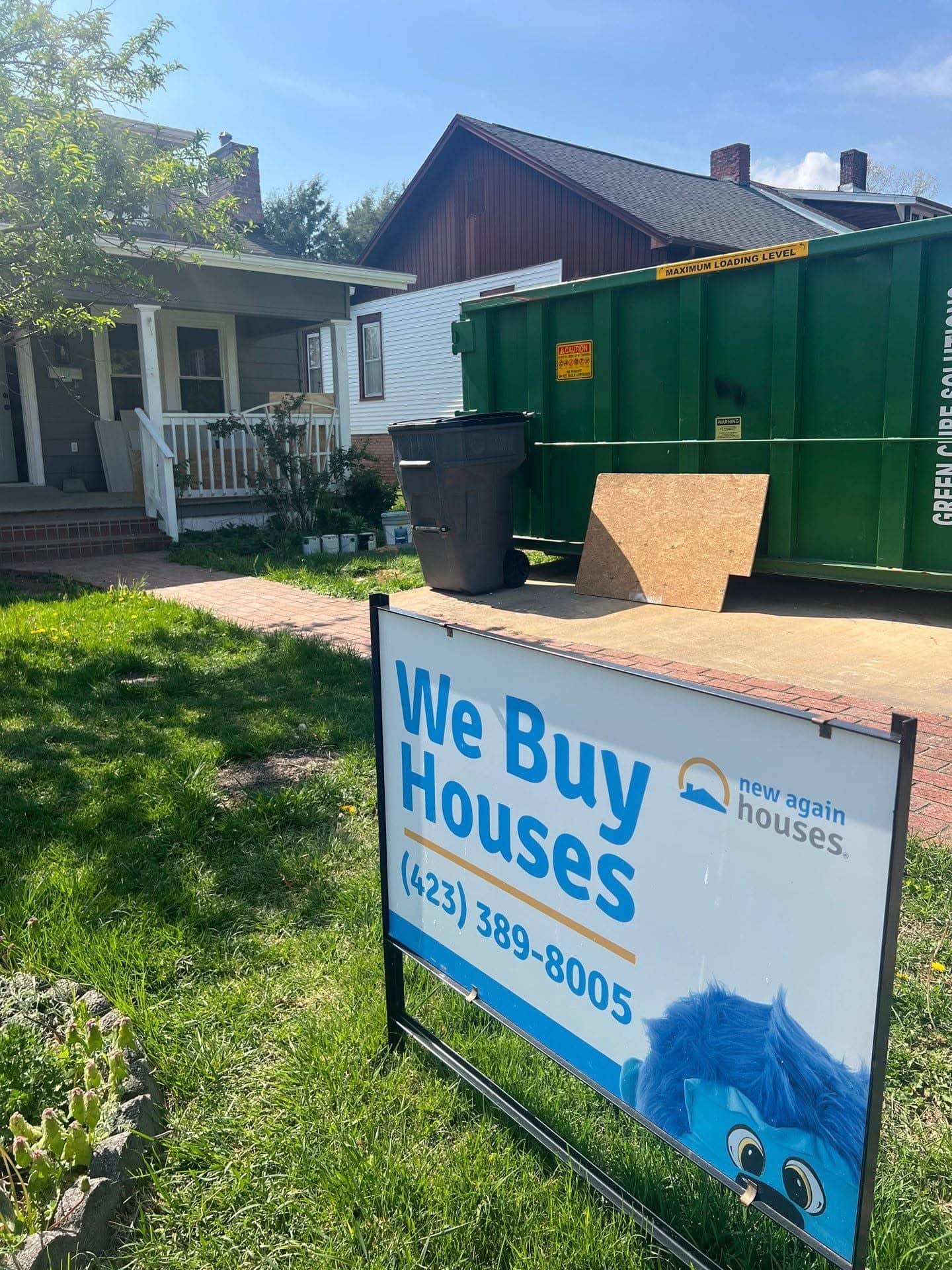
Speed matters here. Franchise owners review hundreds of properties every year with a target of eight to 12 completed deals, and a property that takes days to analyze can slip away before an offer is even made. With MasterSuite™ doing the analytical work in the background, owners can “come up with a fair offer or assessment to that risk within hours, sometimes minutes,” Arnold said.
That speed extends into the renovation itself. Arnold has seen the instinct plenty of times: an owner walks a distressed property and starts thinking in terms of a full gut renovation. “A lot of people watch HGTV and stuff like that and have a mindset of, hey, we’re ripping everything down to the studs,” he said. MasterSuite™ is built to correct that instinct where it isn’t warranted, pointing owners toward the repairs that actually add value, a new bathroom, a fixed foundation, a repaired roof, without adding months to the project.
Taking the Emotion Out of the Deal
Buying and renovating homes is, by nature, an emotional business, and Arnold doesn’t pretend otherwise. Real estate decisions can pull an owner toward a gut call instead of a sound one, especially when a property has personal appeal or a seller’s situation tugs at sympathy. MasterSuite’s role, as Arnold sees it, is to put a guardrail around that instinct rather than erase it. “The data is going to help you keep between the guardrails of that risk,” he said, a description that treats the software less as a decision-maker and more as a check against the moments when emotion might otherwise take the wheel.
Meeting Chad Before You Meet the Company
While New Again Houses invests heavily in technology to support franchise owners once they’re up and running, that same instinct doesn’t carry over to how the company greets a brand-new prospect. When New Again Houses turned its attention to how prospective franchise owners first encounter the brand online, Bolton noticed a pattern across the industry. Most competitors greeted website visitors with the same handful of generic prompts, or a form to request more information, with little to distinguish one brand’s outreach from another’s. “It didn’t have that personal touch at that point,” she said.
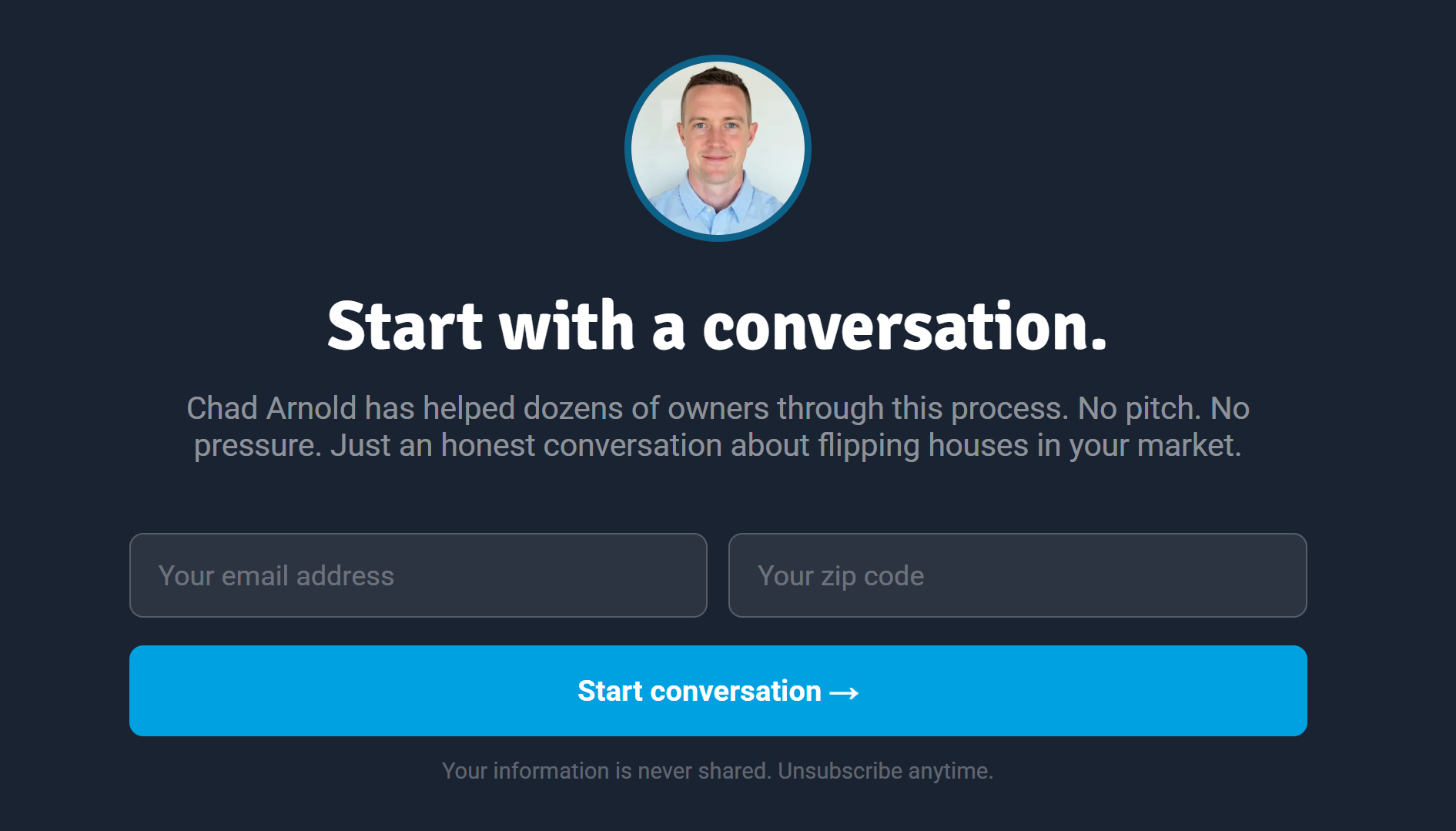
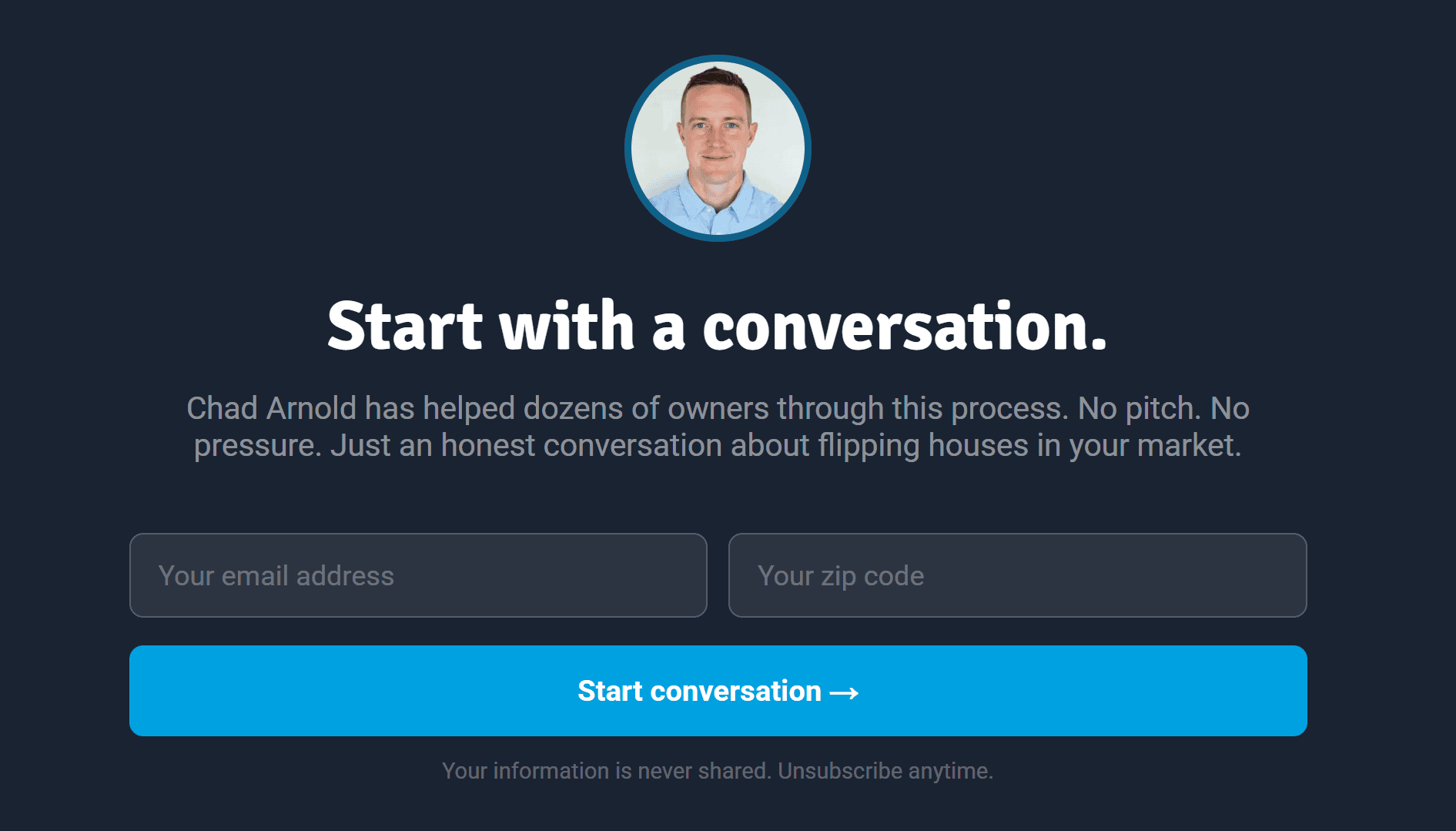
New Again Houses took a different approach, betting that visitors respond better to a real person than a form. Since Arnold is the one who actually speaks with every single prospect, Bolton’s team built the site’s franchise development page around him directly, headshot included, under a button that reads “Talk to Chad.” The idea was simple: let a prospective owner see exactly who they’re about to speak with before they ever pick up the phone.
That decision reflects something Arnold takes seriously in his own outreach. He treats the earliest conversations with prospects as relationship-building rather than a sales pitch, and that approach carries into how he follows up once someone reaches out. “I’ve been very diligent to make sure it doesn’t come across like it’s very robotic when I message them, whether it’s through an email or a text or even the phone call,” he said. That instinct carries into every follow-up he sends: whether a prospect reaches out at midnight or first thing in the morning, Arnold makes it a point to customize his response rather than let it run on autopilot, a quick personal note rather than a generic autoreply.
What Happens After You Click
Clicking “Talk to Chad” doesn’t launch a chatbot or a lengthy qualification survey. “When they click the button, it goes down to the little form that we have on the site with some more information about Chad and how he’s helped other people walk through it and have a conversation with him,” Bolton said. From there, the system sends an automated text with a Calendly link and a follow-up email, and if a prospect hasn’t booked a time, Arnold follows up personally by phone.
Keeping that form short was deliberate. “We’ve been intentional about keeping our form as simple as possible because our main goal is for them to have a conversation with Chad. We don’t want to add roadblocks before we even have that conversation,” Bolton said.
Those changes showed up in the numbers. Since making the switch, New Again Houses has seen “a higher conversion rate on our site,” Bolton said, along with an increase in overall leads. Lead quality held steady as volume grew, which Bolton attributes in part to keeping a human step in the process rather than filtering prospects through an automated qualifier before they ever reach Arnold.
Where AI Belongs, and Where It Doesn’t
New Again Houses’ approach to artificial intelligence didn’t happen by accident. Since March 2026, the company has applied more AI-driven tools to its franchise development process, but these are tools about territory, guiding the exploration journey, garnering data on where interests for this service lay. Arnold describes a structured decision behind that expansion: keep the technology and the relationship-building separate, so the data can do its work quietly while the human conversations remain front and center.
Bolton frames the same idea from the marketing side of the business. “I think of it as the AI can be a tool, but not a replacement,” she said.
That distinction shows up in where the technology actually lives inside the company. Rather than automating the sales conversation, New Again Houses keeps AI working behind the scenes, in its systems and its data, freeing up time to invest in what Bolton called “the human pieces of our business.”
That same philosophy shows up in how Arnold treats prospects who aren’t quite ready to commit. Rather than pushing every lead toward a close, he’d rather tell someone the timing isn’t right yet and leave the door open for them to come back once it is. “We’re trying to bring the right people in and grow it the right way,” he said. “It’s not about the number of people; it’s about the right people.”
Simplifying What Comes Next
Looking ahead, Arnold and Bolton both point to the same challenge: as New Again Houses grows, so does the volume of data flowing through MasterSuite™ and the company’s other systems, and that volume can become its own obstacle if it isn’t managed well. Bolton, who works closely with the company’s tech team, sees the next phase of AI investment as more about making the data New Again Houses already collects easier to act on.
That streamlining goal is already showing up on the property side of the business, where franchise owners are the ones fielding calls from sellers and deciding where to spend their time. Bolton described using data to help owners prioritize which leads are worth following up with and which properties are worth placing an offer on, rather than treating every call the same. The next step, she said, is making that information easier to read at a glance so franchise owners aren’t left sorting through raw numbers themselves.
Arnold takes a similar view from the coaching side, favoring simplicity over volume when it comes to what franchise owners actually see day to day. He compares the approach to a fitness coach handing a client a short, specific list rather than an overwhelming plan: a handful of priorities to tackle each day instead of a wall of numbers. Franchise owners, in his view, don’t need to become analysts to succeed. They need a system that does the analysis for them, and coaches who can help translate what it means. “We don’t need them to be data specialists. We can let the data tell us that story and draw that picture, but then that’s where the coaches can come in and help them talk through that,” he said.
The Takeaway
For a franchise built on both data and doorsteps, that balance is the whole point. MasterSuite™ and the company’s newer AI tools handle the parts of the business that reward speed and consistency: risk assessment, comps, lead prioritization, and the steady stream of information a growing franchise generates. As more of that work happens in the background, the more time Arnold, Bolton, and every franchise owner in the system have left over for the parts of the job that only a person can do: the first phone call, the coaching relationship, the decision to walk away from a deal that isn’t right. As New Again Houses continues to grow, that trade is the whole strategy: let AI do what AI does best, so people have more room to do what people do best.
