


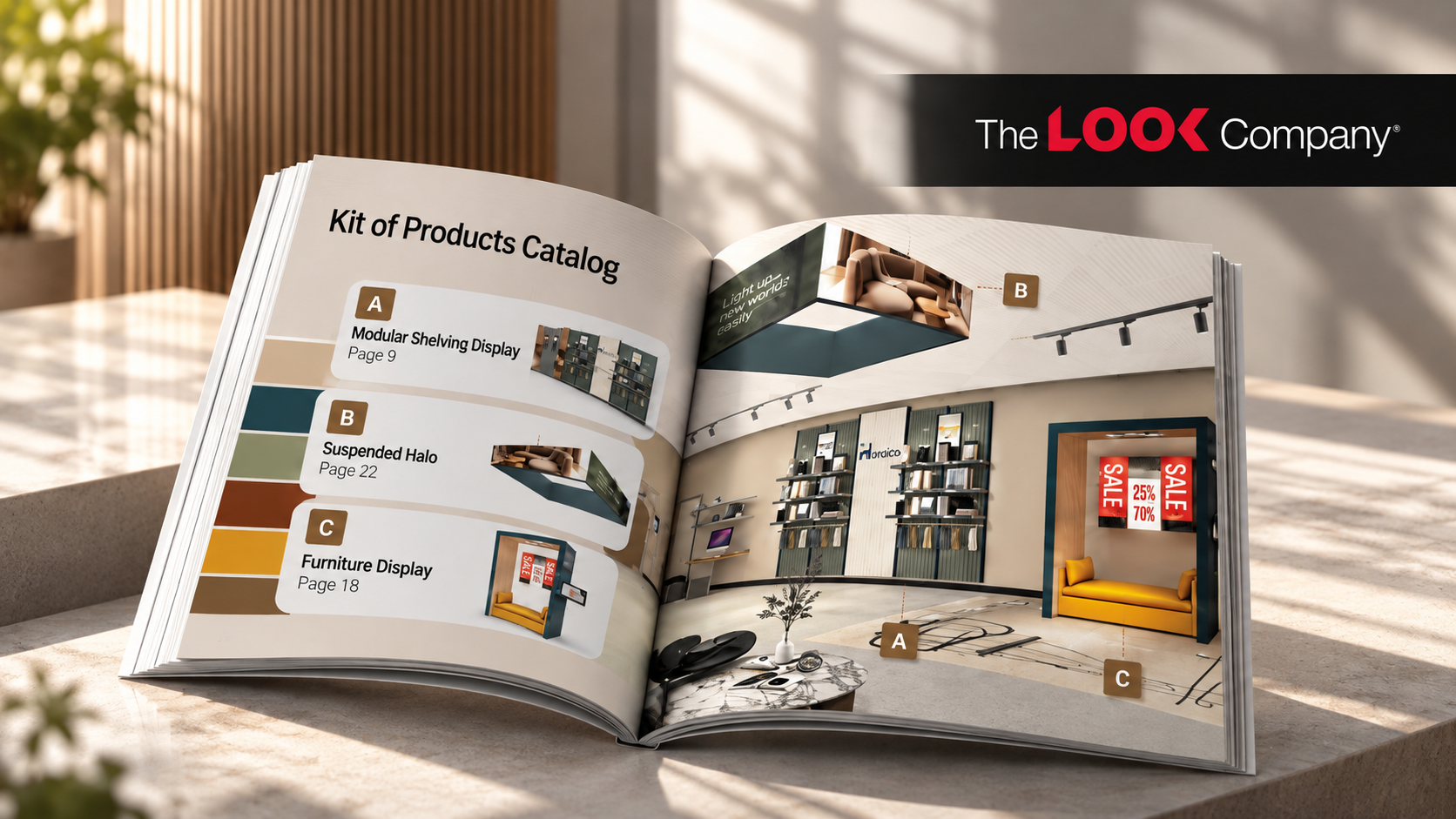
Picture a favorite sandwich shop, the one with crisp menu boards and a storefront that matches the ads. Now picture another location of that same brand a few towns over, where the window graphics have faded and the newest signs look, as Kevin Wildes describes it, like they “came off a laser printer.” Nobody at that second store set out to weaken the brand. A graphic wore out, a promotion needed to go up, and an owner with a business to run made the most convenient call available.
Multiply that moment across dozens or hundreds of independently owned locations, and a single brand can start to look like several. Closing that gap between brand standards and store-level execution is the mission behind the Franchise Visual Standards Program from The Look Company, a visual branding company whose clients include FIFA, Walmart, Formula 1, the NHL and MLB. In a conversation with Franchise Brief, Wildes, who serves as sales and program manager for the program, explained how lessons learned in stadiums and big box stores now apply to franchise systems of every size.
From Stadium Walls to Store Floors
Long before franchising entered the picture, The Look Company built its reputation on a simple premise. “The company’s always been about the brand,” Wildes said. Its early work took place in stadiums, where every display, banner and printed element had to stay consistent with the brand during a major event. Projects tied to FIFA, which Wildes likened to “basically dozens of Super Bowls at one time,” gave the team deep experience managing branding across large, complex environments.
Retail work followed, including seasonal promotions inside big box stores, and that combination gave the company what Wildes called “that sort of overall breadth and depth of what’s possible.” Today, The Look Company designs and manufactures in-house at facilities in Seattle, Tampa and Barrie, Ontario, with additional production capabilities across Europe, Asia and the Middle East. Recent acquisitions have expanded that toolkit further.
Wildes credits Gerry Price, President and CEO, North America, with first pointing all of it at franchising after recognizing that most of the necessary pieces, from large-project logistics to print production, already existed. Fieldwork confirmed the hunch. Visiting franchise locations, the team kept meeting owners who loved how their own store looked but felt that a location of the same brand two towns over felt very different. “We started realizing there was really a place in the market where franchisees and franchisors could still use some help to coalesce their brand initiatives. And we’re experts at that,” Wildes recalled.
Why Brand Standards Break Down in the Field
Ask almost any franchisor how it protects franchise brand consistency, and the answer usually starts with brand standards. According to Wildes, that is exactly why the problem so often gets misdiagnosed. “I don’t think the problem is standards. Everybody’s got a standard. The problem is really in execution.”
Franchisees, after all, are business people first, trying to think strategically while reacting quickly to their local markets. Staying on brand while doing all of that often means juggling a sign vendor, a separate installer and someone to confirm the work actually got done. Wildes heard owners describe the mindset as almost a kind of desperation, a sense of “I got stuff to do,” and when something wore out or got damaged, they didn’t always know where to turn. “So those were the primary pain points that we saw, was there just wasn’t somebody there to hold their hand and help them through the process,” he said.
Gerry Price framed the same idea in announcing the program on September 24th, 2026. “The issue isn’t a lack of brand standards, but giving every franchisee a simple way to put those standards into practice,” Price said in the company’s release.
Drift Happens One Sign at a Time
Even a location that opens perfectly on brand faces a slow, quiet enemy. Wildes calls it drift. Owners get caught up in running the business, and small things slip: a menu board that has been down for a while, street signage that has faded and probably needs some work. Drift, as Wildes put it, happens “one sign at a time.”
Those small lapses add up. Customers who enjoy one location expect the same experience when they travel, and a poor visit in one state can keep them away from a location in another. Consistency also shapes franchise development, because prospective owners are not looking to invest in a brand that seems to be fading. “They want to buy a franchise with an idea and a service or a product that everybody wants and everybody feels really good about. And it’s our job to make sure everybody continuously feels good about it.”
A Home Depot Lesson in Consistency
Wildes has worked on this challenge before, inside a company that was not even a franchise. Beginning in 2001, he spent several years as one of the directors of visual merchandising for Home Depot. Every store carried the same familiar logo out front, but with local managers shaping their own spaces, the experience inside could feel inconsistent from one location to the next.
Wildes led the team that wrote the retailer’s visual merchandising standards and pulled its stores together so they read as one company. The payoff was easy to see. “You didn’t have a Home Depot on the corner that everybody loved and another one that people wondered why it was still open.”
That experience shapes how The Look Company approaches franchisors today. Most arrive with plenty already in place; in Wildes’ words, “they already have a brand, they already have a brand standard, they already have a dream, they already have a model, and they have a plan.” What they often need is help confirming whether those expectations match reality in the field, and shoring up execution where it falls short.
Inside the Franchise Visual Standards Program
At its foundation, the program puts a brand’s physical presence on a single, centralized track. Franchisors establish what belongs in their locations, franchisees order approved materials when they need them, and The Look Company handles design, production, fulfillment, logistics and installation. To meet brands where they are, the company organizes the work into three tiers.
First comes a custom catalog of goods, which Wildes described as the simplest way to work with the company. Franchisees choose the components they need, such as a light box or a banner up front, and the catalog can be organized by store type (Type A, Type B, Type C) or however the franchisor prefers to divide it. Everyone knows exactly what they can order.
Ordering, however, is not the same as knowing what to do with a sign once it arrives. Wildes has heard the question many times: “I ordered from the catalog, but what am I supposed to do with this sign?” A second tier adds placement guidance, covering what fits a given store, where it goes and how it will be installed. A third tier starts from a blank slate for owners who have just secured a space and need help with everything. A restaurant operator in that position, Wildes explained, might say, “I might know where the back of house is going and where the front of the house is going, but I don’t know anything else.” In those cases, the team can fill the entire space on brand and on budget, with the goal of creating an environment that helps customers and generates more income.
Flexible Systems for Imperfect Spaces
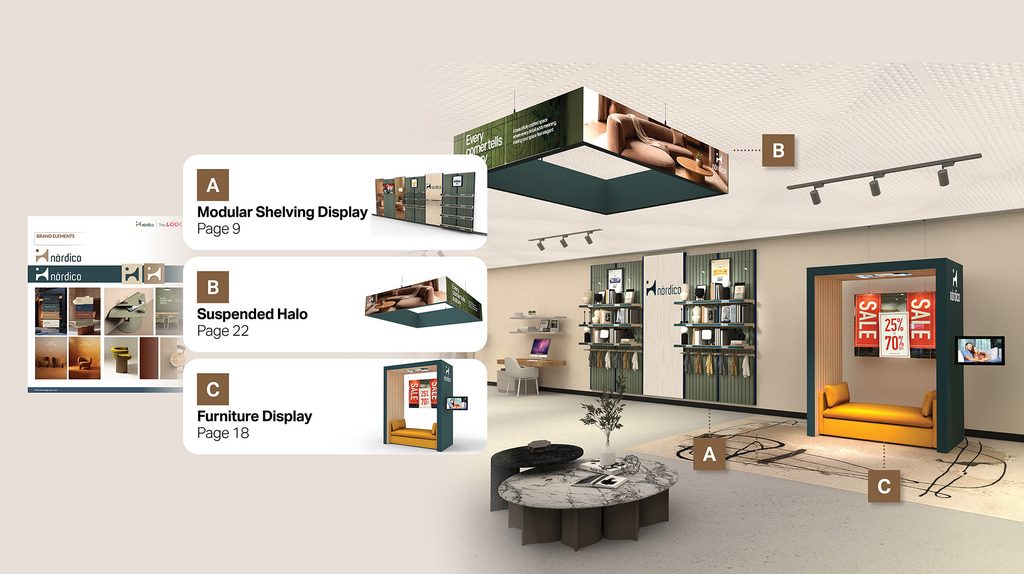
Real estate rarely cooperates with a brand book, so The Look Company can send a team for site surveys and measurements when needed. Its larger ambition, though, is to build flexible systems around each franchise. Some brands have their formats buttoned up and never break the mold, while others operate in a wider variety of spaces and need more handholding.
For those brands, the company develops packages flexible enough to work even when a space is slightly off, along with instructions that let franchisees semi-customize a set of options. “You’re not reinventing the wheel,” Wildes said. Rather than ordering a custom sign because a wall calls for seven feet six inches instead of seven feet, an owner learns how to use components already in the system to fill the space in a way that serves the customer experience and, ultimately, sales.
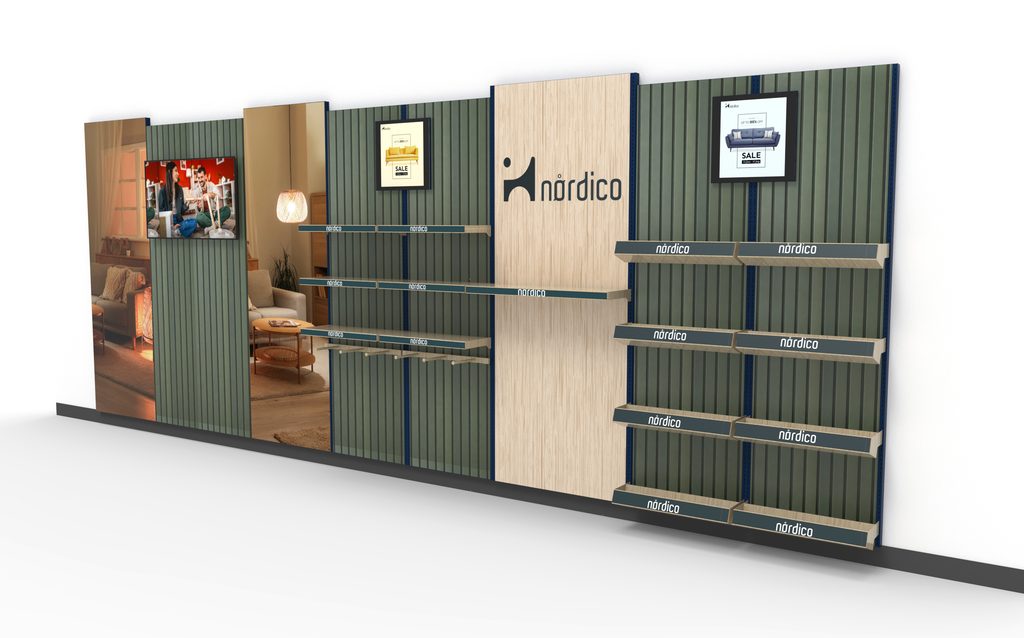
That system draws on a wide product range, from ceiling and hung displays, freestanding lookstands and full wall treatments to pillar wraps, shelf toppers, window and floor graphics and single- and double-sided light boxes. For the occasional “crazy idea,” the company’s designers and engineers also take on one-off projects, a skill sharpened in stadium work, where, as Wildes noted, “not everybody has a huge stadium that you have to cover to look like a soccer ball.”
One Portal, With People Behind It
Day-to-day ordering runs through a custom portal that each franchisor configures to match its model. It can be corporately branded, set up as a white-label service where franchisees buy through the franchisor, or arranged so owners buy directly from The Look Company. Franchisors also decide whether ordering is mandated, handled independently by each location, or routed through corporate. Either way, franchisees can see what they’re ordering and when it will arrive, instead of wondering whether a request ever landed.
Technology alone, however, is not the pitch. Owners can log into the portal at anytime if they want, but they can also pick up the phone and reach a real person. “We have all those things in place, but it’s really got a person behind it and an actual team behind it. So we’re here to help.”
The portal also gives franchisors a quiet early warning system. If a location has never logged in or ordered anything yet somehow just finished a remodel, corporate has a reason to ask what happened, and a chance to bring that store back into the fold before drift sets in.
Planning for Pumpkin Spice Season
Promotions and mid-year campaigns test a system just as hard as new openings, so The Look Company asks franchisors early about upcoming seasonal pieces, promotions and ad campaigns and builds them into the system ahead of time. Balance matters here. “You don’t want to stifle a franchisee’s ability to make a difference, to make something happen. But at the same time, you do want to stay on brand and of course on the plan,” Wildes explained.
Picture a fall campaign built around pumpkin spice season. Well before it arrives, the team identifies which products suit the campaign and how the rollout will work, then kits approved graphic packages and ships them to locations on the franchisor’s schedule, complete with placement instructions so store teams can handle the swap themselves. When the season arrives, the promotion launches consistently across the network.
Remodels and refreshes follow the same standardized process, even though they tend to be more complicated. Some involve moving walls and changing spaces, while others amount to a facelift of fresh paint and new graphics. Either way, the conversation begins with what is changing, what is going out and what is coming in, so new materials replace the old rather than piling on top of them.
Value Engineering for Every Budget
Pricing depends on the scope of the work, and Wildes compared the question to asking what it costs to build a house without knowing whether it’s going up in San Francisco or on five acres outside a rural town. A couple of signs for a brand new franchise and a full remodel, he noted, “are completely different pricing structures.” He credits the company’s volume and buying power with keeping pricing competitive, while its G7 Colorspace Master Qualified status and 8-color, 600 DPI printing support consistent color across rollouts.
Range of capabilities matters just as much as price. Smaller sign shops, Wildes said, are often limited by the equipment they have, which can turn every project into the same solution. “I sell vinyl banners. Everything can be solved with a vinyl banner. That may not be your best solution; so we have many different ways to do that.”
That flexibility allows The Look Company to produce the same sign in more than one way. A value-oriented franchisee still growing the business can achieve exactly the same look as a location with a much bigger budget, using different products at a different price point. “I think it really comes down to what are they trying to accomplish, and then we’re going to help them accomplish that, even if it means multiple versions of the same sign.”
Local rules add another wrinkle. Sign permits typically fall to the franchisee or franchisor, but the team helps brands plan around municipal restrictions. If a sign can’t go out front, for example, the conversation shifts to how the same message might work inside.
What Franchise Executives Should Look For
For franchise leaders wondering whether drift has crept into their own systems, Wildes recommends a simple starting point. Send a team to 10 or 20 locations, photograph a specific required piece and its placement, and compare the results. “It doesn’t have to be a secret shopper, we just want to understand what’s really out there.”
The practice echoes what Wildes and his retail colleagues once called management by walking around, seeing firsthand how standards come to life in each store rather than relying on secondhand reports. Often, the results are encouraging. A concern that seemed to span the whole system may turn out to involve a single location, which makes it far simpler to address.
From there, the conversation turns to goals, strategy and implementation, and Wildes is candid that the work never truly ends. Programs improve as analytics reveal what is working, and franchise systems still run on people. “So it’s never 100% fixed.”
From Ideation to Installation
Step back from the individual pieces, and the full picture of the Franchise Visual Standards Program comes into focus. Design, catalogs, placement guidance, ordering, production, kitting, logistics and installation all live under one roof, giving a franchisor a single house for everything that shapes how its locations look. Installation runs through partners across North America, along with in-house experts who coach owners through unfamiliar systems.
That single partner replaces a familiar scramble. Without it, a franchisee might buy a sign from a shop across the street, find someone else to install it and hire yet another vendor to haul away the old one. With the program, The Look Company carries the work from ideation to installation, whether a brand is opening its first store, refreshing a mature location or launching a campaign across the entire network. For franchisors, that means brand standards have a dependable path from the design guide to the storefront.
A Partner on Both Sides of the Franchise Agreement
The Look Company is initially focusing on fitness and wellness, med spa and personal services, education and tutoring, pet services, automotive services and specialty retail, though Wildes expects interest well beyond those categories. When Franchise Brief suggested the program could benefit any brand with four walls, Wildes didn’t hesitate: “We’ll do more than 4 walls.”
Part of the appeal lies in serving two audiences at once. Wildes wants franchisees to stay motivated and entrepreneurial, within the limits of their franchise model, without losing the brand in the process. Because his team understands both what it takes to run a single business and what it takes to run a corporation, it can sit in the middle and bridge the gap.
Back at that sandwich shop a few towns over, the fix may be as simple as reordering the right sign from the right catalog and getting it installed correctly the first time. For franchise systems trying to deliver one experience across many owners, that kind of simplicity adds up, one sign at a time. As Wildes summed it up, “we’re there for the franchise and we’re there for the franchisee.”
