


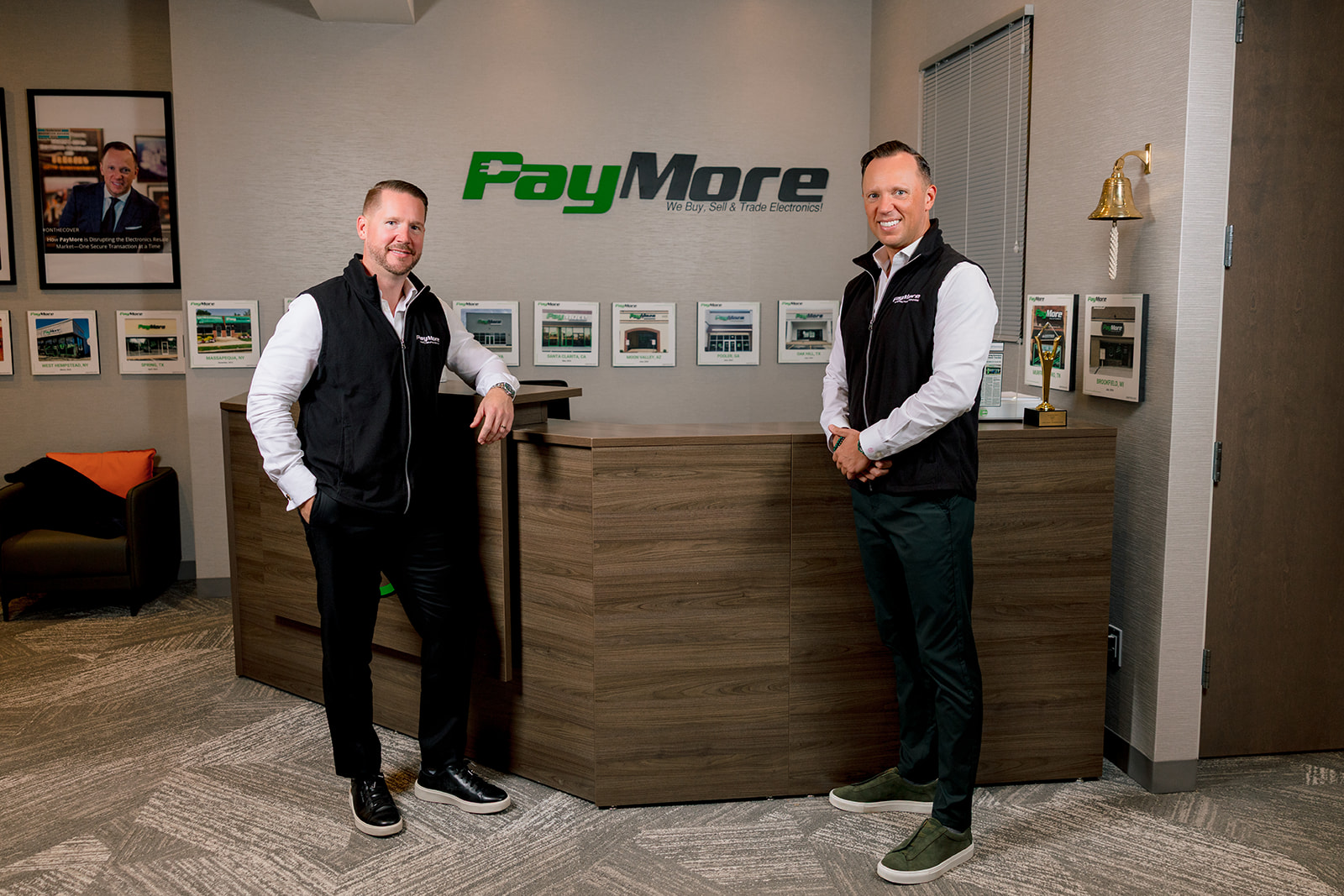
In the mid-2000s, a small secondhand store on Long Island would make an offer on almost anything that came through the door. Its shelves held electronics and furniture alongside tube socks, Hummels, Lladrós (two well-known lines of collectible porcelain figurines), and every other kind of tchotchke. Customers kept coming, but the owners couldn’t even get their own parents through the door, and Stephen R. Preuss Sr. remembers why: “They thought we were selling guns and jewelry.” In their minds, the shop belonged behind barred windows and a buzzer door, with handguns and pawned wedding rings waiting under the glass.
The PayMore story began when a mutual family friend introduced Preuss and Erik Helgesen in 2004, pairing Preuss’s head for business with Helgesen’s technical savvy, and those roles have held ever since. Preuss, now CEO, handles the business side, drawing on years in investment sales at the highest levels within NYC Capital Markets. Helgesen, now president, built the company’s technology himself and oversees its operations and support teams. Looking back on the six years they ran that first store, Preuss jokes, “I’d like to say we made all of our mistakes then or most of them. We just did everything wrong.” In truth, those years worked more like a crash course, with each wrong move pointing the partners toward a right one.
Two of those lessons in particular built a company. Electronics had become the store’s highest-volume and most profitable category, and customers clearly wanted a better place to sell them than the stigmatized storefronts they knew. Preuss and Helgesen built PayMore around both. In a conversation with Franchise Brief, the co-founders traced how one Long Island store, a timely shift in consumer technology, and nearly two decades of homegrown software became a franchise system with 150-plus open locations and roughly 500 stores in total development.
The iPhone Era Picked the Category
The first lesson arrived through the front door. Toward the end of that six-year run, electronics took over the store, a shift Helgesen ties to the iPhone 4 and iPhone 5 boom. Basic cell phones were giving way to smartphones, and phones themselves were turning from gadgets into essentials. “It went from a want to a necessity, whether you were in business, whether you’re in college, whether you’re a parent or even a teen,” Helgesen said. In the spring of 2011, the year PayMore got its name, the Pew Research Center found that 83 percent of U.S. adults had a cell phone but only 35 percent owned a smartphone; by 2026, smartphone ownership had reached 91 percent.
The economics lined up neatly. Smartphones held real resale value, a shelf that could hold one sofa could hold a lot of phones, and customers wanted an alternative to paying full price at a big box store or getting caught in a three-year plan with a national carrier.
Then a single online sale changed the direction of the business. A device the store sold turned out to be broken, and the buyer asked whether the shop had any more broken ones to sell. That request exposed a market for devices in nearly any condition, so the founders established buyers, stopped taking tube socks and sofas, and started wiping customers’ data up front. Along the way, the store began to professionalize what it takes to buy a used phone safely and securely, building processes around every step. Or, as Helgesen sums up the era, “we got out of that Nokia phase and we just ran.”
Taking the Stigma Out of Secondhand
Perception was the second lesson. Mention a secondhand store to most people, Preuss notes, and the image that comes to mind is the same one their parents had: a pawnshop, a business he characterizes as “more of a 2-star industry done in the shadows.” So the partners set out, as Preuss puts it, “to really disrupt the secondhand industry and elevate the experience where people wouldn’t think of that stigma and they would fold it into their shopping habits like they would going to a Target or Walmart.”
In 2011, they moved a couple of blocks from Massapequa Park to Massapequa and relaunched. Customers had effectively named the brand already, telling the founders again and again that the store paid more than anyone else. Helgesen recalls the decision that followed: “We said, well, rip the sign down. Let’s throw a PayMore sign up there. Let’s put a plug in the P and go.” That Massapequa store remains PayMore’s corporate flagship and proving ground today.
Retail grew from the counter, too. At first, PayMore only bought devices and wholesaled them, but small lines at the counter kept producing the same scene. In Preuss’s words, “somebody would sell something in the front of the line and then someone from the back of the line said, listen, I’ll buy that from you.” With no previous retail experience, the founders took over the store next door and learned electronics retail from the ground up.
Software Built From Two Decades of Fixes
From the outside, PayMore looks simple: someone sells a device, and someone else buys it. Underneath sits a fully proprietary operating system that Helgesen began writing as the company’s only coder. PayMore’s first purchases ran on spreadsheets, Word documents, and templates before moving to an in-house point-of-sale system, since rewritten four or five times in four different languages. Helgesen now leads a full development team, and Preuss calls the software the company’s moat, the engine that makes PayMore’s scale and level of service possible. “Without this data-driven software, it’s impossible to do what we do,” Preuss said.
Helgesen describes the platform as the sum of years spent “making a mistake, fixing it, writing code around it, making it better, making it more efficient.” Franchisees from backgrounds as varied as Sprint stores and restaurant chains have shaped it too, producing a suite of tools that sets buy, sell, and trade prices designed to be fair to the seller, give the next buyer a good deal, and leave room for franchisees to build a meaningful business.
PayMore owned its data before AI entered the conversation, and its system holds years of history on prices, device attributes, battery condition, what each item sold for, where, and how fast, with forecasts now layered on top. That history tells a franchisee what is in demand, what will sit longer, and what the store can afford to pay. Anyone can look up online prices, but as Helgesen puts it, “you can scrape things, but you can’t scrape what consumer behavior is doing.”
Ten Minutes at the Counter
All of that data reaches the customer at speed. Preuss estimates that a typical secondhand transaction elsewhere runs above 50 minutes, largely because operators lack real-time pricing information. PayMore stores identify a device, run a security process, test it, and price it within minutes. “Our typical transaction system-wide is under 10 minutes because of this,” Preuss said.
That speed is a quiet part of PayMore’s secret sauce. Anyone who has lost an afternoon at a carrier store waiting to activate a phone, transfer data, or finish a purchase knows how much a device transaction can take out of a day. At PayMore, nobody has to plan their day around the visit. A customer can sell an old phone or upgrade to a newer model in less time than it takes to get through the line at a busy coffee shop.
No Price Tags and No Frankenstein Phones
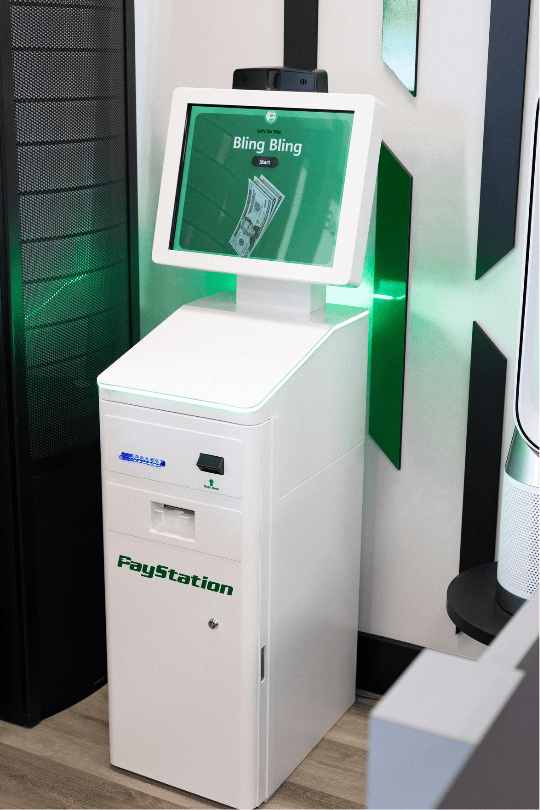
PayMore’s sales floor breaks a few retail habits, too. Shoppers can browse pre-owned devices in a store or online at PayMore.com/shop, and once inside, they’ll notice something missing. “We don’t have any prices on our devices when you walk in,” Helgesen said. Devices on the floor carry no price tags or stickers; each one’s current price lives digitally, where kiosks let customers shop the store’s live inventory and buy online, pick up in store serves shoppers at home.
His reasoning is straightforward: “our prices move with the market.” When an item is a good deal, the system aligns the price; when something sits too long, the price comes down. That keeps stores from drifting into the dusty, barcoded clutter of traditional secondhand retail.
Quality is where PayMore holds a firm line. “The devices that we sell aren’t Frankensteined, they’re not refurbished, they’re not redone,” Helgesen said. Only a share of trade-ins meet the strict criteria for resale to the public as certified pre-owned, meaning no replacement screens, no replacement batteries, and a look and feel close to new. Devices that miss the cut move through refurbisher and overseas marketplaces, where PayMore can triage pallets on franchisees’ behalf.
That network lets PayMore act as a portfolio buyer. Rather than cherry-picking a narrow band of five or six items, stores make offers on, in Preuss’s words, “anything you can put a battery in or plug into the wall,” broken devices included. Smartphones, computer parts, video games, tablets, drones, and laptops lead retail sales. Instead of pushing protection plans and financing, PayMore leans on loyalty: customers who buy, sell, or trade return more than 80 percent of the time, and Helgesen estimates that 60 to 70 percent refer a friend.
From One Store to a Franchise Blueprint
For years, PayMore grew without spending a dollar on outbound marketing. Word of mouth carried the original store through sales milestones of $500,000, then $1 million, then $1.5 million and beyond, all from a site Preuss now describes as a D location, one the brand would not approve for a franchisee today. Helgesen ran it daily with just a few employees.
That momentum, around 2017, is when Preuss’s capital markets instincts kicked in. Instead of opening a few more stores around the Tri-State area, the founders spent a year studying similar concepts and couldn’t find anyone doing what PayMore did on a national scale. “So we found out that that’s called a first mover advantage and we wanted to take full advantage of that,” Preuss said. Franchising became the path to reach coast to coast.
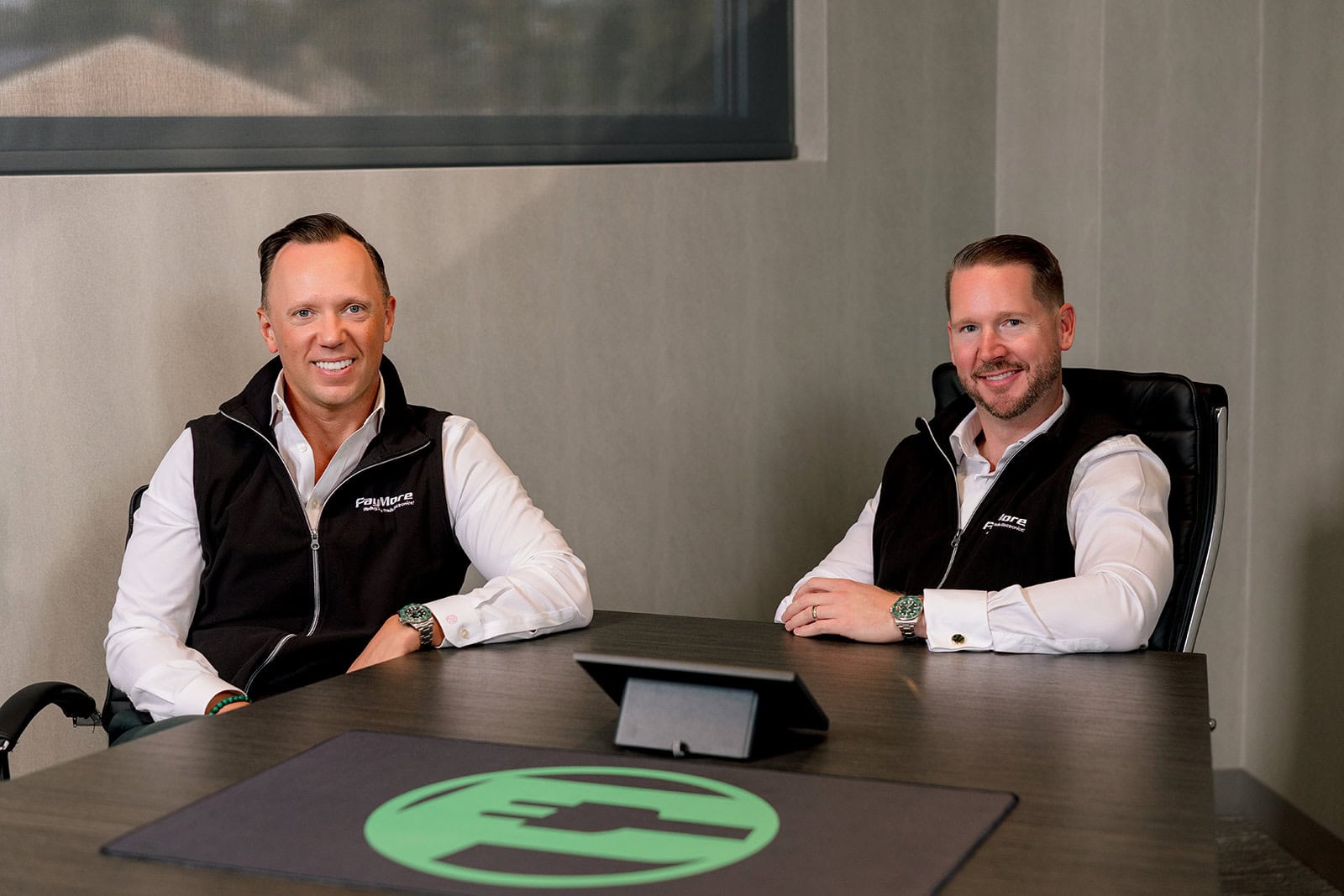
First, they stress-tested the concept in markets that looked nothing like Massapequa. A store in Brooklyn, about as urban as it gets, grew into a seven-figure location. Cary, North Carolina, outside Raleigh, came next, followed by Gastonia, which Preuss describes as the furthest submarket outside Charlotte. Four very different markets across two states all performed, and each new store grew faster than the last. Meanwhile, the founders poured 90 percent of their capital into technology, building two years ahead of need so the platform could already support another 50 locations.
By 2019, they had decided to go all in on multi-unit franchising, and in 2020 PayMore was approved to franchise. From four locations at launch, the system has grown to 152 open stores, with another 60 under construction and roughly 300 more scheduled to open. Multi-unit franchisees drive most of that growth, supported by FranSmart, a franchise sales organization that Preuss says helps “bring qualified franchisees to the table.” With that volume, the team has, in his words, “really gotten the build-out down to a science.”
A Lighter Lift Built for B Centers
Stores run on three to four people, compared with the 15, 30, or 45 some restaurant concepts need, yet Preuss says they are “doing very similar AUVs to a lot of those quick-service restaurants.” With no kitchens, capital equipment, or health department requirements, many stores need few permits beyond signage. According to PayMore’s 2026 Franchise Disclosure Document, the estimated initial investment ranges from $138,750 to $268,500 for a single unit.
Stores fit spaces from about 800 to 2,000 square feet, and PayMore doesn’t need the high-traffic corner next to a Chipotle or an Apple Store. “We’re a destination point,” Preuss said. People looking to sell electronics search the brand out, so stores can sit across the street or down the block from A centers, in B centers where PayMore’s size gives it real leverage. As Preuss frames the priority, “the most important part of it is not who we’re next to, it’s who we’re not next to.” Because the brand exists to strip the stigma from secondhand, it looks for clean centers with welcoming co-tenants.
The Operators Building PayMore
Owner-operators with one to three units remain a valued part of PayMore’s system, while larger multi-unit operators have arrived as awareness spread. Preuss says more than half of PayMore’s franchisees come from food, from brands ranging from Crumbl, Tropical Smoothie, Jersey Mike’s to Domino’s. With cost and labor pressures weighing on heavier concepts, he sees those operators seeking a lighter lift: “they’re looking to give an allocation to their portfolio outside of what they’re typically doing.”
Family plays a role as well. Some operators have children in their teens, 20s, and 30s who grew up passionate about electronics, so a parent and their sons and daughters may each run a PayMore store. Others arrive from corporate America looking to build family wealth, or from phone repair seeking a longer-term play. “We look at each franchisee differently. We look at each market differently and come up with a custom development plan that fits for their market, where it’s comfortable for everyone, where there’s ample upside that they can grow into,” Preuss said.
Support That Runs Through the System
At PayMore, support starts before a franchise agreement is ever signed. Preuss and Helgesen have joined every pre-discovery day and discovery day call and met every franchisee in person, rather than splitting duties or handing candidates to a salesperson. They also made a pact to attend the first 50 grand openings, and they kept it. All that travel strains their schedules, but it suits two founders Preuss calls “big family people, and we treat our franchisees as extended family”
Behind them stands a support team that largely grew up inside the business, including the employees who once worked the Massapequa counter alongside Helgesen and now help franchisees grow stores of their own. New owners are added to a large internal chat the company engineered itself, connected to PayMore’s point-of-sale system, its franchise management system, and nearly everything else it runs. In Helgesen’s view, “this chat is the lifeblood of what we’re doing.” Many owners tell him it leaves them feeling ready to run a store well before opening day.
Each new owner is paired with a support contact from a team Helgesen credits with 50 or 60 years of combined experience. Training begins in a custom learning management system PayMore built in-house, followed by a one-week boot camp at the Massapequa corporate store that puts owners right at the front counter. Afterward, owners and staff can ask any buying or selling question through the chat in real time, with quarterly calls and conventions rounding out the calendar. Ideas flow back up as well, from franchisees and staff into pricing engines that keep absorbing new trends, because, as Helgesen notes, “There’s always something new in electronics.”
Secondhand Is Cool, and Most People Haven’t Found It Yet
PayMore’s analytics show customers increasingly searching for “PayMore near me,” a trend Helgesen calls “incredibly bullish” for franchisees. Recycling has become a growing staple of our model that also pulls e-waste out of local communities, and tests in trading cards and collectibles have done well, though Helgesen is clear about the core: “We know electronics at heart, and that’s our main business.”
Younger shoppers add momentum. “Listen, secondhand is cool. Saving money is cool. Getting a deal is cool,” Helgesen said. Because PayMore buys whatever its communities bring in, every store has something new every day, along with in-store exclusives that reward regular visits. Younger customers in particular come in to see what has changed and try to get there first, turning a trip to PayMore into a treasure hunt, especially for retro gaming and hard-to-find items.
Awareness, in Preuss’s view, is the bigger opportunity. He points to reports suggesting that as many as 80 to 90 percent of people would be open to secondhand but don’t know where to go, while “right now only 1% of people know who we are.” With 250 stores expected by the end of 2027, he believes consistent, customer-first education and execution will make the brand a household name. “PayMore will be synonymous with secondhand electronics, the same way when I say coffee and retail, you would think of Dunkin’ Donuts and Starbucks.”
Preuss believes North America can hold a little over 2,000 PayMore stores, which puts the roughly 500 already spoken for about a quarter of the way there. Because the company invested early in technology, he says the team has “been able to do the work of 50 with 10 people.”
Two decades ago, Preuss and Helgesen couldn’t coax their own parents into a Long Island secondhand shop. Today, the scene that once played out at the Massapequa counter, one customer selling a device while another waited to buy it, is the model behind 150 plus stores and a pipeline stretching toward hundreds more. The tchotchkes are long gone, but the customer promise behind the name still hangs on every sign.
