


Michael Jacobson did not set out to revolutionize the floral industry. He set out to help his uncle sell a flower shop. What happened next is the kind of story that makes you believe a little more in the combination of timing, curiosity, and a willingness to follow an unexpected path wherever it leads.
Jacobson studied finance in college and followed the conventional road into corporate consulting after graduation. He was good at it, but something was missing. “I could sit there and not feel fulfilled in my journey, or I could go and do something about it,” he said. That restlessness had him quietly looking for a different path when a call from his uncle changed everything. The flower shop wasn’t performing well enough. A business broker had already told his uncle the company wasn’t sellable. Jacobson stepped in, intending to clean up the books, cut the fat, and help the family move on.
What he found instead was an industry that had been asleep for decades, and an opportunity so obvious it almost felt like a mistake that nobody had already seized it.
An Industry Ripe for Disruption
The floral industry in the United States is staggering in its fragmentation. Tens of thousands of flower shops operate across the country, and a majority of them are single-unit, owner-operated businesses. There is no dominant local market leader. Innovation has been scarce. Outside capital has been minimal. For years, the closest thing to a national brand has been a wire-service intermediary model that Jacobson describes plainly as broken.
The wire service model works like this: a customer places an order through a large national brand, which then routes that order to a local florist, collecting a commission of 30 to 40 percent in the process. For the florist receiving the order, the math is painful. With margins already squeezed by the commission structure, the pressure to cut costs somewhere becomes almost inevitable. Older flowers get used instead of fresh ones. Cheaper substitutes fill arrangements that were sold as something else. Quantities come up short. The result is a model with almost no inventory accountability and little incentive to protect the customer’s experience. For consumers, that translates to a mismatch between what they ordered online and what actually arrives at the door, a gap between the beautiful product image and the reality of aging blooms.
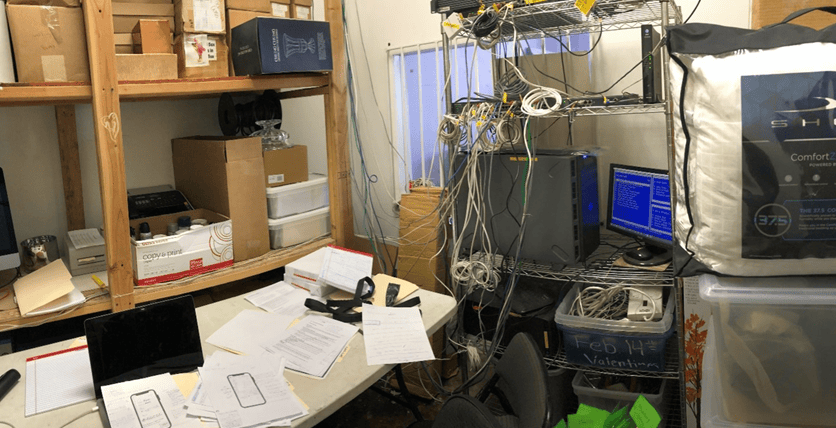
Jacobson saw all of this while trying to make his uncle’s shop sellable. He cut the wire service relationships, which cut revenue in half, but the shop became more profitable almost immediately. The counterintuitive result confirmed what he suspected: the industry wasn’t broken by accident. It had been shaped by incumbents who benefited from keeping things exactly as they were. “There’s very little to no outside capital coming in,” he said. “So you’re not getting innovation from within the industry.”
He bought the flower shop from his uncle and went to work. Within four years, the shop grew from roughly $500,000 in annual revenue to over $7 million, making it the largest flower shop in Los Angeles.
From One Shop to a Franchise Model
Jacobson did not rush to franchise. After proving the concept in Los Angeles, he opened additional corporate stores in Ventura County and Orange County, each chosen specifically because they were far enough from his original location to stress-test the concept without the advantage of brand familiarity. Those stores averaged over $1 million in revenue in their first year. The newest of the three corporate locations, now in its third year, is exceeding $2 million annually.
Franchising had not been part of the original plan. Jacobson admits he had a negative reaction to the word itself when he first considered it. “I would never own a franchise, that’s what I thought at the time,” he said. But he committed to doing his due diligence across all expansion paths before making a decision, and what he discovered changed his perspective. The infrastructure of a good franchise system, he came to believe, could leverage the existing passion and skill already present in local flower shops, rather than competing against them.
French Florist launched its franchise opportunity two years ago, following five years of infrastructure building before that. The company has since awarded 45 territories, with 17 franchise locations currently open. The rest are in various stages of site selection or buildout, with some multi-unit owners working toward their second and third locations on staggered timelines.
Converting an Industry from the Inside Out
One of the more distinctive elements of the French Florist growth strategy is that there is no single prescribed path to ownership. The brand supports three routes, each designed to meet a different candidate where they are.
The first is a traditional build: find an available space, whether a gray shell or vanilla box, build it out to French Florist standards, and open. The second is an acquisition and conversion, where a franchise candidate purchases an existing flower shop and re-platforms it under the French Florist system. It is an approach Jacobson tested himself first, using it to expand the corporate footprint before ever offering it to franchise owners.

Existing shops often come with an established customer base and a physical space already built out for production, with an owner ready to transition. What they typically lack is modern infrastructure, a reliable supply chain, and the technology to compete at scale.
The third path is perhaps the most interesting. An existing florist who wants to plug into a proven system, rather than sell or close, can convert their own shop into a French Florist franchise. For shop owners who have passion and the customer relationships but have been running without real infrastructure, it offers a way to stay in the business they love while gaining the technology, supply chain, and marketing support they have never had access to before.
French Florist provides all three, removing what Jacobson describes as the noise, outdated wire service relationships, disconnected tools, inconsistent sourcing, and replacing it with the full French Florist engine.
In practice, all three models perform comparably well within the system. The right path depends on what is available in a given territory and what fits the candidate’s situation. Either way, the franchisor supports the process from site evaluation through opening.
A Digital-First Brand in a Physical World
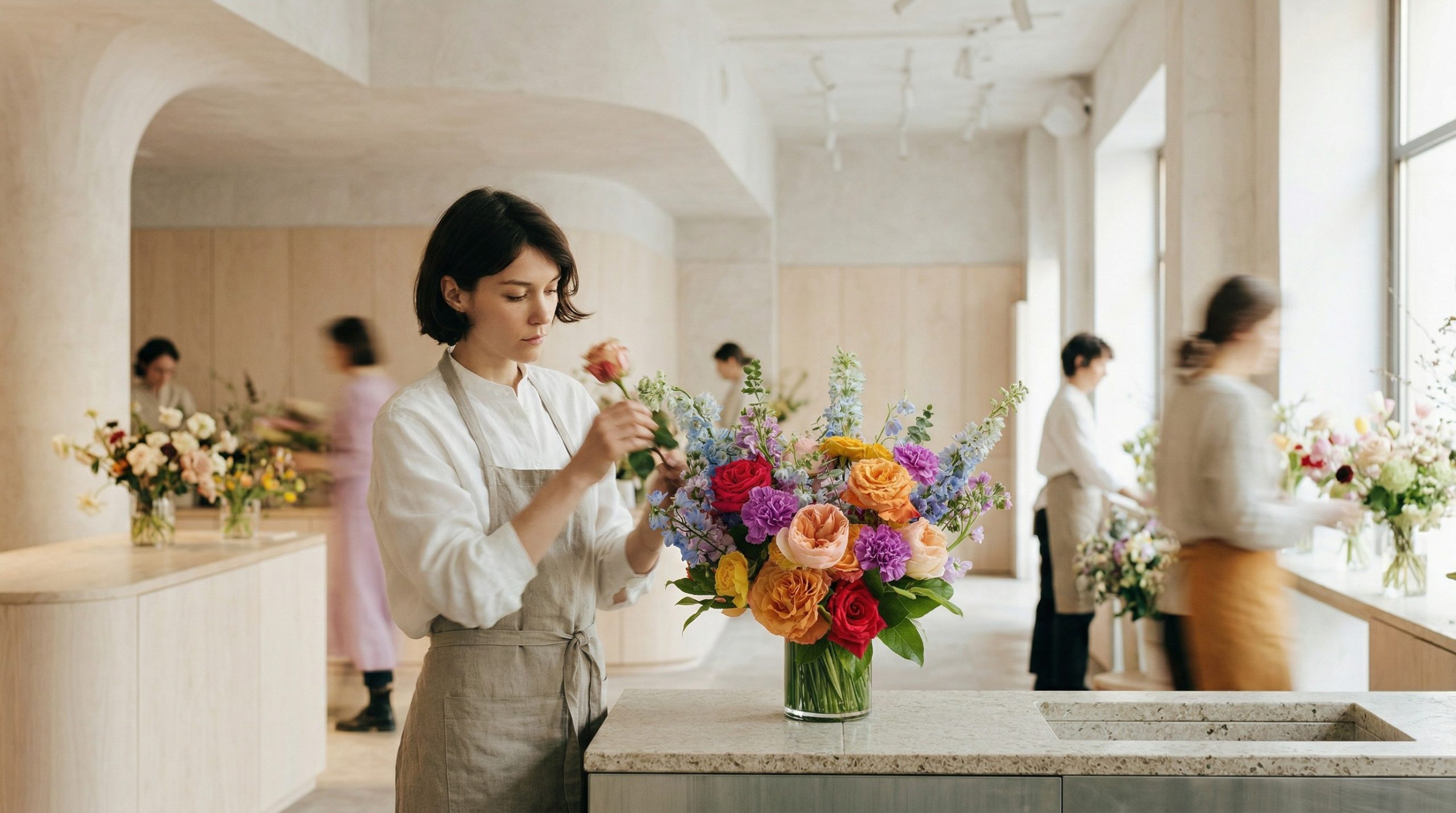
French Florist occupies an interesting position in retail: it looks like a brick-and-mortar brand but operates as a digital-first e-commerce business. The physical store exists primarily as a production facility, positioned in B or B-plus commercial real estate to keep overhead manageable. Approximately 95% of revenue flows through online orders, with walk-in traffic accounting for the remaining 5%, though walk-in traffic is genuinely welcomed and enjoyed as part of the neighborhood presence.

Location strategy is deliberate. Proximity to residential neighborhoods strengthens digital search ranking, since geocentric queries like “flower shop near me” favor businesses physically close to the searcher. The physical footprint, typically around 1,400 square feet, is sized to support production efficiently without bloating operating costs. Customers can walk in and pick up flowers same day, but the engine driving the business runs online.
Contrary to what many consumers assume about the floral business, the revenue calendar at French Florist is not dominated by holidays. Birthdays rank first. Anniversaries rank second. Sympathy and funeral arrangements generate consistent volume throughout the year. Valentine’s Day and Mother’s Day exist and matter, but the day-to-day occasions, graduations, milestone celebrations, moments of unexpected kindness, provide a revenue base that keeps the business stable year-round.
Rethinking the Supply Chain from the Ground Up
One of the most tangible ways French Florist separates itself from the incumbent model is in how it sources flowers. Traditional florists purchase through domestic wholesalers, where a flower typically passes through a consolidator, then a wholesaler, then a retailer before ever reaching the customer. By the time it arrives, it can be 20 days old, with a remaining vase life of only a few days.
French Florist bypasses that chain entirely. The company imports directly from farms in Colombia, Holland, Canada, Mexico, Thailand, and domestic U.S. sources, flying flowers into major airports and either arranging franchise owner pickup or coordinating third-party logistics for doorstep delivery to the shop. Flowers sourced this way can last 10 to 15 days. The quality difference is immediate and visible.
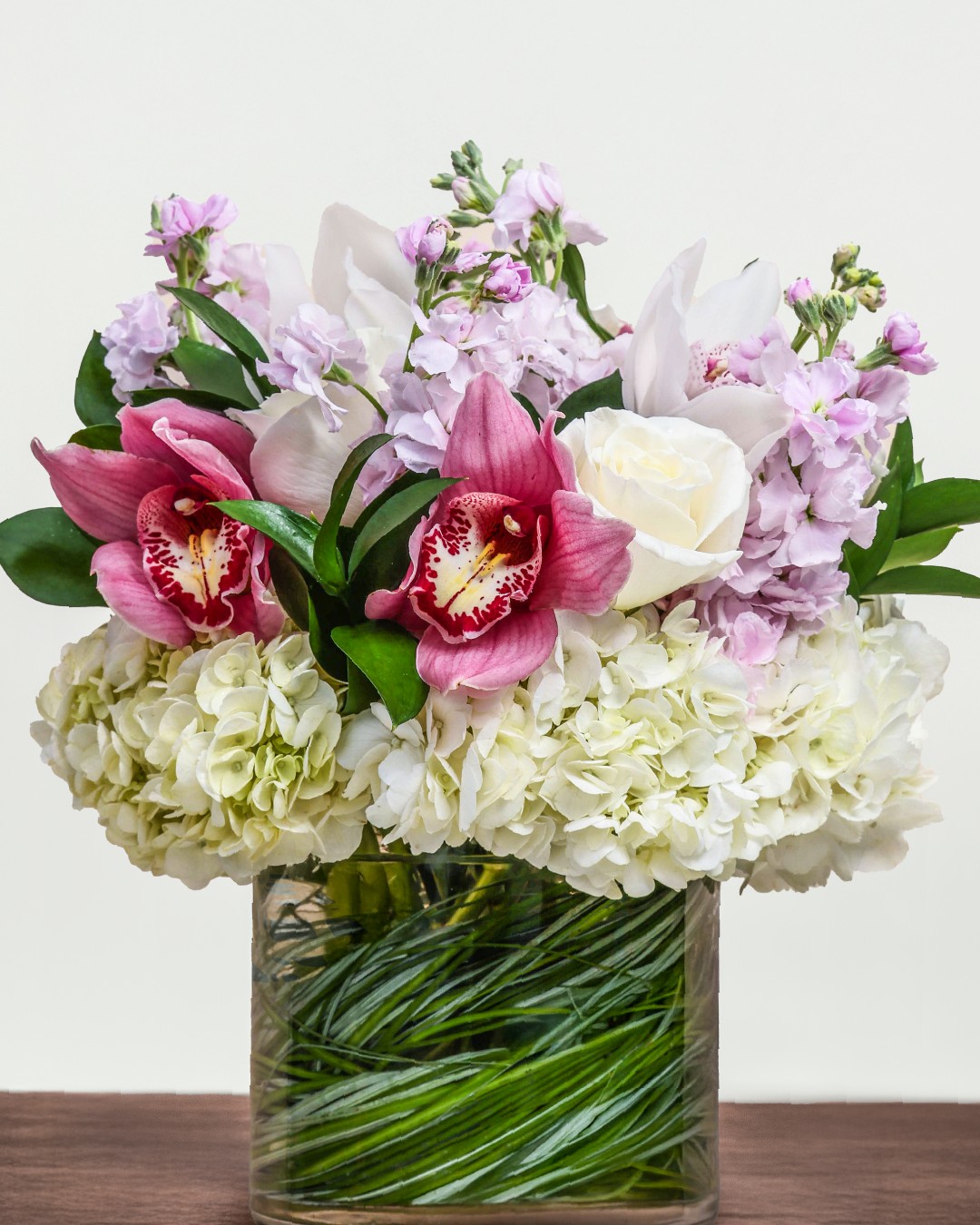
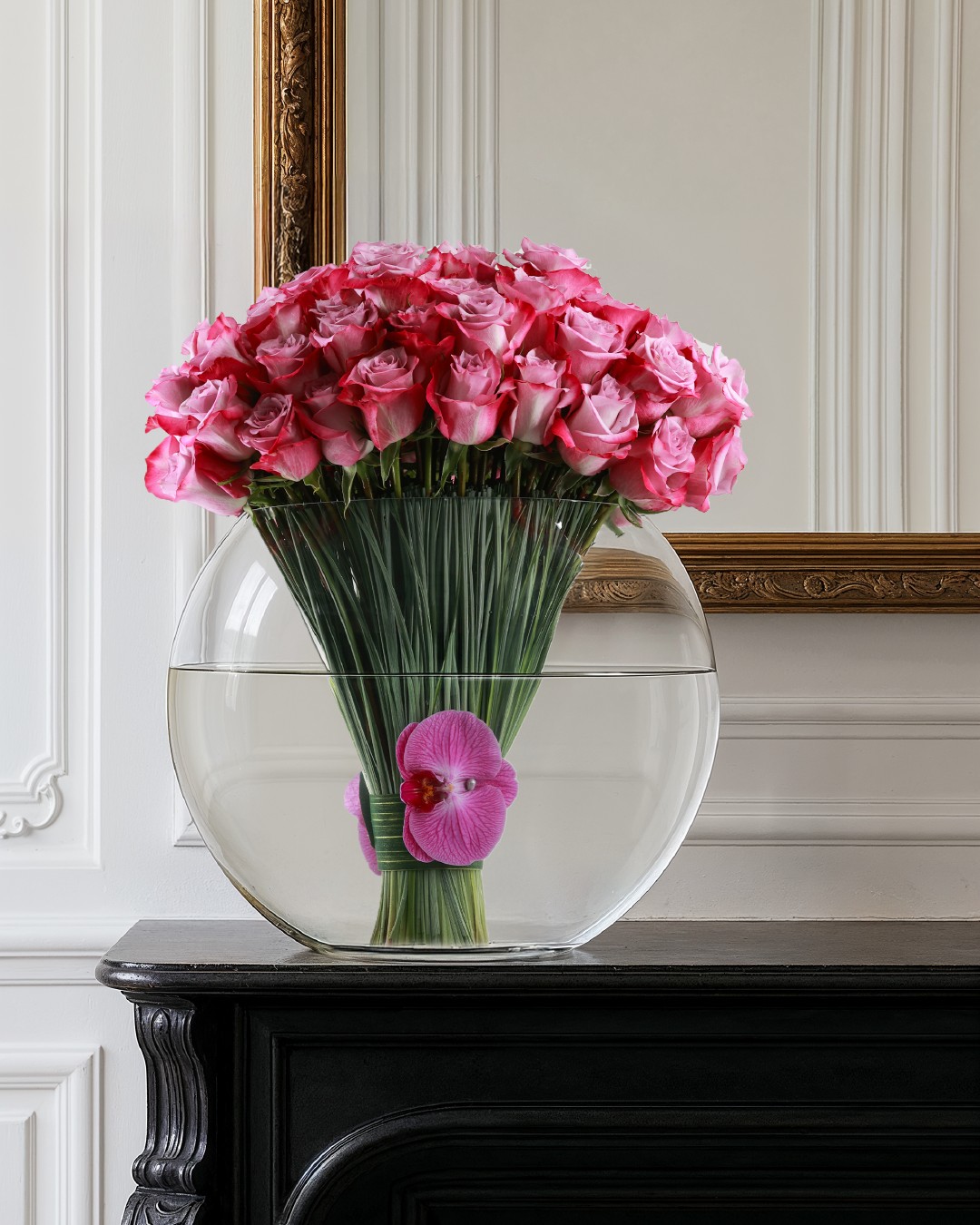
Layered on top of the supply chain is a proprietary predictive analytics system. Every store operates its own algorithm that forecasts incoming orders for any future date and generates a Flower Buyer Report, a detailed list of the raw materials and specific flowers a location will need to fulfill anticipated demand. For a new franchise owner heading into their first Valentine’s Day, the system provides benchmarks drawn from existing network data. After that first holiday, the algorithm learns the specific purchasing patterns of that market and refines its recommendations accordingly. It is the kind of operational detail that sounds simple until you consider what it actually replaces: years of guesswork, over-ordering, waste, and the anxiety of a first major holiday with no data to lean on.
Technology as a Competitive Moat
French Florist has invested between $2 and $3 million in building its technology platform from the ground up, and the philosophy behind it is evident in how each system is designed. Rather than layering together third-party tools, the company built an integrated platform where every team member, from the lead designer to the delivery driver to the customer service representative, interacts only with the portion of the system relevant to their role.
Designers start their day on an iPad, clock in through a time-and-attendance system built directly into the platform, and see all orders queued for the day. Each order includes the design recipe; for custom arrangements, the system displays the retail value of each ingredient in real time so designers can flex their creativity while staying on budget. When an order is completed, it flips from gray to green in a dispatch view, and the delivery driver receives an automatic notification on their mobile app.
For franchise owners, an AI-powered analytics layer aggregates data across all locations in the system. Owners can query performance benchmarks, cost-of-goods ratios by region, or top performers by specific metrics, in plain language, without needing to run reports manually. “We’re remarkably tech-enabled,” Jacobson said, “and it is a really core pillar of the competitive advantage that we have in the marketplace.”
Consumer Experience as Philosophy
Ask Michael Jacobson about the French Florist consumer experience and he doesn’t start with the flowers. He starts with the idea behind them. The brand borrows from a European, and specifically French, sensibility: that flowers are not a luxury reserved for obligatory holidays, but something closer to a daily expression of care. “Flowers are love,” he said, and while that might sound like a tagline, the conviction behind it shapes every operational decision the company makes.
In practical terms, that philosophy shows up in the details. Care instructions accompany every order. Flowers arrive fresh, because the farm-direct supply chain makes freshness achievable rather than aspirational. When those flowers eventually reach the end of their life, there is one final detail waiting for the customer. Inside each vase, visible only once the flowers are gone and the water rinsed out, is a laser-etched message: “You are loved.”
“There are hundreds and hundreds of things we do that are just these tiny additions to the experience that make it feel a little bit more magical,” Jacobson said. “It’s the combination of all these things that I think makes that experience really cool.”


The brand’s tagline, “You are loved,” functions as its own strategic thesis. Where competitors lean on product quality or convenience, French Florist is positioning the act of sending flowers as inherently meaningful, independent of occasion. The argument Jacobson makes is that flowers sent on a random Tuesday, for no reason at all, may be more powerful than flowers sent on Mother’s Day; precisely because they are unexpected.
Training, Marketing, and Unit Economics
French Florist organizes its franchise support around three stated competencies: technology, supply chain, and marketing. Together, these are designed so that franchise owners can concentrate almost entirely on the consumer experience while the corporate team handles the infrastructure that makes that experience possible.
Training
Training begins with 70+ hours of online coursework, developed not just for the owner but for every role in the shop, including managers, designers, and delivery drivers. In-person training follows for both the lead designer and the owner or manager, covering design standards, operations, and the mechanics of running the business profitably.
The lead designer role carries outsized importance in the French Florist model. A two-designer, one-delivery-driver team can support roughly $1 million in annual revenue, meaning the quality of that first key hire has an immediate effect on the business. “Whether they’re active or passive, it doesn’t matter,” Jacobson said. “We’re going to make sure that they are set up to have a really great lead designer.”
Marketing as a Service
On the marketing side, French Florist operates what Jacobson describes as “marketing as a service,” meaning the franchisor executes the bulk of digital marketing activity on behalf of each location. The approach covers both demand capture and demand generation, with trackable return on ad spend across both strategies. Franchise owners control the intensity of their investment through a dial metaphor: crank it up to accelerate market share, dial it back to optimize near-term profitability.
Unit Economics and Investment Profile
According to Jacobson, the average independent flower shop in the United States generates approximately $350,000 in annual revenue at around a 10% profit margin. French Florist’s corporate locations have operated at more than three times the industry average in annual revenue with at least at least 18% total operating income, after all franchise fees. Total investment ranges from approximately $200,000 to $400,000 per the company’s Item 7 disclosure.
Franchise candidates who are new to the floral industry are not at a disadvantage. Jacobson himself had no floral background when he entered the business, and prior industry experience is not a prerequisite for success in the system. What matters is business acumen, coachability, and clarity about what ownership is for. On that last point, Jacobson is unusually candid: he has directed prospects toward other systems when French Florist wasn’t the right fit, and sees that honesty as part of building a system worth joining.
An Intentional Path Forward
French Florist’s expansion pace is deliberate. After opening the first ten franchise units, the company paused to let those locations mature before accelerating. “It might look like we’re expanding quickly,” Jacobson said, “but we’re doing it in a very intentional way.”
The larger ambition is cultural as much as commercial. Jacobson believes the American relationship with flowers has been diminished by decades of transactional thinking, and that restoring it is a long game measured in individual experiences rather than advertising campaigns. “Let’s just focus on meeting the American culture for where it’s at, providing an incredibly remarkable experience,” he said, “and slowly, when somebody interacts with our brand, we’ll be able to bring that magic back to them and they’ll get to that conclusion on their own.”
For franchise prospects, the invitation is to be part of building something that is still genuinely early. Seven years of infrastructure. Two years of franchising. And an industry that has been quietly waiting, mostly unknowingly, for someone to show up with better flowers, a better experience, and the conviction that sending them means something.
