


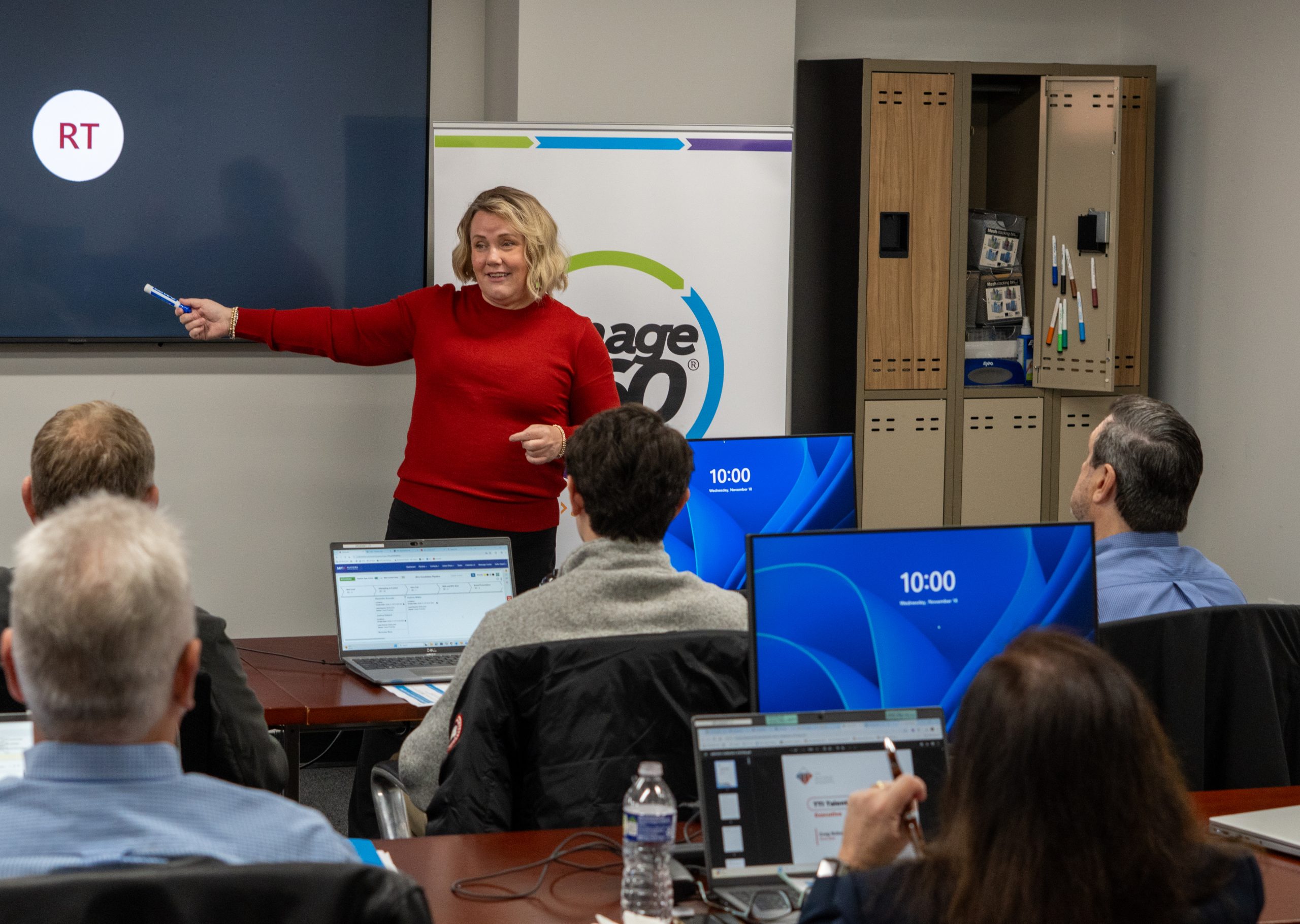
When a mishap with a moving company left Danielle Scott trying to get her belongings back, she knew exactly who to call. She had worked for that company some 15 years earlier, and she dialed Paulie, a man who had not worked with her in more than 12 years. He promised to call right back, and he did, with news that her things would arrive within 24 hours. Before they hung up, each told the other, “you’re the best.”
For Scott, a call like that is the whole point of leadership: “it’s the prize. That’s the winning. That’s where you win.” Loyalty that lasts more than a decade does not appear by accident. In her experience, leaders earn it years in advance, through the time they spend teaching, developing, and making room for the people around them.
Scott, Chief Development Officer at Alliance Franchise Brands, sat down with Franchise Brief to talk about succession planning, a subject that reaches from the corporate support office to the single-unit operator. Her view challenges a familiar instinct among ambitious professionals: the urge to become indispensable. Indispensable, she argues, is a trap.
Over the course of the conversation, several insights emerged for leaders at every level. Holding knowledge too tightly can stall a promising career and leave an emerging brand exposed. Future leaders tend to reveal themselves through initiative and resiliency rather than polish, and mentorship works best when it grows naturally instead of by assignment. For franchisors and franchisees alike, the path forward starts with paying closer attention to the people already on the team.
Learning Franchising the Hard Way
Scott’s career began in hospitality, specifically in restaurant concept development. Someone would arrive with an idea for a restaurant, unsure how to build it or how the service would work, and she would storyboard the concept with them, adjusting everything from service flow to the size of the dining room until it was ready for an architect. One restaurant company she worked for built a concept that worked well and generated notable returns, so leadership handed her a new assignment: “okay, this works, go sell it.” Her honest reply: “I don’t know how to do that.”
Their logic was hard to argue with: she built it, so who better to sell it? With colleges not yet teaching franchising, Scott went looking for people who could teach her. She called anyone with “franchise” in their title and asked whether she could hang out with them for a while. Several of those people, heavy hitters today, were growing up in the industry alongside her and took her under their wing. Over time, those friendships turned into job offers and partnership opportunities.

That path has led to her current role at Alliance Franchise Brands, which she joined in March of this year. The privately owned franchisor has been in business for 50 years, and its eight brands, led by Allegra Print and Media and Image360, span sign graphics, visual communications, and printing and media across more than 400 franchises.
Even now, the habits from those early years shape how Scott learns. When she finds someone with something to teach, she stays close and asks a million questions. “I’m like that little dog with the big dog, you know? I’m like, hey Spike, what’s going on Spike? What are you doing today Spike?” Rarely is she chasing textbook knowledge; she watches how people move and looks for the skill that works like a superpower. Learning, however, is only half of the equation, and over time Scott discovered that the other half matters just as much.
The Trap of Being Indispensable
Early in a career, most people treat their first big job like something to hold with both hands. They want to be the best, the expert, the person no one can replace. Growth teaches a different lesson, because nobody gets anywhere alone, and the people who rise are the ones who bring others along. Scott’s rule is simple: “you want to teach others what you know because if you don’t have someone behind you ready to take your place, you can’t move up. You can’t go anywhere.”
The Promotion That Stalls
Years in the executive seat have shown Scott how this plays out. A leader can look across a team and see people who are remarkably talented yet have no one ready to step into their role. When a new opportunity opens, that leader may hold off on promoting them, simply because the position they already fill is too vital to leave empty. Talent alone, in other words, can keep someone stuck.
Flip the scenario, and the math changes. When a team member has been cross-training someone who is eager to grow, that team member can walk into a leader’s office and vouch for their protégé, which makes them the natural choice for the next role. “If something comes up, they’re primed to be promoted. Then that means you’re primed to be promoted.” The data backs her up. A Sun Microsystems study of its own mentoring program, cited by Security Management magazine, found that employees who served as mentors were promoted six times more often than those who did not mentor, while the people they mentored were promoted five times more often than those without a mentor.
When One Person Holds All the Keys
Emerging brands face a sharper version of the problem. Founders and early teams wear 15 different hats and sometimes reinvent the wheel every day until they find their rhythm, which makes it easy for critical knowledge to pool in one person. Scott’s first recommendation is to research the industry and identify what outside help could replace that knowledge if the person disappeared tomorrow. Franchising is a very large industry, she points out, with third-party vendors and fractional talent available to fill gaps. The lesson is a simple one: no business should ever be held hostage by a single employee.
Who owns that research at an emerging brand? Scott’s answer is blunt: “It’s you.” Founders should explore networking platforms for consultants and coaches, learn which vendors serve the industry, and check their reviews and reputations. “Where are the helpers? When you get into trouble, where’s your bench?”
Those questions belong at the very beginning, before an owner forms an LLC, alongside a second question many people skip: what is the exit strategy? In Scott’s view, two days matter more than any others in a business. “It’s going to be the day you open and the day you exit.” What happens in between depends on the support system around the owner, and franchising offers a deep bench because the franchisor has already made the mistakes and refined a model that works.
Spotting the Next Leader
Avoiding that trap starts with knowing who is ready to grow, and Scott looks for two signals: initiative and resiliency. Executives have usually been pushed down many times before reaching the top, and the simple act of hanging in shows resilience. Attitude, for her, outweighs polish. “Somebody with the right attitude and with the ambition and the fire in their belly to want to do more goes so much further with me than someone that could model the next 3 years of my financials in front of me.”
Preparing that person takes more than piling on extra work. Scott starts with invitations: sit in on a meeting, learn something new, then debrief afterward by asking what they thought and what they took away. Their level of interest determines whether the invitations keep coming, and as curiosity grows, she begins showing them work that affects the company on a larger scale.
That broader view is the goal. People at different levels see only part of the picture, Scott explains, even when they believe they see all of it. “It’s not until you really get into the executive levels to where you really see the whole picture of what the company is trying to accomplish.” Showing staff how their work moves the company forward builds that perspective, and the handoff happens gradually: a report one week, part of a meeting the next, each step a chance to confirm the person is getting it.
Mentorship Can’t Be Assigned
Matching employees with mentors might sound like a tidy fix, but Scott is skeptical of formal programs inside a company. “I don’t think that should be a program. I don’t think it should be matched up.” Mentorship, in her view, should grow between two people who genuinely want to spend time together, and that desire is itself the clearest sign of who wants to grow. Research points in the same direction. In a study of more than 600 protégés published in the Journal of Applied Psychology, researchers Belle Rose Ragins and John Cotton found that people with informal mentors viewed those mentors as more effective and received greater compensation than people paired through formal programs.
Her advice to aspiring leaders is direct. “If you really want it, go find your mentor.” Asking for 10 minutes to talk through a few ideas makes a far stronger impression than any assigned pairing, and it takes the kind of courage that gets noticed. Forced matches can also backfire by pushing mentorship onto someone who has no interest in it, while the real candidates tend to reveal themselves. “You know who a go-getter is when you see them.”
Mentors for Every Season
Scott also cautions leaders against expecting the people they develop to stay forever. Working for one company for 20, 30, or 40 years is what earlier generations did, and aspiring executives benefit from seeing how different companies operate. Someone may take the skills a leader taught them, build on them at another company, and keep building from there. “Mentors aren’t just one and done. They are in every season of life.” The task is to take the best parts of each experience and carry them to the next journey.
Servant Leadership and the Goodwill Dividend

None of this works without the right posture from the top. “I come from a place of servant leadership, whereas I believe I work for my people.” Scott wants to be the kind of leader who can sit down next to someone in the lunchroom and ask what’s going on without shocking anyone. Leaders who are too busy or too corporate to be approachable leave her wondering about the cost: “I wonder what kind of humanity and connection they’re missing.”
Developing people is also how a leader sows goodwill. Coworkers often spend more time together than with their own families, so those hours should count for something. “I believe the more good you put out, the more good comes your way.” It starts with setting ego aside, or as Scott puts it, being “able to get over yourself,” then recognizing what knowledge would help someone else. In practice, that might mean noticing someone who keeps hanging around and simply offering to show them how the work gets done.
Willingness, she has found, is rarer than it should be. After a long career, Scott has concluded that “there really aren’t that many executives that are willing to just like drop the veil and say, do you want to learn something? Let’s do it together.” Time is the usual excuse, but in her view leaders have to make time and make it important to be with their people. Her prescription is modest: set aside some hours once a month to share tips, tricks, and institutional knowledge with the team, then check in to see who wants to learn more and whether people are comfortable and happy.
Where Franchisors Can Start
Most organizations are starting from the same place. In SHRM’s 2025 benchmarking research, just 22% of HR leaders reported that their organization had a formal succession plan, a figure that fell to 16% among smaller organizations.
For a franchisor’s founder or CEO starting from scratch, Scott’s first move is to “start surveying your people.” Are they happy? Are they in the role where they thrive? An organized, creative admin might be a great graphic designer in waiting, or might not, and only real conversation reveals which. Those conversations also surface who wants more and who “likes where they are and doesn’t want anybody to move their cheese.”
Pay close attention to the people who stay late and stay invested for no reason other than that it is part of their DNA. “You know, those people, they don’t own the company, but gosh, if they did, WOW, because they act like they do.” Those are the people to keep an eye on. From there, leaders can map the chain (who is my right hand, who is their right hand) all the way down the line, then plug people into the places they belong.
Finding Your Right Hand as a Franchisee
At the franchisee level, that right-hand relationship becomes even more personal. Scott, who is also involved in franchise brands outside Alliance with other partners, gives every franchisee she puts into business the same advice: find your right hand. If that person sticks with you through the first year or two, start profit sharing, and by the third year consider buying them into some equity. They may dream of owning a business but lack the finances, and a stake changes the relationship. “Now they own something. Now they have skin in the game.”
It also changes the owner’s future. “if you only want to own one thing and you want to work in it for the rest of your life, I don’t know that you necessarily bought yourself a business as much as you did a job.” Eventually, owners want to work on the business rather than in it, and a trusted right hand can run the location while the owner looks for the next spot or the next adventure. Operating partnerships, managing partners, and general managers with ownership stakes all help keep a business stable with people who genuinely want to build it. Many owners have yet to plan for that second day. A 2025 U.S. Bank survey of 1,000 small business owners found that only 54% had a formal succession plan, even though owners with a plan were more likely to report significant growth over the past year (64% versus 50%).
The First Step Is Personal
For leaders who have never thought about succession planning or mentoring, Scott’s starting point is inward. Take a personal inventory of who you are, what you want, what you are willing to do, and what your mission statement is for your life. From there, the paths multiply: mentoring within your own office, volunteering with organizations like SCORE to help people with their business plans, and networking with the people you hope to emulate. Find out where they hang out, which clubs and programs they belong to, and what subscriptions they get. “Start being that person. And then eventually the people will find you and they’ll take you and say, let’s go.”
Scott’s own definition of success has little to do with titles or org charts. “Having a ton of people out there that I’ve been around, that I’ve worked with, appreciative of the time that they spent with me. That would be my biggest success.” In the end, succession planning is not really about who replaces a leader. It is about how many people that leader prepared along the way.
