


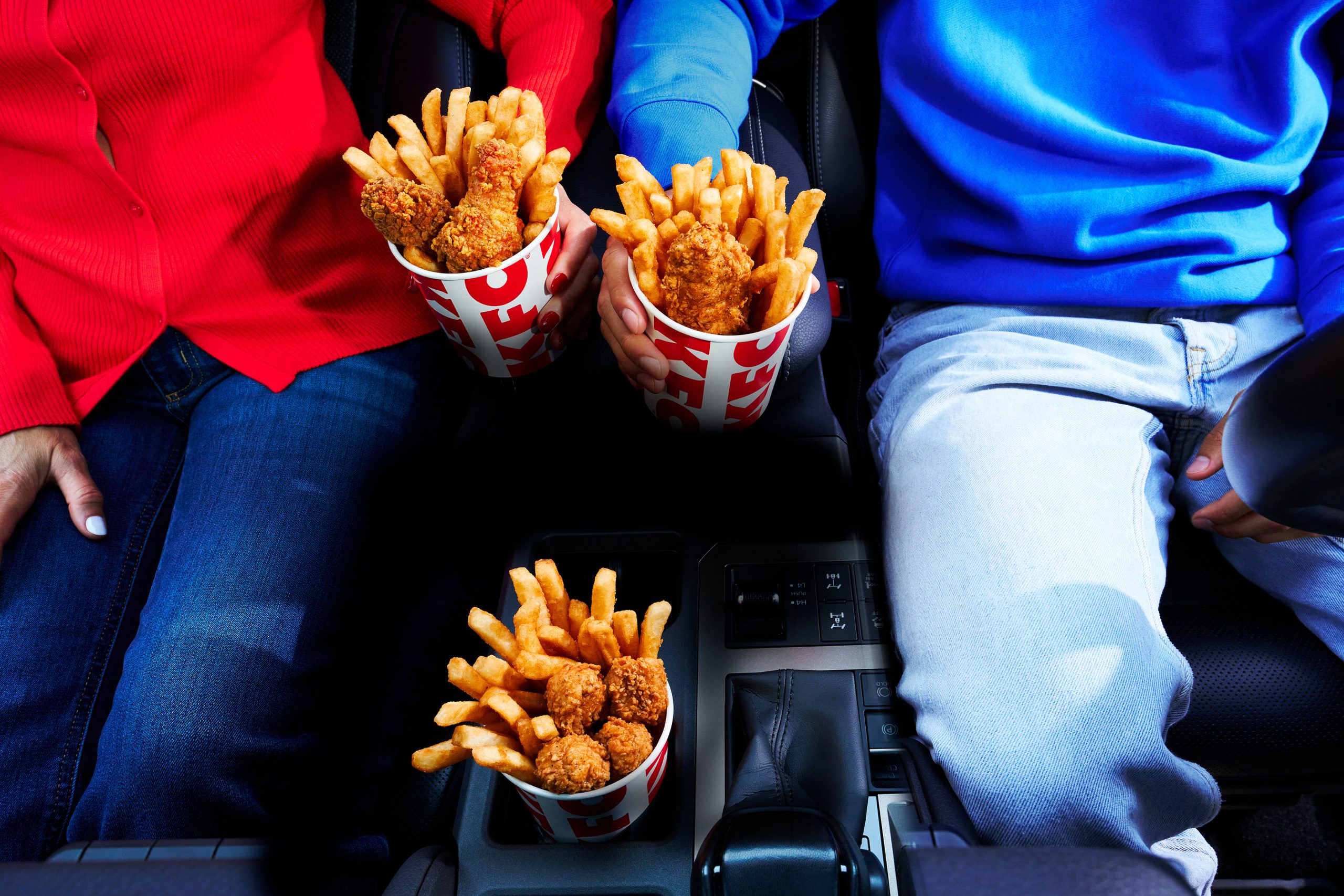
For decades, KFC’s iconic bucket has been associated with bringing people together around a meal. But what happens when those people aren’t sitting around a dining room table? What if they’re sitting in a car, heading to a soccer game, running errands, or setting off on a family road trip?
That’s the consumer experience KFC appears to be considering with its introduction of Go Buckets, a new snack-sized version of its familiar packaging designed to fit inside a standard vehicle cupholder.
Announced earlier this October, the new Go Buckets start at $3.49 and pair chicken with fries or wedges. Customers can choose four nuggets, two wings, or one tender, with six available combinations offering 16 to 18 grams of protein, according to the company.
The menu addition may seem simple, but it illustrates a broader consideration for restaurant operators: the customer’s experience doesn’t necessarily end when the food passes through the drive-thru window or off the online order pick-up shelf.
Rethinking the Bucket for the Entire Car
Consider a typical drive-thru visit. A customer pulls up to the window and collects an order for several people. The driver may have a spouse or friend in the passenger seat, with children or additional passengers in the back.
A traditional family-sized bucket makes sense when everyone arrives at a destination and gathers around a table. Inside a vehicle, however, sharing from one container presents a different set of practical challenges. Individual Go Buckets offer another approach. Rather than passing around one large container, passengers can have their own portions of chicken and fries in packaging designed to fit a cupholder.
It’s a small design decision that changes how the product can be enjoyed.
The format may also make KFC more appealing for occasions when customers aren’t looking for a complete family meal. A snack before an afternoon activity, a quick bite between appointments, or food for passengers on a longer journey can become opportunities to visit the brand.
A Familiar Product Designed Around Changing Habits
KFC’s launch reflects broader changes in how Americans purchase and consume restaurant food.
According to Datassential research cited in the company’s announcement, 87% of consumers reported snacking outside traditional mealtimes. Meanwhile, the National Restaurant Association reports that nearly three out of four restaurant orders are now taken to go.
Together, those trends help explain why restaurant brands continue developing products that are portable, flexible, and suited to smaller eating occasions.
“People want food to fit into their day, not the other way around,” said Melissa Cash, Chief Marketing Officer of KFC U.S.
That observation captures the thinking behind Go Buckets. Instead of asking customers to adapt their routines to the traditional KFC meal, the company is adapting a recognizable part of its brand to fit more occasions. For KFC, the bucket also carries decades of brand history.
Its origins date to 1957, when Colonel Harland Sanders and Pete Harman, KFC’s first franchise owner, began selling family meals containing 14 pieces of chicken, five rolls, and a pint of gravy in paper buckets. Nearly 70 years later, the bucket remains part of the brand’s identity. The Go Bucket retains that familiar visual connection while serving a different purpose.
Why Franchise Operators Should Look Beyond the Transaction
For franchisors and franchise operators, the Go Bucket offers an example of how consumer experience can influence product development. Much of the restaurant business focuses on what happens before and during a purchase. Operators evaluate menu offerings, order accuracy, service times, employee interactions, and drive-thru efficiency.
Those are important measures. But the customer’s interaction with the product continues after the transaction. Where will the food be eaten? Who is sharing it? How will it be carried, distributed, or stored? Does the packaging make that experience easier or more difficult? These questions become increasingly relevant as off-premises dining accounts for a substantial share of restaurant orders.
KFC’s cupholder-sized packaging addresses one specific part of that journey. It also demonstrates how a familiar product can evolve without abandoning the brand recognition built around it.
For franchisees, the format creates a potential opportunity to serve different purchasing occasions, including individual snacks and smaller group orders. Whether it translates into incremental transactions, higher visit frequency, or improved guest satisfaction will depend on customer response and restaurant execution. The Go Bucket’s introduction alone does not establish those outcomes, but it offers operators another way to think about the relationship between packaging and customer behavior.
For franchise brands across restaurant categories, the underlying principle applies well beyond fried chicken.
A thoughtful packaging change can make takeout easier to transport. A family meal designed for simpler distribution can reduce inconvenience at home. An individual portion can make sharing a group order more manageable.
None of these changes necessarily requires reinventing the core product.
KFC’s Go Buckets are a reminder that the consumer experience extends beyond the restaurant walls. Sometimes, understanding that experience means following the customer all the way to the parking lot, the passenger seat, and the journey that comes next.
