


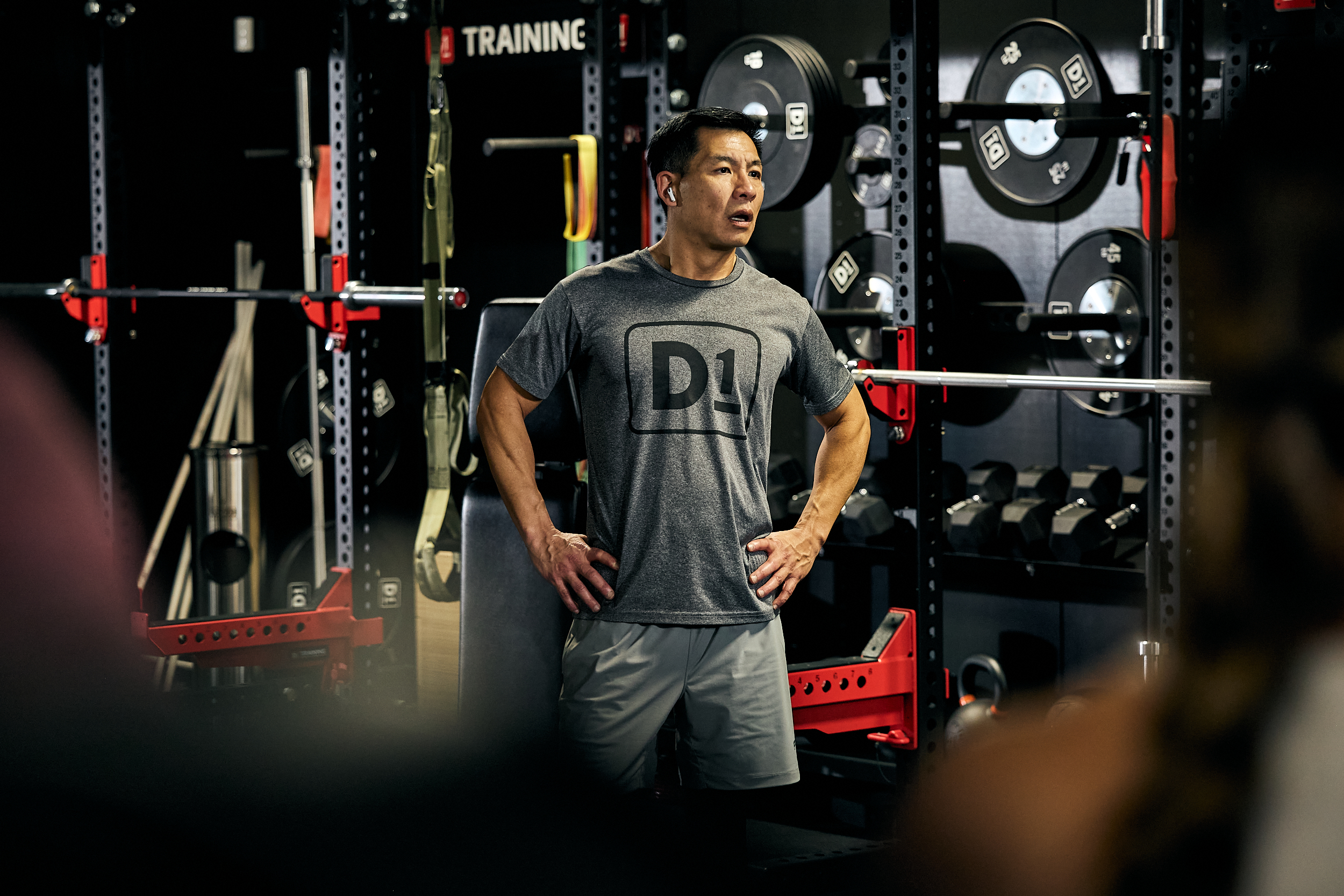
For the past two decades, the fitness industry has competed on experience. As boutique concepts reshaped the category, music, instructor personality, community, amenities and atmosphere became the differentiators that attracted members and made brands stand out.
Those elements still matter, and at D1 Training, we’ve designed the environment to motivate people and make them want to return, but it has always supported the training rather than defined it.
The Shift Toward Measurable Results
Fitness providers have historically adapted to the level of fitness knowledge consumers have, and that knowledge has evolved significantly. In the past, people often measured their progress based on the scale or what they saw in the mirror. Today, body composition analyzers, wearable technology and other tools make it possible to track smaller progressions across nearly every facet of conditioning.
Consumers are now looking more closely at what they gain from the time and money they invest. A young athlete may want to become faster, stronger or better prepared for competition. An adult may be focused on endurance, mobility or maintaining strength. Whatever the goal, members increasingly expect their training to follow a clear progression and have more tools available to understand whether that progression is actually happening.
In many ways, this is a return to what fitness was always meant to deliver. Results were the point long before experience became the differentiator, and the category is swinging back toward progress people can see, feel and measure.
For fitness providers, the opportunity is to establish a clearer connection between the progress a consumer sees and the product or service they are providing. When members can see small improvements over time, whether through performance, body composition or other measurable indicators, brands need to help them understand how their training is contributing to those results. Fitness providers that can demonstrate that connection will be better positioned than those that cannot.
The Coach’s Role in Delivering Results
Each session is part of a broader program at D1 Training. Coaches help members understand the purpose behind the work and adjust exercises based on ability, experience and individual needs. That places significant responsibility on the coach. A strong personality and high-energy class are not enough. Coaches need to understand the programming, recognize where each member is starting, and know how to challenge that person safely.

This is especially important in a group setting. Members may follow the same general training plan while requiring different levels of intensity, instruction or modification. The coach must maintain the energy and accountability of the group without losing sight of the individual.
Building a Consistent Franchise Model
For franchise systems, the challenge is making that approach repeatable and consistent. A fitness brand cannot depend on one exceptional coach or operator. Franchisees need an established model, while coaches need the education, standards and support required to deliver it consistently.
That consistency, when done well, is also good business. Members who see measurable results tend to stay longer because they can see that the training is working, and retention is what turns a fitness concept into a durable, recurring-revenue model.
Our D1 Training franchisees enter the system with a defined training philosophy, structured programming and an operating model developed over more than two decades. Coaches work within that framework while retaining the flexibility to modify movements and intensity when needed.
Serving Every Athlete, Powered by Technology
Youth training demonstrates the value of that structure. Parents are often looking for more than an activity to fill time. They want programming that helps their children improve performance, develop confidence and build habits that extend beyond the field or court.
Serving athletes at different stages of development also gives D1 franchisees an opportunity to build lasting relationships with families. A child may begin with foundational training and continue as athletic goals become more advanced, while the same facility can serve adults seeking a structured, coach-led approach to fitness. For an operator, having the ability to serve youth athletes as well as adults at the same facility diversifies the revenue base and extends the value of each membership beyond a single season or training cycle.
Technology will continue to influence how clearly fitness providers can demonstrate that progress. One area that will be particularly interesting to watch is the development of artificial intelligence and camera-recognition technology. There is already technology capable of identifying a person, matching them to a member profile, and tracking the weights they are lifting along with the number of repetitions they complete without requiring the consumer or coach to manually record the information.
As those tools become more advanced, fitness providers will have even more opportunities to measure progress over time. It will be interesting to see how the industry adopts that technology and how consumers respond to having an increasingly detailed view of their performance.
Preserving the Model as it Scales
As D1 continues to grow, our priority will be preserving the standards that have shaped the model from the beginning. Continued investment in coach development, programming, and franchisee support will provide members with the same purposeful training experience in every market. As the industry evolves and consumers become more informed about their own progress, fitness brands that can connect a strong experience to meaningful, measurable results will be best positioned to earn long-term trust with their members.
Disclaimer: This Opinion Article reflects the personal views of the author and is intended to share perspective and experience. It does not necessarily reflect the views, positions, or editorial stance of FranchiseBrief.
