


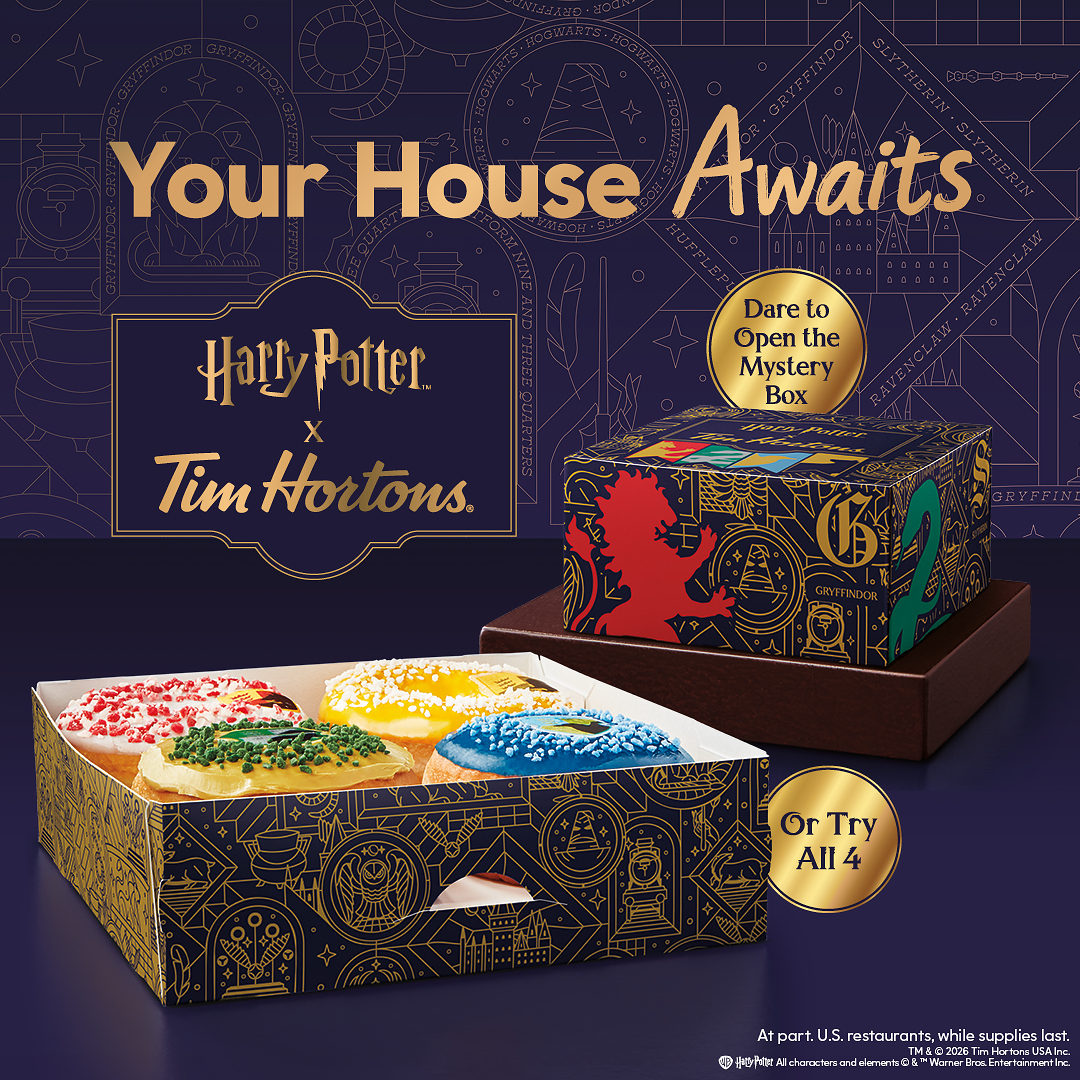
A donut box is usually designed to do one simple job: get the donuts home intact. But when that box becomes a mystery to open, a clue to decode or a keepsake worth photographing, packaging starts doing something much more interesting. It stops acting like a container and starts becoming part of the product itself.
That idea is on full display in Tim Hortons’ new Harry Potter collaboration, which launched at participating U.S. restaurants on Aug. 12th. The limited-time program surrounds Harry Potter-inspired donuts, Timbits and beverages with packaging designed to extend the wizarding world beyond the food. Single-donut Mystery Boxes, multi-pack boxes, Timbits packaging and temperature-activated cold cups all contribute to the experience.
For franchise and restaurant brands, the campaign offers a timely example of how packaging can shape the way customers encounter a product before they ever take the first bite.
Packaging Can Build the World Around the Product
Tim Hortons could have approached the collaboration by placing four differently decorated donuts in familiar packaging and relying on the strength of the Harry Potter name. Instead, the company built the theme into the physical experience.
Guests can choose donuts representing Gryffindor, Slytherin, Ravenclaw and Hufflepuff, or order a Mystery Box and discover which house awaits inside. Golden Snitch Caramel Timbits can come in a Golden Snitch-inspired holder, while select beverages arrive in limited-edition cups that reveal a trail of Patronuses when filled with a cold drink.
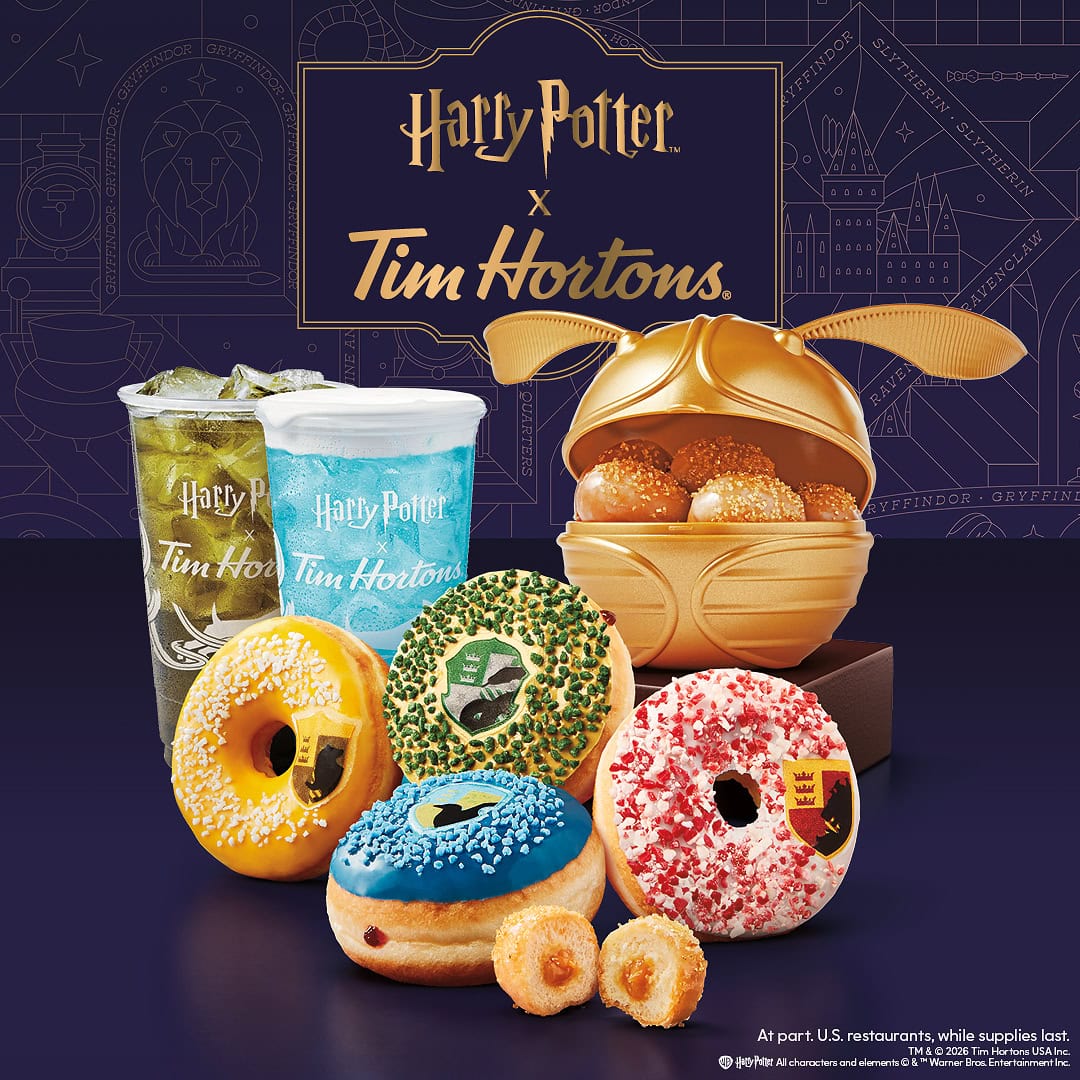
That changes the role of the package. Opening the box becomes a reveal. Holding the cup becomes an interaction. Choosing a house becomes a form of participation.
“Harry Potter has been a beloved part of so many of our guests’ lives for decades and we couldn’t be more excited for guests to discover the wizarding world at Tim Hortons restaurants,” Katerina Glyptis, President of Tim Hortons U.S., said in announcing the launch.
The keyword may be “discover.”
Discovery requires a sequence. There is anticipation, interaction, and then a reveal. Strong packaging can help orchestrate that sequence. Research suggests the effect is not merely decorative. A Journal of Consumer Psychology study found that watching a box being opened can create enjoyment and raise evaluations of what is inside, even when the product itself is already familiar. When the contents are unknown, opening the box can also create surprise.
That makes the Harry Potter Mystery Box more than a themed carton. It gives an everyday restaurant purchase a small moment of theater.
The Package Changes the Experience Before the First Bite
Food brands naturally focus on flavor, and they should. Research repeatedly indicates that the intrinsic qualities of food ultimately matter heavily once people begin eating it. But what happens before consumption can shape expectations going into that moment.
Packaging is one of the first signals a guest receives. Research on multisensory packaging has found that color, shape, and other design cues can attract attention, communicate expectations about flavor, and, in some circumstances, influence how consumers perceive the product inside.
A separate study examining food consumption across several stages found that vision played the strongest sensory role during the purchasing stage, while other senses became more important later in the experience.
That progression matters in restaurants. A customer first sees the campaign online, on a menu board or across the counter. Then comes the package: the opening, then the food. Each stage can either reinforce the same story or break it.
With Tim Hortons’ Harry Potter collaboration, the dark blue and gold visual language, Hogwarts House references, illustrated boxes and Golden Snitch-shaped holder create continuity between the licensed property and the food itself. The packaging tells guests where they are supposed to be, metaphorically speaking, before taste enters the equation.
Great Packaging Gives Customers Something to Do
One of the most compelling aspects of experiential packaging is that it asks something of the customer. Not much, necessarily. Maybe the customer opens a flap. Looks for an Easter egg. Waits for a cup to change color. Takes a photo. Saves the box instead of throwing it away. But participation changes the relationship.
Tim Hortons’ temperature-activated cup is a particularly clear example. A standard cold cup disappears into the background of the transaction. This one changes when the beverage goes in, revealing a trail of Patronuses. The package responds to the product. That makes beverage preparation itself part of the reveal.
The Canadian version of the promotion takes the storytelling further, with Tim Hortons noting that its themed packaging contains Easter eggs for Harry Potter fans. The detail illustrates another useful packaging principle: people who know the fictional world can engage with the design at a deeper level, while casual customers can still appreciate the visuals.
This is where packaging starts behaving more like media. It carries imagery, story cues, and hidden details. It creates a reason to look twice. And because the object is physically in the customer’s hand, that storytelling can feel more personal than an ad viewed and forgotten on a screen.
From Disposable Container to Collectible Object
Limited-edition packaging also introduces a different kind of value: scarcity. The Harry Potter x Tim Hortons packaging is available while supplies last at participating restaurants. Formats include single-donut Mystery Boxes, multi-pack donut boxes, 10-pack and 20-pack Timbits boxes, and cold beverage cups.
Scarcity can change the customer’s relationship with an otherwise disposable object. A box that ordinarily goes into the recycling bin may suddenly feel worth keeping.
That impulse is closely connected to the broader appeal of unboxing culture. Research published in the Journal of Business Research describes unboxing as an emotional and hedonic consumption practice, rather than simply the functional act of opening a package. The process can give the package, the reveal, and the product a shared meaning. For restaurant brands, that creates an interesting opportunity. Menus disappear quickly. Packaging travels.
It leaves the restaurant. Then sits on desks and kitchen counters. It appears in cars, offices, social feeds and group chats. A package designed with enough visual identity can extend a campaign into places the restaurant itself cannot reach. That is particularly relevant for franchises, where consistency across locations remains essential. The packaging can give hundreds or thousands of individual transactions a recognizable visual thread.
Packaging Is Part of Brand Memory
Packaging also has a life beyond the immediate sale. A 2024 study examining the relationship between packaging and brand image found that consumers assign packaging practical, symbolic, and social value, with its influence extending beyond the point of purchase into later stages of consumption.
That helps explain why distinctive restaurant packaging can become so closely connected with memory. People may remember the cup from a trip, the box from a celebration or the limited-edition wrapper from a collaboration they sought out with friends. The package becomes evidence that the moment happened. Licensed campaigns can amplify that effect because the customer may already have an emotional connection to the entertainment property before walking into the restaurant.
Tim Hortons is combining that existing Harry Potter affinity with familiar menu formats, including donuts, Timbits and beverages. The result is not an entirely unfamiliar product experience. Instead, familiar restaurant rituals are being reframed through a new visual and tactile world.
“We’re bringing the magic of Harry Potter to life in true Tims fashion – from donuts inspired by each Hogwarts House, to a Golden Snitch Timbit and Timbit holder, spellbinding Patronus and Forbidden Forest inspired drinks, and limited-edition merch that guests will want to collect and share.”
That final phrase, “collect and share,” captures much of what contemporary experiential packaging can accomplish. A strong package can give customers a reason to keep the object and a reason to show it to someone else.
The Opportunity for Franchise Brands
Not every restaurant campaign needs a major entertainment license, an elaborate structural package, or a thermochromic cup. The broader lesson is simpler. Packaging can answer a question that franchise brands increasingly face: How can a familiar product feel new without losing what customers already recognize?
Sometimes the answer is not changing the food dramatically. It is changing the moment around the food. A seasonal sleeve can create anticipation. A numbered box can encourage collecting. A hidden message can reward attention. A package that changes appearance can introduce surprise. A recognizable visual system can make a limited-time offer feel like a complete world rather than a new menu item placed inside the usual container.
The most effective concepts still have to function well. Food must travel properly, beverages must remain easy to hold, packaging must work operationally for restaurant teams, and the experience cannot become so complicated that it slows service. But when those fundamentals are in place, packaging becomes valuable creative territory.
Tim Hortons’ Harry Potter campaign makes that idea tangible. The donut still has to taste good. The drink still has to refresh. The box still has to carry the food. But the box can also be a mystery. The cup can perform a reveal. For a few minutes, an ordinary restaurant order can feel like an invitation into another world.
