


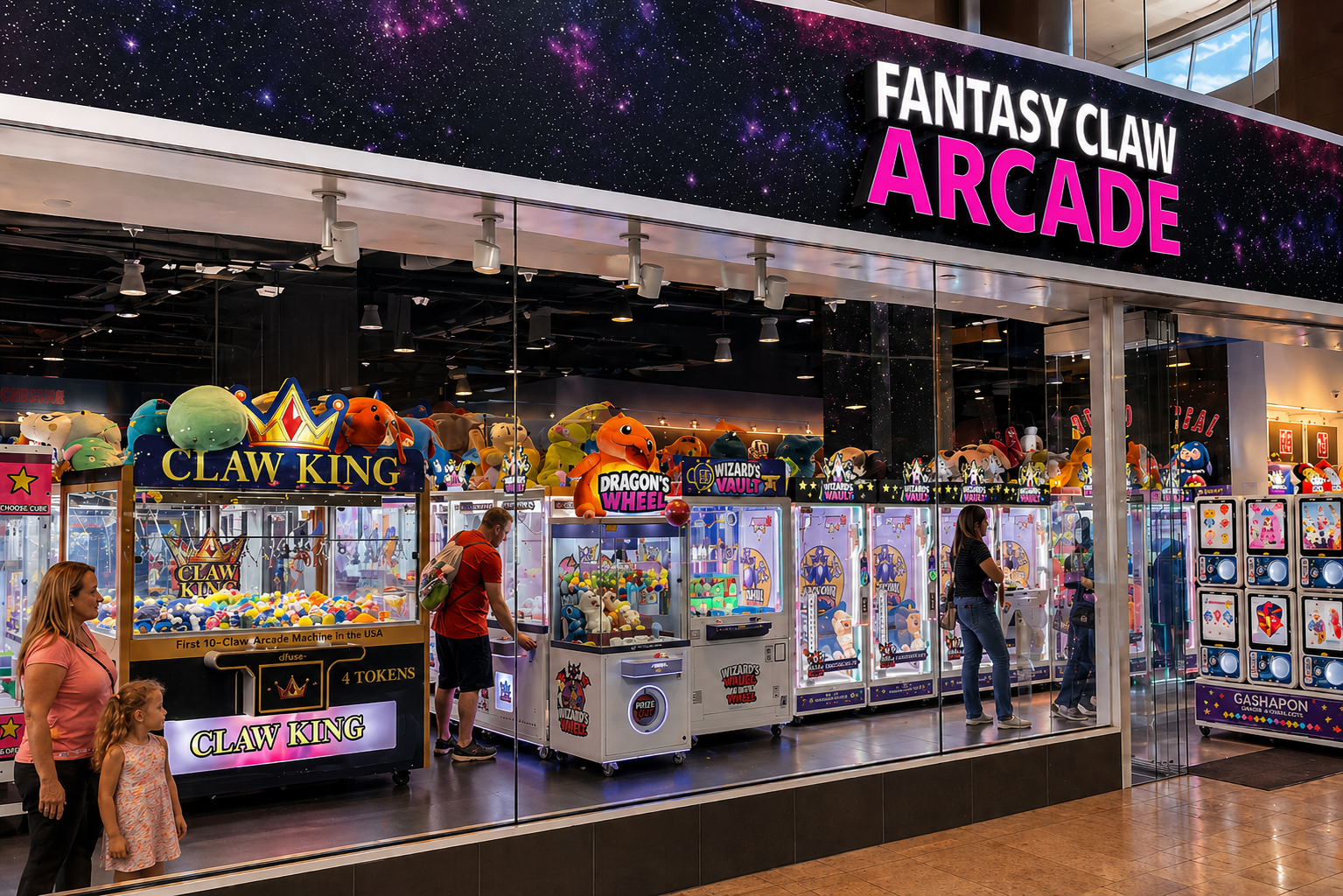
Walk past a claw arcade on your way to a department store, and something happens. The lights catch your eye. The sounds pull at some corner of your childhood. Before you know it, you have tokens in your hand and thirty minutes have quietly disappeared. That magnetic quality is not an accident, and for Fantasy Claw Arcade, it is the entire business model.
Elliot Cole, who leads franchise development for Fantasy Claw Arcade, describes the brand’s opportunity with the kind of clarity that comes from watching it work in person. The concept was born from a simple observation: claw arcades are everywhere across Asia, packed on every floor of multi-story buildings, with lines out the door. In the United States, that category is still in its early stages. Search volume data for “claw arcade” on Google Trends has pointed consistently upward over recent years, while comparable entertainment categories like axe throwing and escape rooms trend flat. Managing partner Bradley Howard, a serial entrepreneur, saw that gap and moved to fill it.
Howard assembled a founding team with complementary experience across every discipline the business would require. Tamir Eliyahoo brings deep expertise in mall and retail operations across the Western US, including site selection, lease negotiation, and buildout execution. Nadav Elimelech has been instrumental in launching locations across multiple markets, playing a leading role in retail execution, operations, and local market growth. Jason Smylie, who has a background in franchising through his work with Capriotti’s Sandwich Company, brings the systems and scaling experience that turns a good concept into a replicable one. Together, the group covers brand building, supply chain, retail real estate, and franchise development.
As Cole put it, “It’s not just a group of ragtag guys who decided one day it would be fun to do a claw arcade. They came to the table with their relative perspectives and experiences to build something great.”
Cole, who had worked alongside Howard at a prior e-commerce company, joined when Fantasy Claw was ready to grow. “He and I had worked so well together in a past life,” Cole said. “Scaling something up and building something great. I was looking for the chance to do it again.”
More Than a Row of Machines
What separates Fantasy Claw Arcade from the growing number of claw concepts in the United States starts with a deliberate choice to look and feel different. Much of the claw arcade market has converged around a similar aesthetic, the kawaii style common in Japanese pop culture, with pastel colors, cartoon animals, and cuteness. Fantasy Claw went a different direction entirely.
The brand’s theme is a magical wizard world. It sounds whimsical, but there is a logic to it. Think of any medieval film where a transaction happens: someone always drops a pouch of gold coins into an outstretched hand. Fantasy Claw borrowed that image. Tokens come in branded pouches, placed directly into a guest’s hands, tactile and satisfying in a way that a tap on a kiosk screen is not. “We plop them in your hands,” Cole explained, “and it’s tactile and makes you feel like you just got paid a pouch of gold.”
That theme permeates everything inside the store. Mystical murals line the walls and every machine carries Fantasy Claw’s custom branding and its own unique game names. There are no self-service token kiosks; guests interact with staff, who walk them through promotional packages that reward higher spend with bonus tokens and even wizard hats and wands. If you are getting one of the top packages, Cole noted with a grin, you should look the part.
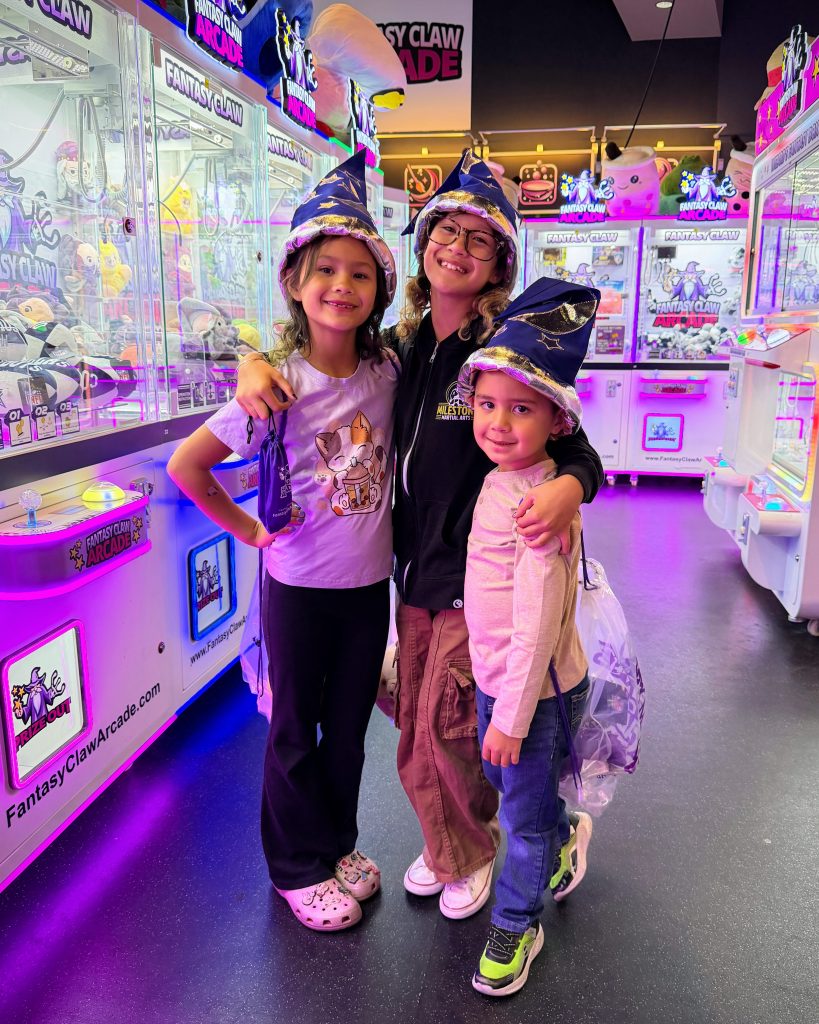
Details accumulate into something larger. Massage chairs sit in the corner of the arcade, which sounds like an odd addition until you picture a parent walking in with two kids and a full day behind them. The children race off with tokens and wizard hats. The parent sits down, plugs in a phone, and breathes. “When the experience is over, the parents feel relaxed, they feel refreshed, the kids had a great time, everybody wins,” Cole said.
What the Las Vegas Flagship Proved
Fantasy Claw’s first location, at the Fashion Show Mall on the Las Vegas Strip, was not a soft launch. It sits at 4,500 square feet, houses 130 machines, and landed in a non-prime section of the mall that a previous shoe retailer had vacated because foot traffic alone could not justify the space. Most operators passed on it. Fantasy Claw took it, and the results were strong, with the location reporting $1.1 million in revenue in 2025, as reflected in the brand’s Item 19.
The Vegas store also demonstrated something important about how a claw arcade generates traffic differently from traditional retail. A shoe store requires a customer who already wants shoes. A claw arcade creates impulse visitors. Lights and sounds pull people in mid-stride. Prize redemption machines sit in every cabinet. A prize portal lets guests trade up smaller wins for bigger ones. “When you’re walking past the claw arcade,” Cole said, “you can’t help but look.” Beyond impulse traffic, the location became a destination in its own right, with guests arriving at the mall specifically to play.
Worth noting: Fantasy Claw does not plan to replicate 4,500-square-foot stores across its franchise network. That flagship was an opportunity-driven decision, and 130 machines represents a significant upfront investment. The target footprint for new franchise locations is 1,500 to 2,000 square feet, which fits roughly 65 to 75 machines and brings the investment into a range that makes more financial sense for partners entering the system.
A Flexible Business Inside Four Walls
Cole has a way of describing the claw arcade business that reframes the whole category. Think about walking through an airport: there are vending machines for Legos, makeup, cupcakes, electronics. You can put nearly anything inside a vending machine, and a claw machine, he argues, is no different.
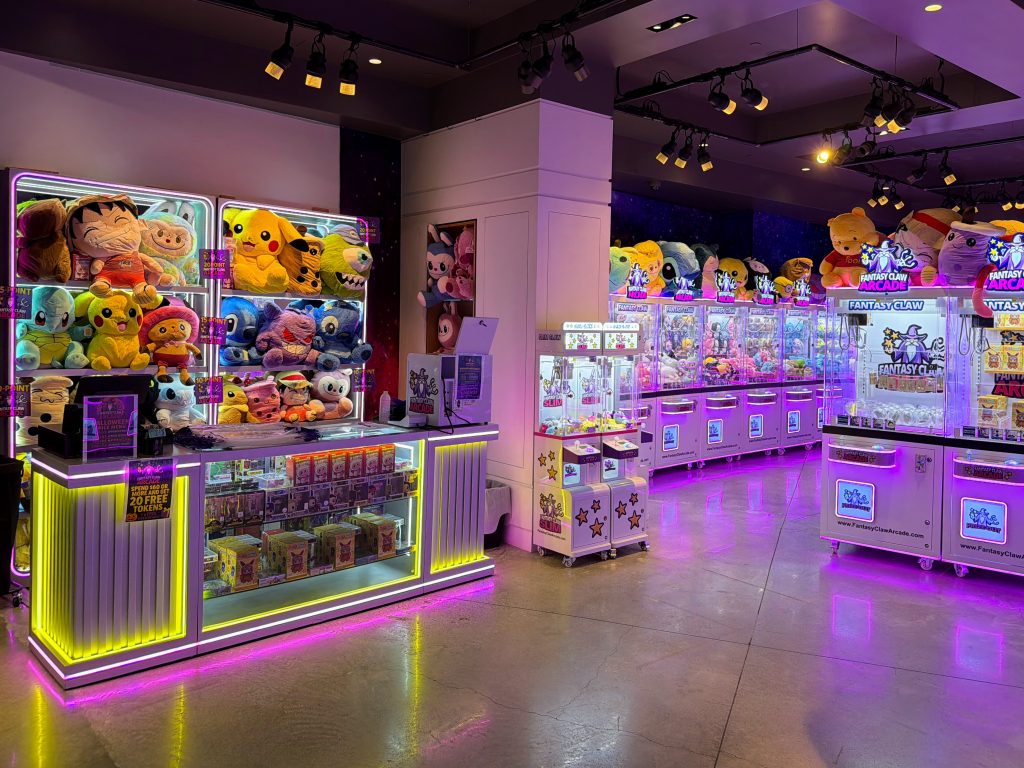
That flexibility is a real operational advantage. Fantasy Claw locations have stocked makeup, drawing in customers looking to gamify a beauty purchase. At a Las Vegas location with heavy tourist traffic, pool floaties and Vegas-themed souvenirs found their way into the machines, because that is what tourists heading to a pool party actually want. When a squishy craze swept across the United States recently, the team loaded machines with butter, dumpling, and ice cube squishies, and demand was high enough that guests started asking to buy them directly at the counter. Fantasy Claw obliged, adding a merchandise sales channel that nobody had originally planned.
“People always say, what’s your target demographic?” Cole said. Paraphrasing his answer Cole answer pointed to anyone. “You can gear prizes towards adults, teenagers or kids just by changing what you put in the machine.”
Keeping that inventory fresh is one of the most important levers inside the business. Repeat visits depend on a rotating assortment, and you can appeal to virtually anyone just by changing what you put in the machine. Fantasy Claw actively monitors trends and manages supply relationships to stay current, which is one of the advantages the franchise system provides that an independent operator would need to build entirely from scratch.
The Shift Happening in Shopping Centers
There is a broader structural shift underway in American retail real estate that makes this moment particularly interesting for experiential franchise concepts. For decades, the tenant mix in US shopping malls was roughly 90 percent retail. That balance has been shifting, gradually at first, and more deliberately in recent years, as landlords began prioritizing concepts that give people a reason to show up beyond just buying something. In other countries, experiential concepts, entertainment, health and wellness, food and beverage, make up a meaningfully higher share of the mix. American landlords are catching up.
The data from ICSC Las Vegas reinforces what Fantasy Claw has been observing from the ground. JLL’s 2026 Entertainment Report identified roughly 16.5 million square feet of location-based entertainment concepts planned across the US and Canada, driven by consumers seeking closer-to-home leisure options. Entertainment and healthcare have become, according to JLL, the two biggest users of traditional retail space over the past decade, filling former anchor and big-box vacancies that traditional retailers are no longer absorbing. The result is a leasing environment that increasingly favors experiential concepts, particularly those that are fresh, traffic-driving, and not replicable by e-commerce.
Fantasy Claw has been experiencing that demand firsthand. Developers and property owners have reached out directly, asking whether a claw arcade can anchor a new commercial center or fill a specific space in a mixed-use project. The recent opening in Columbus, Ohio, a regional destination mall with strong foot traffic and no comparable concept already in place, is a live example of the white space still available in markets across the country. For franchisees considering the category, that window is real but not permanent. As the experiential tenant mix fills in across major markets, the opportunity to secure a strong first-mover position will narrow.
Supporting Franchisees from Lease to Grand Opening
Fantasy Claw’s support structure is built to carry franchisees through the parts of the process that most people have never done before. Site selection is first: the team helps identify locations, reviews them against established criteria, and assists with lease negotiation. Once a space is secured, they provide machine layout plans tailored to the specific footprint and expected customer profile of that market.
One of the less obvious elements of opening a claw arcade is electrical infrastructure. A 1,500 to 2,000 square foot location running 65 to 75 machines requires a panel upgrade; standard commercial power is rarely sufficient. Fantasy Claw has built that knowledge into its buildout playbook, so franchisees are not discovering the requirement mid-construction. For second-generation spaces in good condition, the buildout can be relatively efficient: wall decals, updated lighting, electrical work, and branding elements bring the space to life without a full gut renovation. For gray shell spaces, the team provides complete specifications from materials to color codes.
No claw arcade exists without the right machines, and Fantasy Claw handles that order on the franchisee’s behalf, along with the opening prize assortment. That detail matters more than it might seem, because the initial in-machine inventory shapes the first impression guests have of the store. Getting that right requires judgment about what will perform in that specific market.
Training in Las Vegas, Then On-Site at Opening
Franchisees and their teams travel to Las Vegas for a week of in-person training at the Fashion Show Mall flagship. Up to four people can attend: the franchisee, a store manager, and additional staff. The curriculum covers the company’s history and values, machine operations and stocking, error code troubleshooting, guest interaction, promotional packages, and floor management. It is the kind of training that is difficult to replicate through manuals alone, because so much of running the experience well comes from watching it work.
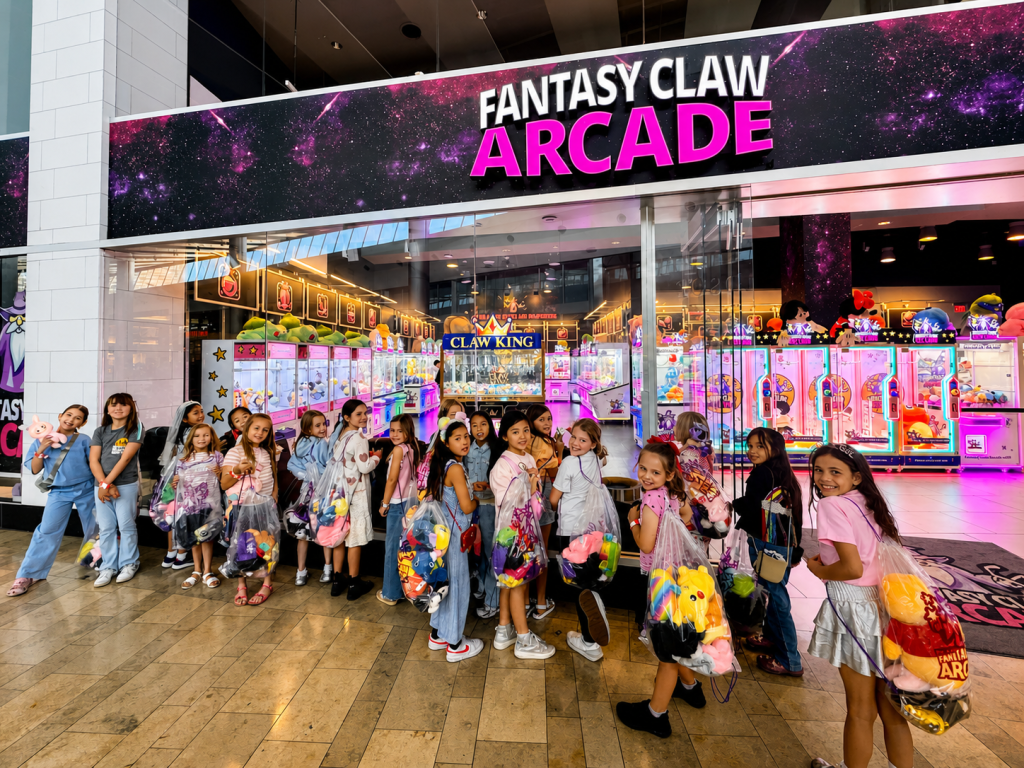
When it is time to open, the Fantasy Claw team flies to the franchisee’s market. They support the franchisee and store manager in training their staff, assist with grand opening execution, and stay through launch to make sure the early days run smoothly. “From the moment they sign the franchise agreement through the moment they open their doors, we’re there with them,” Cole said. The support does not stop there; ongoing reporting and regular check-ins give franchisees a way to share performance data, surface challenges, and get direct guidance from the corporate team.
The Economics That Make This Work
One of Fantasy Claw’s more quietly significant advantages sits in its supply chain. The brand has a factory-direct relationship with its claw machine manufacturer. According to Cole, a standard claw machine purchased through a US-based distributor typically runs around $2,800. Through Fantasy Claw’s relationship, that same machine can land at a franchisee’s door for approximately $1,000 less. Across a 65-machine opening order, the arithmetic is meaningful: it lowers the initial investment, making entry into the business more accessible for prospective partners.
The day-to-day staffing model is lean. A typical shift runs with one person opening and one closing, with a brief overlap in the early afternoon when mall traffic peaks. On busy weekends, two staff may be on at once. A single store manager can backstop multiple locations, which is how Fantasy Claw currently operates its three Las Vegas stores. For franchisees building out a multi-unit footprint, that structure creates economies of scale that improve as the portfolio grows, both in labor efficiency and in prize ordering, where larger pooled orders translate to volume discounts and faster shipping.
Guest experience is built into the operational model as well. Staff do not just stand at the counter; they walk the floor and actively watch to make sure guests are having a good time, stepping in when needed with extra tokens, a restocked machine, or a repositioned prize. “We want people to win,” Cole said. It is a guest experience philosophy, but it is also good business: guests who have fun come back.
Growing Toward 100 Units
Fantasy Claw currently operates five locations, three in Las Vegas, one in Hawaii, and a fifth in Columbus, Ohio, with a sixth slated for Hawaii by October. Looking further out, the goal is to reach 100 units by the end of 2029.
Getting there through corporate stores alone would be slow. Fantasy Claw is actively seeking franchise partners, with a particular interest in multi-unit operators. The Ohio opening, for instance, is a multi-unit deal, with the franchisee committed to opening additional locations within the state. That model fits the business well: multi-unit operators can share infrastructure, pool orders, and leverage a single manager across several locations.
Cole’s own relationship with franchising, having come to it without prior experience in the industry, shapes how he talks about it. He describes the model as ideal for people who want to be in business for themselves but value having a proven system, a playbook, and a support structure behind them. “If you want to be in business for yourself, but you don’t necessarily have that pedal-to-the-metal entrepreneurial drive,” he said, “franchising is beautiful.”
Fantasy Claw is a young brand making its case during a moment when the category is gaining momentum, landlords are opening doors, and the experience economy continues to outperform its transactional counterpart. The wizard is at the front of the store, the prizes are stocked, and the pouches of gold coins are ready to be handed out. The machines are waiting.
