


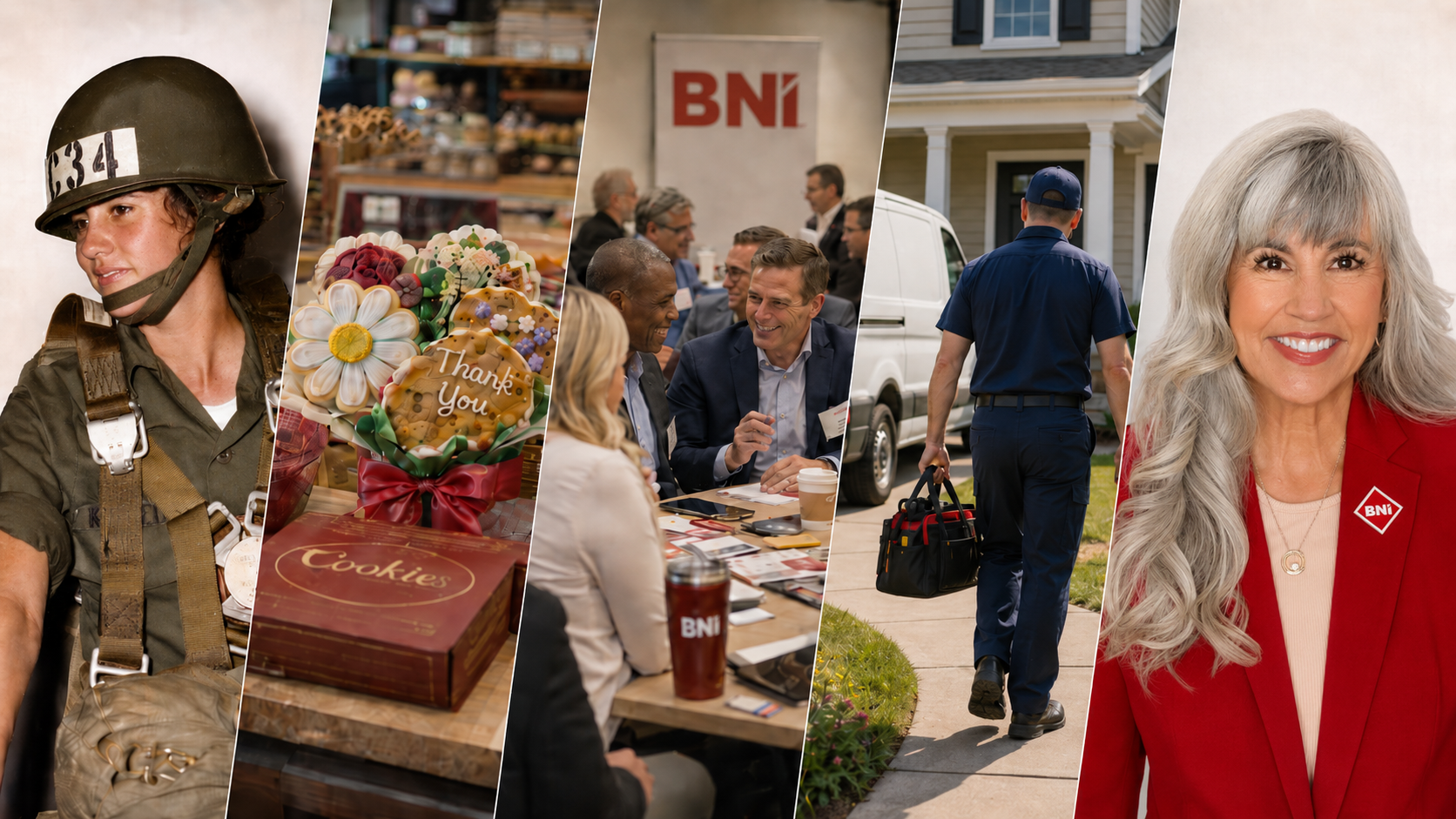
There is a concept in Olivia Fox Cabane’s book The Charisma Myth that stopped me cold when I first read it. Cabane describes what she calls “focus charisma,” the rare ability to make another person feel, in that precise moment, as though they are the only person in the room. It sounds straightforward enough on the page. You can nod at it, underline it, and move on. But understanding a thing intellectually and actually feeling it are two entirely different experiences.
In late February of this year, I met Mary Kennedy Thompson in person for the first time during the CFE celebration event at the IFA Annual Convention. She shook my hand, looked me in the eye, and thanked me for being there. For a few seconds, the room simply ceased to exist. That is the moment I stopped understanding presence and started feeling it. Once you feel what something truly means, you can begin to practice it in your own life. For Mary, someone who has spent over three decades at the intersection of franchising and relationship-driven business, presence is not just a social skill. It is the entire foundation.
That lived understanding of presence, of making real connections that compound into real opportunity, is inseparable from the story of BNI and inseparable from the story of Mary Kennedy Thompson herself.
The Making of a Logistician
Before she was a cookie franchise owner, before she was the president of a national brand, before she helped guide Neighborly from $425 million to $4.3 billion in revenue, Mary Kennedy Thompson was a Marine.
Her path into the Corps was not entirely conventional. She had been accepted into a Navy flight program but kept encountering Marines during university training and found herself drawn to what she describes as doing the hard things.
“I’ve always liked doing the hard things,” she said. “I think we’re not built to do easy. I think we’re actually built to strive, and the more we strive the more fulfillment we get and the more fulfillment we get, the more happiness we truly experience and enjoy.”
She turned down the Navy offer and joined the Marine Corps, becoming part of one of the first officer classes integrated with men and one of only three women in the entire Corps who were jump-qualified at the time.
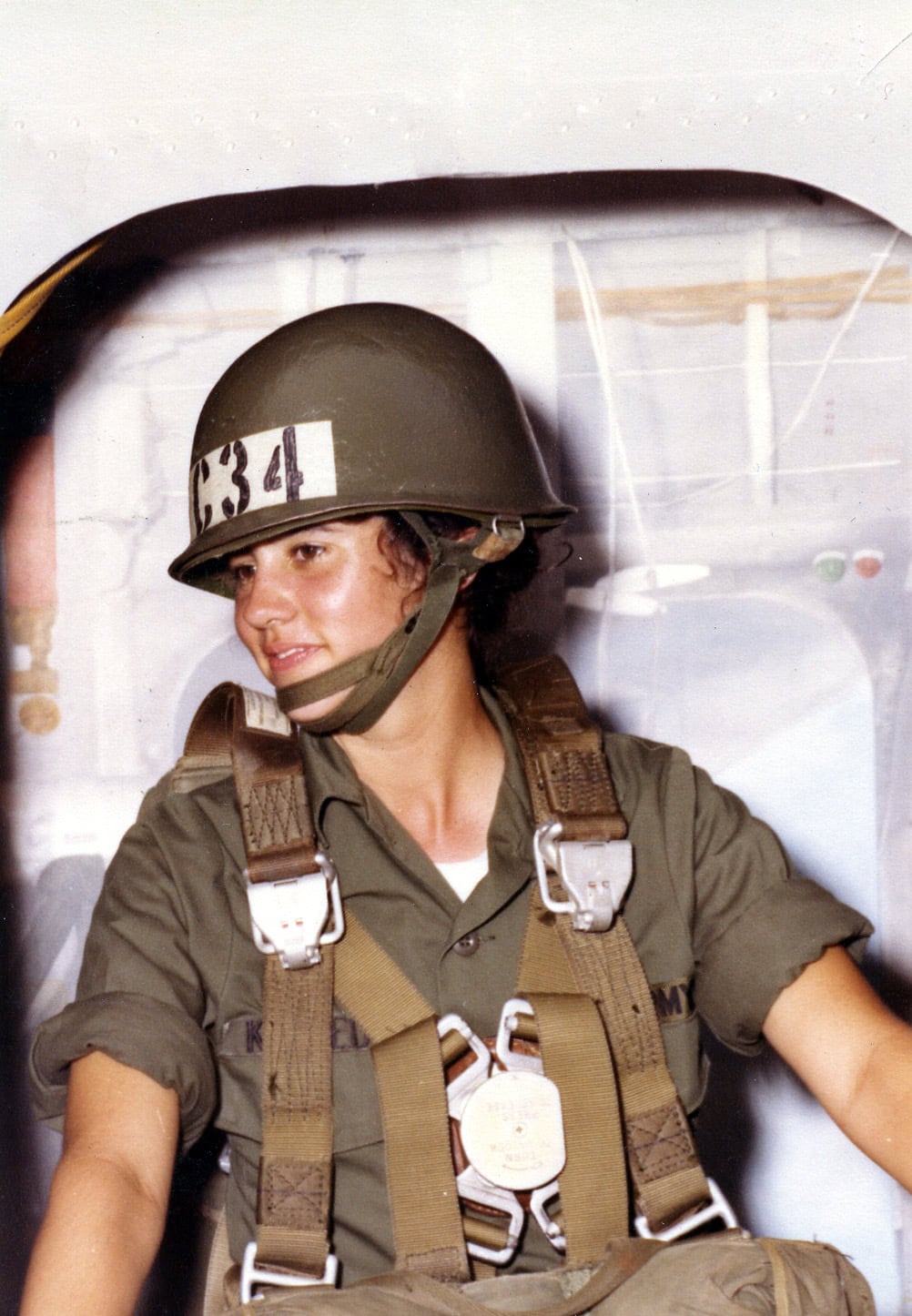


Her military occupational specialty was logistics, and it proved to be the most durable gift her service would give her. As a logistics officer, her job was to understand how to move people, equipment, and resources from one place to another with precision and purpose. Systems were not bureaucratic overhead; they were the mechanism by which complex, high-stakes operations became repeatable and scalable.
The Franchise Connection Few People Make
That foundation maps directly onto franchising in ways that Thompson recognized early. “If you think about franchising,” she said, “franchising is how you can know the many things to be able to run your business and use systems that you can be operationally excellent. That’s what logistics is all about.” Franchisors spend enormous energy building playbooks, processes, and support infrastructure precisely because they are trying to solve the same problem a logistics officer solves: how does a diverse team, spread across multiple locations, produce a consistent and reliable outcome every single time?
She left the Marines feeling a pull toward the business world and toward controlling her own destiny, took a sales job where she was named Rookie of the Year, but found that something was missing. “I missed leading a team,” she said. “I was an individual contributor as a salesperson, and I just really missed leading a team of people.” The answer to that need arrived on her nightstand, left there by her husband Will: a small brochure from a company then called Cookie Bouquet.
Cookies, Chaos, and a Chapter That Changed Everything
Thompson’s entry into franchising came with no business background, no inherited wealth, and no safety net. She and Will had been building a house; instead of moving in, they sold it and used the proceeds to buy their first franchise. The leap was equal parts terrifying and clarifying.
“Cookies by Design taught me how to make cookies, taught me how to sell cookies, and taught me how to make money selling cookies,” she said. “And if I had not been a franchisee, I don’t think I would have been as successful because I didn’t know anything about business.”
That is not false modesty. Thompson had a degree in English and a deep understanding of logistics, but had never read a profit-and-loss statement, never built a marketing plan, and had no idea how to hire people. In the Marine Corps, your team was assigned to you. In a cookie shop in Austin, Texas, you were on your own. She opened three locations, grew into a multi-unit franchisee, and learned the hard way that running a business requires a completely different set of muscles than running a platoon.
What filled the gap, more than any manual or training program, was a BNI chapter.
An insurance agent named Nancy invited her to a meeting not long after she opened. Thompson went, looked around, and felt the familiar discomfort of being the least experienced person in the room. She went back. On her second visit, she met the new VP of marketing for a small company called Dell Computers that had just moved into its first building nearby. Dell wanted to give branded gifts at product launches. Thompson said yes. That relationship grew to represent 10 percent of her entire business.
“I always say people come into BNI for the transactional,” she said, “but they stay for the transformation.”
The Room That Became Her Board of Directors
What kept Thompson coming back was something harder to quantify than a single referral, even a good one. Austin in the early 1990s had essentially zero unemployment, which meant finding reliable delivery drivers was a genuine crisis for a business built on getting cookie bouquets to doorsteps on time. She brought the problem to her chapter. Someone connected her with the local fire department, where firefighters worked one day on and two days off and were actively looking for supplemental income. “I would have never figured that out if they hadn’t told me that.”
That exchange captures what BNI actually is, at its most useful. It is not just a referral network. It is a weekly gathering of people who have already solved the problems you are currently facing and who have a structural reason to help you. The Givers Gain philosophy means that sharing what you know is not charity; it is the currency of the room. Thompson absorbed that lesson as a franchisee and never forgot it. Decades later, when BNI came looking for a CEO, she already understood the product from the inside out, because it had helped build her first business.
What BNI Is, and Why It Matters to Franchisees
BNI, Business Network International, operates on a deceptively simple premise: give first, and the returns will follow. The philosophy, captured in two words, Givers Gain, shapes everything from how meetings are run to how members are trained to how chapters are structured.
The scale of that philosophy in action is striking. With over 11,600 chapters across 76 countries and nearly 360,000 members globally, BNI generated $27 billion in member-to-member closed business in the most recent twelve-month period. For every dollar a member spends in dues, Thompson says, the average return is $71 in closed business. “I don’t know any marketing that is as good as that,” she said. “I really don’t.”
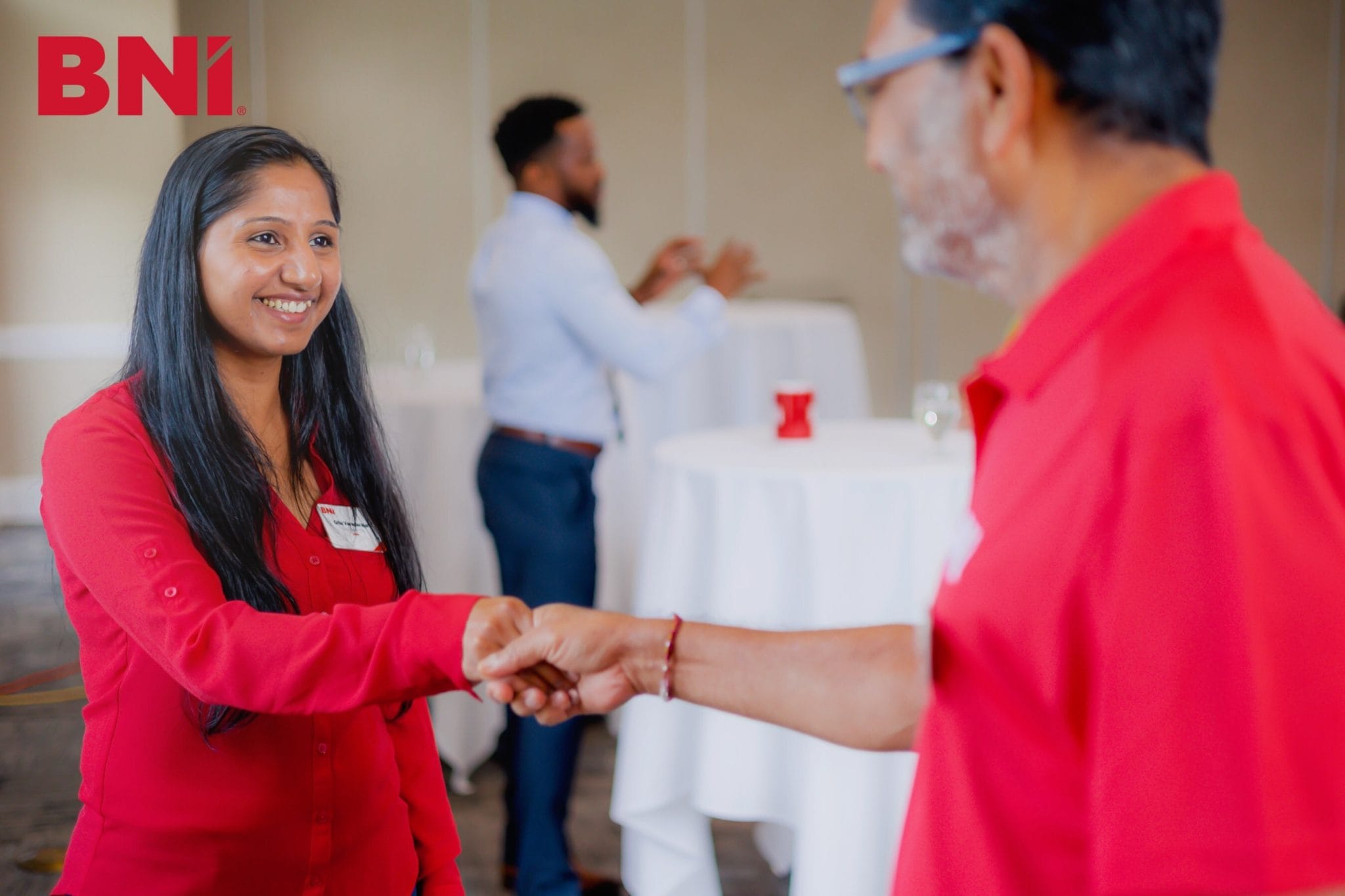
The weekly chapter meeting is the engine behind those numbers. Each member introduces themselves, describes what they do, and states their ideal referral, specifically and out loud, to a room of people who then carry that ask into their own networks. “Networking is a science more than an art,” Thompson said. “Most people don’t realize that.” BNI teaches the science of telling people exactly what you are looking for, so that generosity can actually be directed. Inside chapters, what BNI calls “power teams” form naturally among members whose businesses complement one another, a restoration company and a plumbing company, a realtor and a mortgage loan officer, connecting regularly to make sure the right opportunities are flowing in the right directions.
What Happens When You Walk In the Door
For someone attending a BNI meeting for the first time, the experience is carefully structured to reduce the discomfort of not knowing what to do. Thompson draws a comparison to ordering at Starbucks for the first time. The feeling of confusion one may experience with the different blends of coffee and different sizes with their own distinct language. “The person behind the counter is going to teach me without teaching me,” she said, describing how the choreography of a BNI meeting guides visitors through the format naturally, so they leave knowing what to expect and how to participate next time.
The result, over time, is more than a pipeline of referrals. It is confidence, community, and a set of communication skills that transfer far beyond the meeting room. Thompson described a painter in her chapter, originally from Guadalajara, for whom English was a second language. Every week, the structure of the meeting required him to stand up and speak about his business. “Every week I got better and better and better at it,” he told her. “And then one day I found out I was pretty good in front of the customer because you had made me better and better at it.” He eventually reduced his total spending on finding new business to BNI alone, because 70 percent of his business was coming through the chapter.
Presence as a Practice, Not Just a Principle
There is something worth pausing on here, something that connects Thompson’s personal story, the Marine Corps, franchising, BNI, and the larger arc of what it means to build a business rooted in relationships. It comes back to presence.
Cabane’s book describes presence as a learnable skill, not a personality trait reserved for the naturally charismatic. Being fully attentive, listening without your mind drifting, making the person in front of you feel genuinely seen; these behaviors can be practiced, developed, and embedded into how you show up every single week. BNI’s structure, at its core, is a system for doing exactly that. You sit across from the same people repeatedly. You hear their stories, learn what they need, and over time develop an instinct for connecting them with the right opportunities before they even ask.
That repetition is not incidental. It is the mechanism. Thompson describes her own chapter as a group of people “that you know and you like and you send business to because you want to.” The want is the keyword. The returns happen because real relationships have formed, because presence has been practiced long enough to become genuine. When you meet someone new, and they feel, even briefly, that they are the only person in the room, it is almost never an accident. It is the output of hundreds of small, consistent choices to pay attention.
For franchisees, this matters in a concrete and practical way. New owners often arrive with strong technical skills and solid systems, but the ability to walk into a room of referral partners and make each of them feel genuinely heard is a different kind of skill entirely. BNI trains that muscle every single week, in a room of people who are building the same thing you are: a business, a reputation, and a future grounded in trust.
The Franchisor’s Case for BNI
For franchisors looking to integrate BNI into their support model, Thompson points to what the smartest operators are already doing: adding BNI membership to the opening investment package within the FDD under Item 7. At roughly $1,000 a year, it is one of the highest-return line items a new franchisee can have in their launch budget. BNI offers a Partners Program specifically for franchisors, providing specialized onboarding and chapter placement for new franchisees at no additional charge.
The rationale is straightforward. A new franchisee walking into a BNI chapter on day one is not just investing in referrals. They are investing in a peer group, a local support network, and a weekly structure that forces them to articulate their value proposition out loud until it becomes second nature. “Our vision to change the way the world does business is a real vision for us,” Thompson said, “and our mission is to grow our members’ businesses through structured training and structured meetings.”
About 20 percent of Neighborly franchisees were already using BNI when Thompson arrived at the organization, something she discovered only after making the move. It is the kind of statistic that, once you understand the product from the inside, feels less like a coincidence and more like confirmation.
From Success to Significance
Thompson was planning to retire when BNI came calling. She had spent nearly two decades at Neighborly, watched it grow by a factor of ten, and felt the natural pull of a chapter ending. Then a friend offered her a reframe that changed everything. “It’s time for you to move from success to significance,” they told her. She had not been ready to hear it until that moment. “I realized that I wasn’t ready to retire,” she said. “And I did want to make a difference.”
She has now been at BNI for two years, describing the time as having gone by fast and feeling blessed. The organization she leads has never had a year without growth in its 42-year history, and Thompson sees significant runway remaining. “When you look at how many SMBs are out there, small and medium-sized businesses, we’re not even 1% of the marketplace,” she said. “There’s so much more opportunity.”
Her framing of why that opportunity matters goes back to something she heard from Charlie Chase and has carried ever since.
“Franchising is the greatest democratization of wealth creation that I know of,” she said. “It helps a lot of people and creates a lot of wealth for people who, like me, I didn’t inherit any wealth.”
BNI, she argues, is Main Street. Franchising is Main Street. Her role puts her at the intersection of both. “I couldn’t be more bullish and excited about the future.”
For those who have only read about presence, consider this: there is a reason the people who experience it remember it. It is the feeling of being fully seen by someone who has earned the right to see you, because they have spent a lifetime learning to give before they receive. Mary Kennedy Thompson did not arrive at BNI by accident. She arrived there because every step of her career, from logistics officer to first-time franchisee to franchisor executive to CEO, was practice for building something that matters.
