


Net Promoter Score (NPS) has become one of the most widely used customer loyalty metrics in franchising. For brands with dozens, hundreds, or even thousands of locations, the appeal is easy to understand. NPS turns customer sentiment into a number that operators can track, compare, and act on.
At its core, NPS asks one powerful question: How likely are you to recommend this business to a friend or colleague? Customers answer on a scale from 0 to 10. Their responses help companies understand not just whether guests felt satisfied, but whether they felt strongly enough to advocate for the brand.
That distinction matters in franchising. A customer who recommends a daycare, fitness studio, restaurant, home services company, or pet care center does more than return. That customer helps drive word-of-mouth, local awareness, and trust, three factors that can shape unit-level performance.
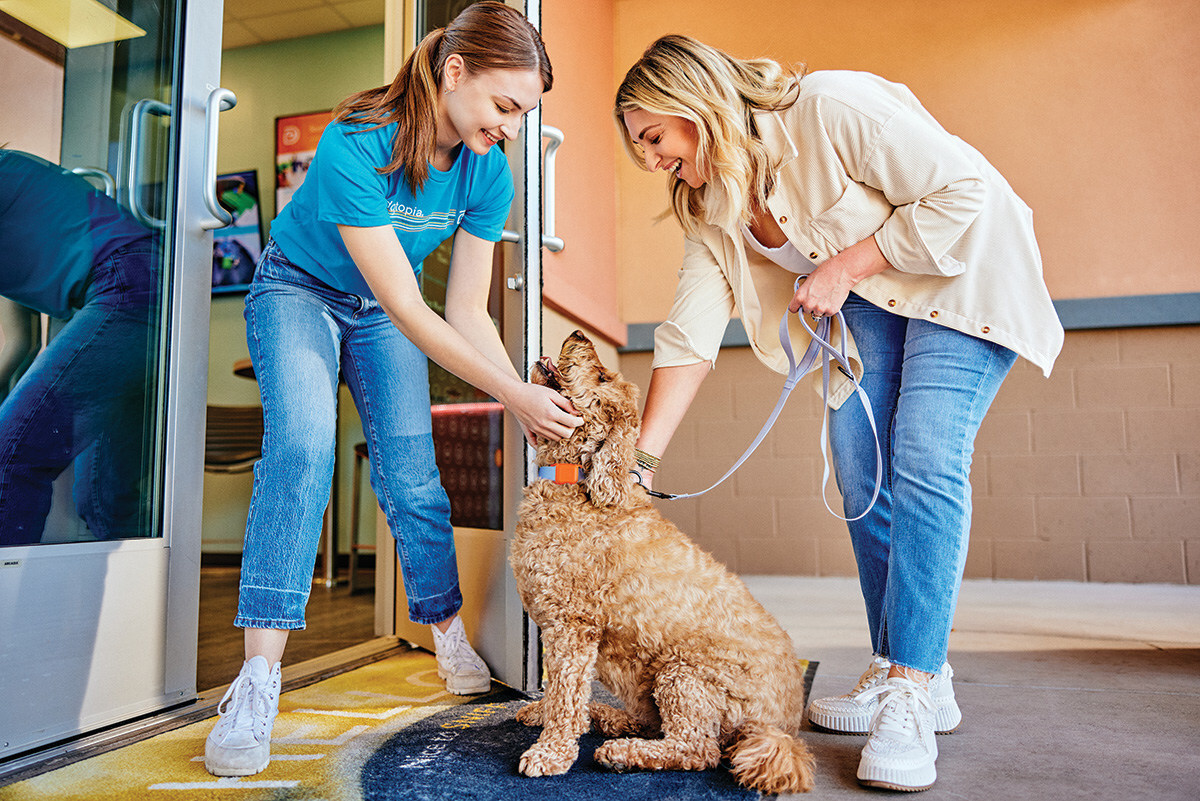
Dogtopia recently offered a timely example of how franchise brands use NPS as a sign of customer advocacy. The pet wellness franchise announced that it reached a Net Promoter Score of 90 in the first quarter of 2026, tying the score to customer demand for routine, transparency, and visible wellness benefits in dog care. The company also said the score supports a feedback loop that helps guide retention, repeat visits, training, policy, and customer experience improvements.
How Net Promoter Score Works
NPS starts with a single survey question, usually phrased as: “How likely are you to recommend us to a friend or colleague?” Customers respond on an 11-point scale from 0 to 10. Bain & Company, which supported the development of the Net Promoter System, groups responses into three categories.
- Promoters are customers who give a score of 9 or 10. These customers tend to feel enthusiastic about the brand and may be more likely to return, refer others, or speak positively about the experience.
- Passives are customers who give a score of 7 or 8. They may feel satisfied, but they do not show the same level of advocacy as promoters. For franchise operators, passives can be especially important because small improvements may move them into promoter territory.
- Detractors are customers who rate from 0 to 6. These customers may have had a poor experience or unmet expectations. Their feedback can reveal service gaps, operational issues, or communication problems that need attention.
The calculation is simple:
NPS = Percentage of Promoters minus Percentage of Detractors
For example, if 70 percent of respondents are promoters and 10 percent are detractors, the NPS is 60. Passives count toward the total number of responses, but they do not directly add to or subtract from the final score.
NPS can range from -100 to 100. A score of 100 would mean every respondent is a promoter. A score of -100 would mean every respondent is a detractor.
Why NPS Matters in Franchising
Franchise systems depend on consistency. A customer in one market should understand what to expect when visiting the same brand in another market. NPS gives franchisors a way to monitor that consistency across the network.
For franchisors, NPS can help identify trends by region, location, service line, customer segment, or visit type. A franchisor may discover that certain markets produce higher scores because of stronger onboarding, better staffing practices, or more effective communication. Those insights can then inform training, field support, and brand standards.
For franchisees, NPS can act as an early warning system. A dip in customer advocacy may reveal problems before they show up in revenue, online reviews, or customer churn. Owners can use comments from NPS surveys to understand what customers value, what frustrates them, and what keeps them coming back.
This is where the Dogtopia example becomes useful. In its April 27th, 2026 announcement, Dogtopia connected its NPS performance to transparency, proactive communication, individualized knowledge of each dog, and consistent care standards across locations. The brand also pointed to tools such as DASH by Dogtopia, which gives pet parents visibility into their pet’s activity and wellness during daycare visits.
Neil Gill, president and CEO of Dogtopia, captured the operational value of customer feedback in the release: “Collecting data is important, but it is only one piece of the puzzle. The clever teams in business learn to listen and act on the information contained within the data.”
What Franchisors Should Track Beyond the Score
A strong NPS can make a compelling headline, but the number alone does not tell the full story. Franchise brands get more value from studying the comments behind the score.
A franchisor should look for patterns. Are detractors mentioning wait times, cleanliness, scheduling, communication, pricing, or staff knowledge? Are promoters praising the same team behaviors across multiple locations? Are passives pointing to small improvements that could make the experience more memorable?
NPS becomes more useful when brands connect it to business metrics such as repeat visits, membership retention, average ticket, referrals, complaints, and online reviews. The goal is not just to celebrate a high number. The goal is to understand what creates customer loyalty and then build systems around those behaviors.
NPS can also help franchisors coach franchisees more effectively. Rather than relying only on financial performance, field teams can bring customer sentiment into business reviews. That gives operators a broader picture of brand health.
What Franchisees Should Do With NPS Feedback
For franchisees, the most important step is follow-through. Customers who take time to answer a survey often expect the business to listen. When a location receives negative feedback, a thoughtful response can sometimes rebuild trust.
Owners should also celebrate positive feedback with their teams. Promoter comments can reinforce the behaviors that make customers feel known, respected, and confident in the brand. In service categories, especially, employees play a major role in whether customers recommend a business.
Franchisees can use NPS feedback in team meetings, training sessions, and local marketing decisions. A fitness studio might learn that customers value accountability. A pet care center might learn that transparency and safety drive loyalty. A restaurant might find that speed and friendliness matter more than a seasonal promotion.
The value comes from turning comments into action.
Common NPS Mistakes Franchise Brands Should Avoid
NPS works best when brands treat it as a learning tool, not a vanity metric. One common mistake is focusing only on the final score. A high score can hide issues in specific markets, while a lower score can still contain useful feedback that leads to improvement.
Another mistake is surveying too often or at the wrong moment. Customers may ignore surveys if they receive too many requests. Brands should choose moments that matter, such as after a first visit, after a service interaction, or after a membership milestone.
Franchise systems should also avoid using NPS as a blunt instrument against franchisees or employees. When teams feel punished by feedback, they may become defensive. When they see NPS as a tool for improvement, they are more likely to act on it.
Finally, brands should remember that NPS is not the only customer experience measurement. It works well alongside customer satisfaction scores, online review analysis, retention data, complaint resolution times, and mystery shopping results.
The Bottom Line for Franchise Brands
Net Promoter Score gives franchise systems a practical way to measure customer loyalty across a network. It helps franchisors spot trends, helps franchisees understand local customer sentiment, and gives teams a shared language for improving the guest experience.
For brands like Dogtopia, NPS also shows how customer advocacy can reflect deeper operational choices. Transparency, communication, consistency, and measurable value all shape whether customers become promoters.
In franchising, those promoters matter. They return, they refer, and they help a brand grow one local relationship at a time.
