


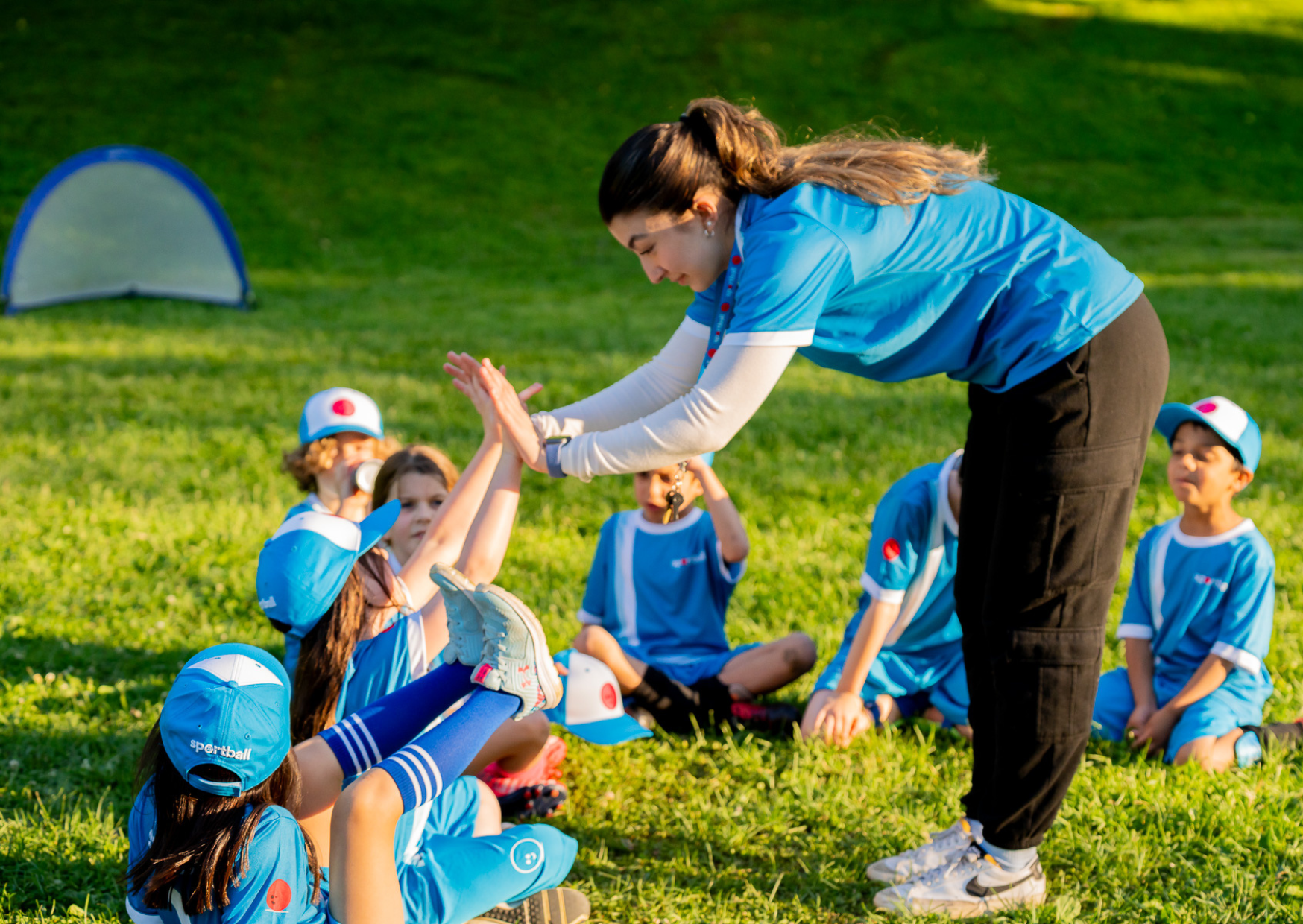
Most parents know the version of youth sports that feels like a second job. Early morning practices, weekend tournaments, the quiet pressure to pick a sport and commit before a child has figured out what they actually enjoy. Sportball was built as the antidote to all of it.
Founded in Toronto in 1995 by husband and wife Mark and Carmella Gelgor, Sportball was built around a belief that felt almost radical for a sports program: that kids do not need to compete to grow. Movement, joy, and a coach who greets them at the door, that is the starting point. Thirty years later, that belief has grown into a franchise system with more than 900 activity sites across four countries, reaching more than 70,000 children each year. The brand already has locations in Austin, Boston South, Brooklyn, Dallas, Katy, North Houston, Phoenix, San Antonio East, and Southern California. With U.S. expansion now accelerating, the brand is bringing its research-backed, fun-first approach to American families who are increasingly looking for something different.
Jason D’Rocha, Vice President of Sportball and a 20-year veteran of the company, sat down with Franchise Brief to tell the story of how the brand was built, what makes its methodology distinct, and why the ideal Sportball franchise owner might not have a sports background at all.
Where It All Begins: Meeting Kids Where They Are
Sportball’s founders arrived in Canada with a concept, not a playbook. Their multi-sport approach had roots in South Africa, but not everything translated to North American culture and climate. So they spent years rethinking which sports would resonate, how young they could start, and what the experience should feel like for a 2-year-old encountering a soccer ball for the very first time.
What emerged was a curriculum built around eight major ball sports, delivered in developmentally appropriate stages starting as young as 16 months. Earliest classes are parent-participation programs, where parents join their children on the gym floor. That choice was deliberate. For toddlers, sport is not yet about skill. It is about building positive associations with movement, with coaches, and with the adults who brought them there.
“When you’re thinking of teaching kids how to play sports, they’re not going to go play pickup basketball or hockey,” D’Rocha said. “But what they’re going to do is build up really positive association with sports, physical activity, and mom and dad or their caregiver.”
As children grow, the structure evolves with them. Drop-off programs begin around age 3 and a half, introducing independent play and giving children their first experience with an authority figure who is not a parent. By the time kids reach 6, 7, and 8, Sportball has layered in skill development, team play, and gentle introductions to competition, all within a framework where mistakes carry no real stakes.
The Case Against Early Specialization
Across North America, children are being funneled into single-sport programs earlier and earlier, and the consequences are visible. According to the American Academy of Pediatrics, 70% of kids quit sports by age 13. Overuse injuries are rising and burnout is common. For every child who reaches a collegiate or professional level, thousands more walk away from sport entirely before ever finding out whether they actually enjoyed it. Sportball has spent three decades working to interrupt that pattern, and the urgency has never felt more relevant.
When Winning Becomes the Wrong Goal
D’Rocha draws a pointed analogy. He references Andre Agassi, one of the greatest tennis players in history, who famously admitted he never loved the game he mastered. Specialization without passion, D’Rocha argues, can produce skill without fulfillment, and sometimes resentment.
Physical Literacy
Exposing children to up to eight sports within a single season, the program builds what the brand calls physical literacy: the foundational movement skills, including balance, coordination, timing, and hand-eye tracking, that allow a child to enter any sport with competence and confidence. Producing elite athletes is not the goal. Producing kids who love being active, and who carry that love into adulthood, is.
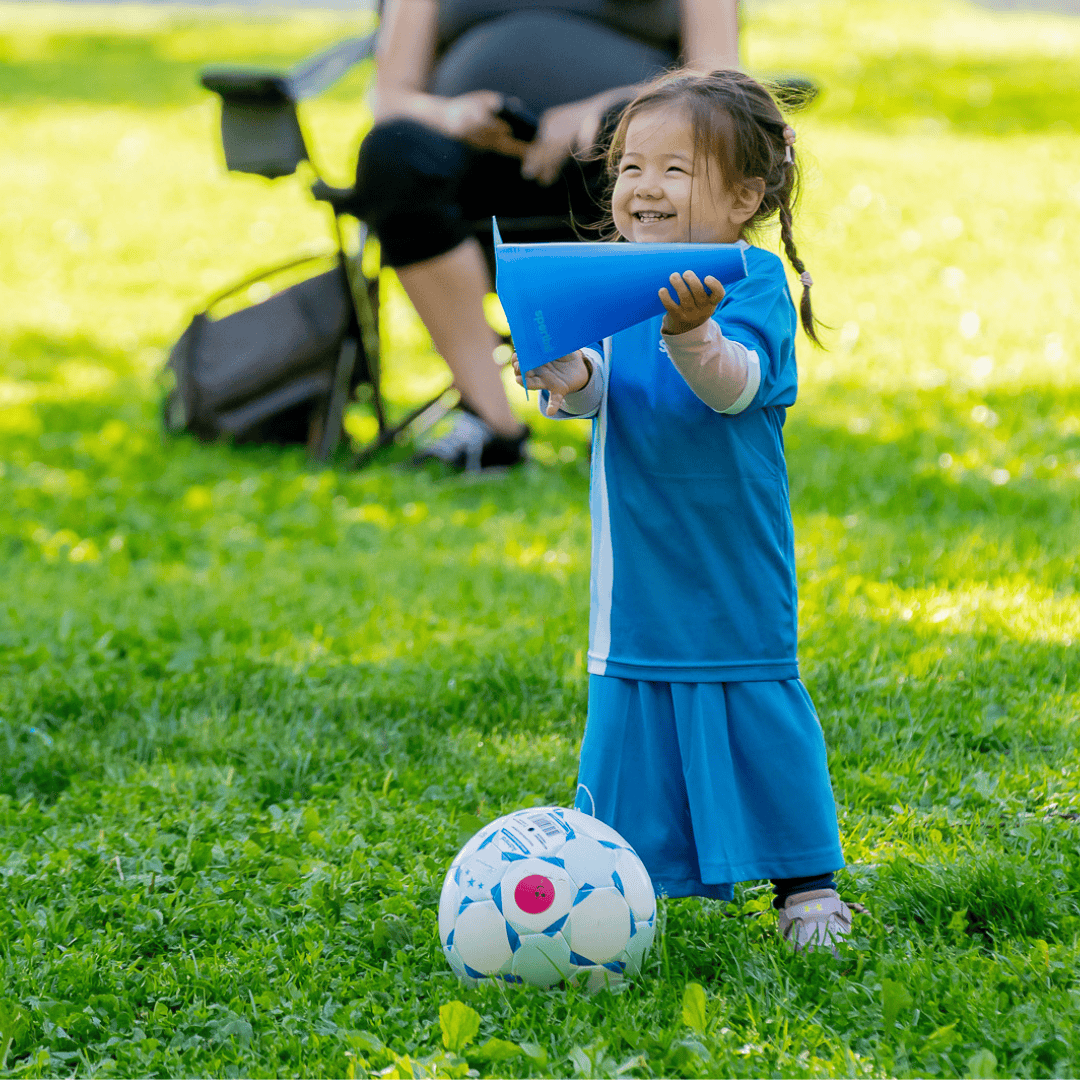
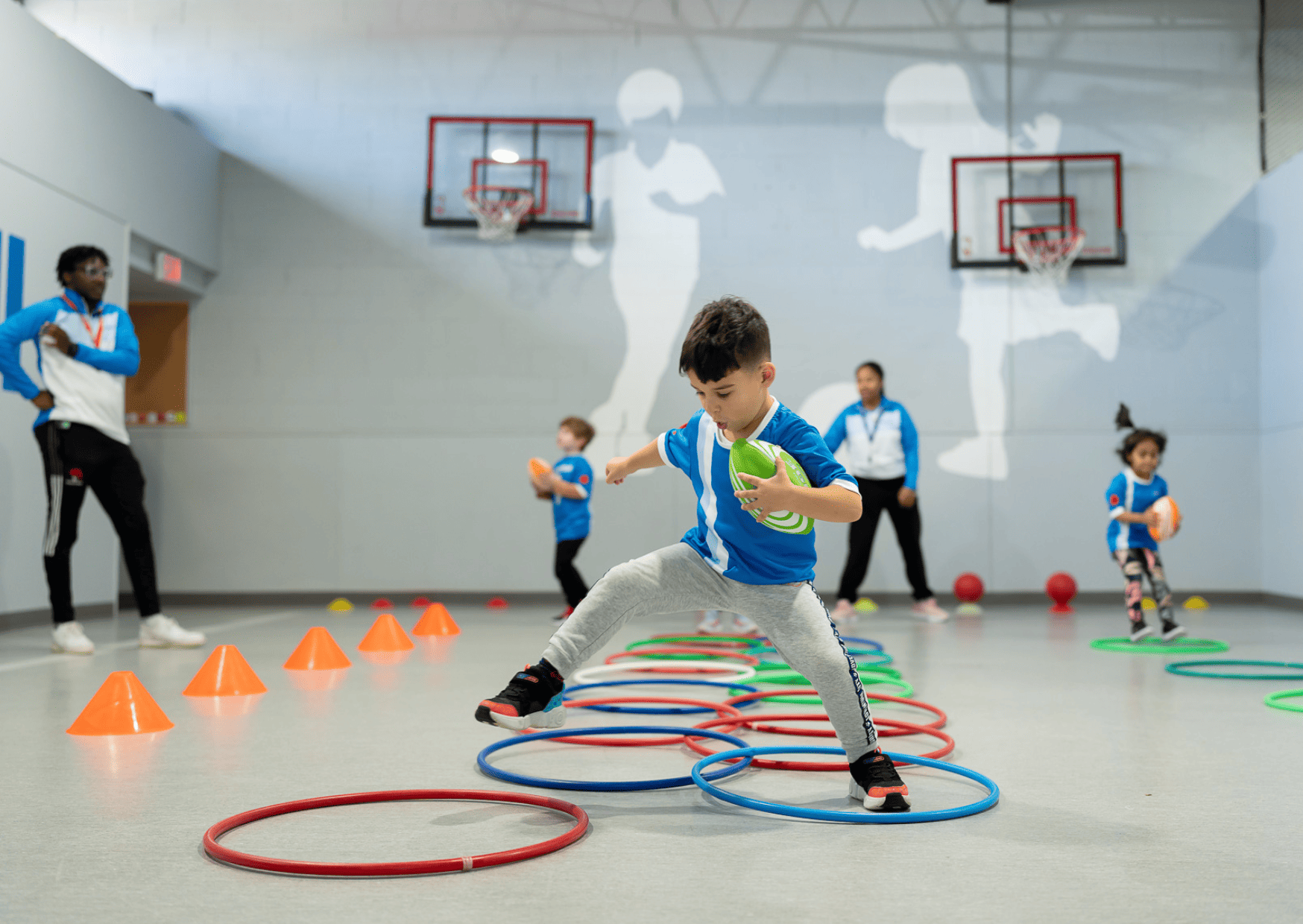
“If you can introduce children to sport and physical activity at a young age and they have developed positive associations with parents, with a coach, with friends, with teammates,” D’Rocha said, “well, then when they get older, maybe they’ll start to see it as necessary as brushing their teeth.”
Screen Time
Physical literacy is only part of the picture. Growing sedentary behavior driven by screen culture is a concern that runs parallel to early specialization, and Sportball addresses both. D’Rocha, who has two daughters of his own, is candid about the challenge. Children communicate on screens, do homework on screens, and entertain themselves on screens.
When “Counting Sleeps” Becomes the Metric
That phrase, “count their sleeps,” comes up more than once, and it matters because it captures the emotion Sportball is trying to create: anticipation, not obligation. When a child asks their parent, “how many more days until the next Sportball class?”, the parent knows they found something special. The joy and excitement in that question are akin to counting down the nights before a special holiday or number of school days before a fun vacation.
D’Rocha connected that anticipation to the broader realities of digital screens and sedentary routines. Sportball, he suggested, gives parents a consistent weekly reason to show up. That helps establish routine and reinforces that movement belongs in the rhythm of life.
In the same breath, he framed routine as a life lesson. Many adults know the feeling of not wanting to do the thing that is good for them, then doing it anyway because the habit is established. Sportball’s role is to create that habit early, but in a way children experience as fun and relationship-driven.
What Actually Happens Inside a Sportball Class
Walking into a Sportball class for the first time, a parent might be surprised by how much structure lives beneath what looks like organized chaos. Sessions run about 60 minutes and follow a deliberate sequence that coaches are trained to deliver consistently, because for young children, knowing what comes next is half the battle. Predictability reduces anxiety, and reduced anxiety means kids are ready to learn.


Structure That Feels Like Play
Opening with a 10 to 15 minute warm-up that is as much social as it is physical, coaches introduce turn-taking, following instructions, and skill combinations, sometimes asking children to balance on one foot while holding a ball, layering challenge without raising anxiety. Consider a game called Popcorn, where a coach dumps a bucket of colorful balls into the air and children race to return them to the basket. Simple by design, every child can succeed, and that first moment of success becomes the foundation for everything that follows.
“If I can play a game where they can have success, then when I put a tennis racket in their hand, they’ll think, ‘Coach J already gave me a chance to be successful. Let me see what else he’s got,’” D’Rocha said.
Built to Progress, Not to Judge
From there, class moves into skill practice, individual exploration, and group activity. Coaches are trained to offer progressions for children who are ready for more challenge, and refinements for those who need more time. Sessions close with a low-energy activity to bring the group back down before a structured, hand-to-hand dismissal that ensures every child is safely returned to their caregiver. Coaches then brief parents on what was covered and offer ideas for practicing at home, because as D’Rocha puts it, “refine, rehearse, and repeat” extends well beyond the gym floor.
For families who want more flexibility, or have children who are not drawn to team sports, Sportball also offers a Fit Kids program built around functional fitness games and activities that develop strength and endurance without a sports-specific focus. Birthday parties and private events round out the menu, making Sportball a program families tend to grow into rather than out of.
A Franchise Model Built for Purpose
Sportball’s franchise model is built around low overhead and geographic flexibility. Rather than requiring brick-and-mortar locations, franchisees run programs inside gymnasiums, multi-purpose rooms, schools, and community centers, paying only for the hours they occupy the space. Costs stay predictable, and growth comes from adding locations and registrations rather than managing a lease. It is a structure designed to let owners focus on building relationships and delivering great programs, not on managing real estate.
A Model That Works for Everyone in the Room
Pricing is seasonal, with families registering for 10-week sessions at rates that typically range from $15 to $25 per child per class, depending on the market. That range is not arbitrary. It sits comfortably within what families already spend on enrichment programs, and that pricing integrity leaves franchisees room to invest in what matters most: the coaches who show up every week and make the experience worth coming back for.
Paying coaches well is not just good culture, it is good business. When a child counts their sleeps until their next Sportball class, that loyalty belongs as much to the coach as it does to the brand. Retaining great coaches means retaining families, and retaining families means a stronger, more predictable business.

Setting Franchisees Up to Win
Each new franchisee goes through a structured discovery process that builds a full business plan for their territory, including competitive analysis, revenue modeling, and identification of program locations, before any commitment is made. As D’Rocha puts it, “We’re awarding territories. We’re not just selling them.”
From there, a support model connects new owners with a corporate team member who provides dedicated hours each week covering registration platforms, marketing assets, business development playbooks, HR, and training.
Once a franchisee is ready to launch their first season, one of the model’s most valuable advantages kicks in: registration opens before the doors do, so families are signing up and deposits are arriving before a single class is ever delivered, giving new owners early financial visibility and a running start from day one. After opening, Monthly Growth Labs bring the franchise network together to share best practices, and bi-weekly calls with a dedicated growth coach keep momentum building from there.
The Person Sportball Is Looking For
Becoming a Sportball franchisee doesn’t require a background in corporate finance or operations; they have designed systems and playbooks to teach those aspects of the business. When asked what they are looking for, the message was clear:
“We’re looking for people who are passionate about our mission and willing to put the work into their community.”
Charisma, comfort with people, and a willingness to follow a proven system all matter. But what D’Rocha describes most often is someone who has reached a turning point; a person with real-world experience who is ready to use it for something that feels meaningful. He sees that shift happening across the corporate world right now.
“There are so many ways to earn a dollar in this life,” D’Rocha said. “Maybe I want to do something that actually makes a difference.”
Coaching Knowledge, Career Path and Impact
Most youth sports programs treat coaching as a transactional role: show up, run the drills, go home. Sportball treats it as a development opportunity, and that distinction runs through every layer of how the brand hires, trains, and promotes the people who deliver its programs. It is also one of the reasons the model works as well as it does for franchisees, because a coach who is growing tends to stay, and a coach who stays builds the kind of relationships that keep families coming back season after season.
That weight on the coach is why Sportball invests heavily in training. D’Rocha described a coach onboarding system, including the Coach’s Journey and Coach’s Academy, built to train coaches not only on sport delivery but also on how to engage families, manage classes, redirect behavior, and support children who feel nervous or experience separation anxiety.
From Rookie to Master
Every new hire enters through the Coach’s Journey and Coach’s Academy, moving through a graduated system from rookie to lead, lead to mentor, and mentor to master. Most Sportball coaches are university and college students, many studying kinesiology, occupational therapy, or education, and for those young professionals a coaching role at Sportball is a formative experience that builds skills they will carry long after they leave.
Sportball also sets what D’Rocha called “table stakes” for working with children: coaches are expected to have a nationwide clearance appropriate for working with the vulnerable sector, and to be CPR and first aid certified. D’Rocha also said Sportball has had very few injuries over its years of operation, which he attributed to the program’s non-competitive, low-impact approach and the young ages served.
What makes that investment particularly smart is where it leads. At the top of the ladder, Master Level Coaches become candidates for area management and even franchise ownership, creating a pipeline that benefits everyone in the system. Coaches who have lived the program from the inside make some of the most effective franchise owners, because they already understand the methodology, the culture, and what families expect when they walk through the door. Several current franchisees, including owners in Austin, Katy, Vancouver, and the Okanagan, began as part-time coaches before buying their territories. D’Rocha himself started as a part-time coach in 2004, a detail he shares not as a footnote but as proof of what the journey can look like.
Proof in the Pudding
Perhaps the most powerful illustration of what Sportball’s model can do comes from a story D’Rocha tells with quiet pride. A child with special needs arrived at Sportball barely able to catch a ball, terrified of what might come his way. His mother was ready to pull him out after the first class. D’Rocha asked for one season. The child stayed, grew from apprehensive to confident, from confident to competent, and eventually his mother asked whether he could train as a junior coach. He joined the staff. He became a mentor-level coach.
“The proof is in the pudding,” D’Rocha said. “We were able to move kids on this journey through physical literacy, sports development, and social development, to a point where hopefully not only do we pay them, but they can actually come back and contribute themselves.”
The Right Brand at the Right Time
Youth sports in North America is a $37.5 billion market, valued in 2022 and projected to reach $69.4 billion by 2030. That growth creates real commercial opportunity, but D’Rocha frames Sportball’s expansion in terms that go well beyond market size. He talks about a generation of kids being failed by a system that prioritizes winning over wellbeing, and a brand that has been quietly solving that problem for three decades. As the team expands its footprint in the U.S., Sportball is not chasing a trend. It is meeting a need that has been building for years.

A Market Ready for Something Different
Pressure points in U.S. youth sports are well documented. Seventeen percent of parents expect their children to go pro, even as less than 2% of NCAA athletes ultimately reach that level. Sedentary behavior driven by screens is accelerating. Early specialization, travel teams, and year-round training cycles are producing a generation of kids who quit by 13. Sportball was built for exactly this moment, and its track record across cultures suggests the model travels well.
Singapore offers a telling example. In a culture that had long prioritized academics over recreation, the brand reframed its value proposition around research showing that physically active children perform better academically. More than 5,000 children now participate in Sportball programs there, a result that speaks to the brand’s ability to find the right message for the right market.
More Than a Business
Above all else, D’Rocha returns to the same idea when describing what makes Sportball different from any other franchise opportunity. It is not the model, the methodology, or even the market size. It is the feeling of knowing that the work you do each day is shaping someone’s life in ways you may never fully see.
“You may not be famous on social media, you may not have a billboard with your face on it,” he said. “But sometime down the road, someone will look back and say, ‘If it wasn’t for that person, I may not be here today.’ You do have the opportunity to make a difference in people’s lives in a way you may never even know. And I think that’s the beauty of having a business like this.”
For families, Sportball offers something increasingly rare: a place where kids can simply play. For franchisees, it offers a business built around something that outlasts any single season. For the coaches who grow through its ranks, it offers a start. And for the children counting their sleeps until the next session, it offers exactly what it always promised.
