

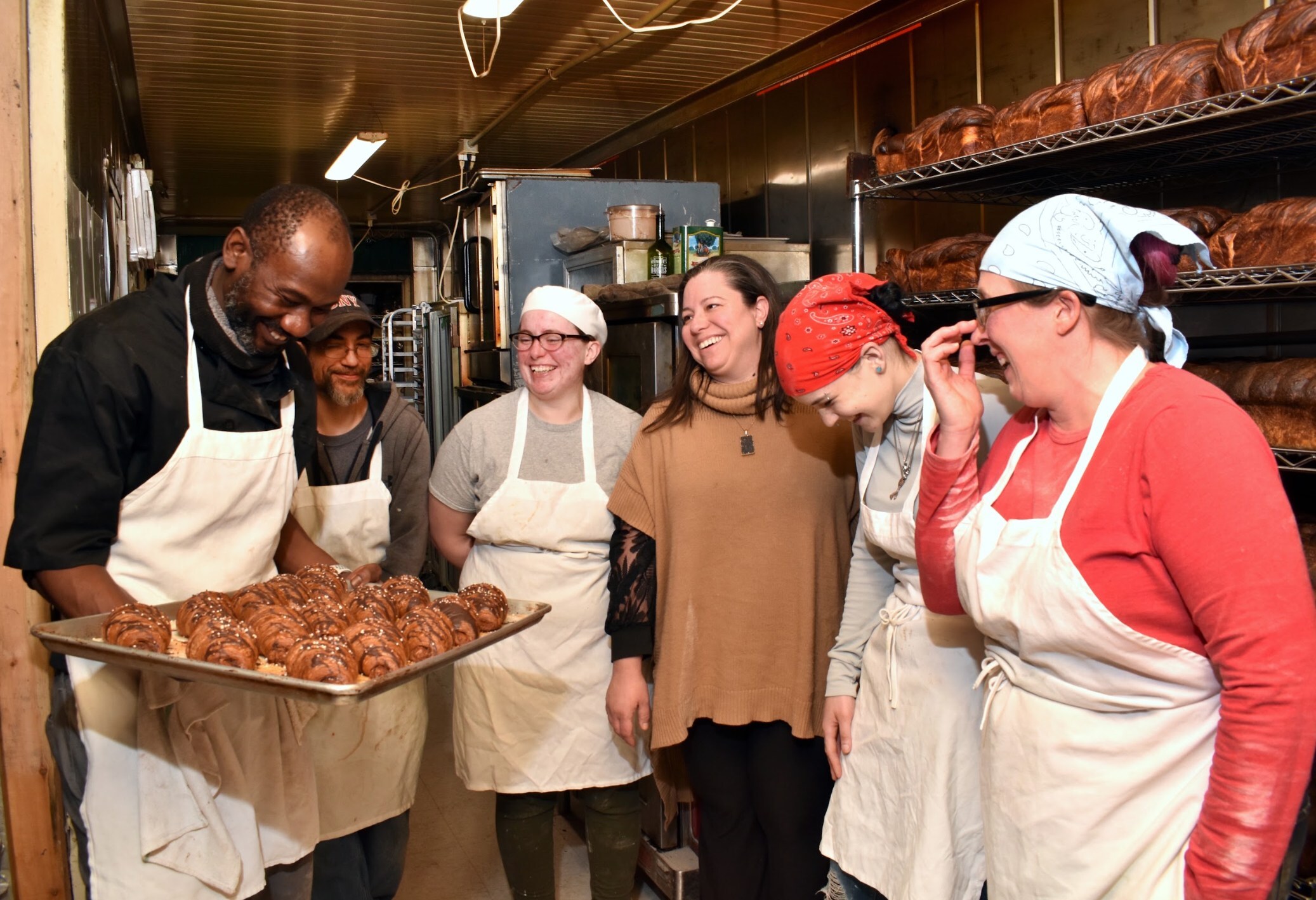
See & Be Kitchen, the Catskills bakery admired for long-fermented sourdough and an unmistakably people-first spirit, has baked an unusual path to franchising. Rather than waiting to see who clicks a lead magnet or sorting through online applications randomly in the abyss, the company is launching the First Rise Challenge on January 1st, 2026, an eight-week, high-energy competition that doubles as a selective training ground and story engine. The prize is a singular role in the brand’s next chapter, the opportunity to become its founding franchisee across a prioritized list of Northeast territories.
The premise carries the charm of a community bake day and the structure of a serious operator assessment. It also threads the brand’s values into each week, making culture fit as important as cash flow. See & Be Kitchen’s invitation is clear in its tagline, “Be our first. Bake the future,” and in the way the company describes the experience, an “apprenticeship to ownership” journey that celebrates heart, craft, and the real work of nourishing a neighborhood.
“We’re not just searching for a business owner. We’re searching for a partner who believes in people, craft, and community as fiercely as we do,” said See & Be Kitchen founder Chrissy Traore. “This first franchise will help shape the heart of our brand’s future. We want someone who rises with purpose, leading with skill and soul.”
A Weekly Recipe That Mirrors Real Bakery Leadership
The First Rise Challenge is organized like a well-proofed dough; each stage builds the next. Week 1, “Call to Rise,” asks candidates for a 90-second video that gets to the heart of why they want to bring See & Be Kitchen to their chosen territory. It is a simple but telling request that forces contenders to articulate purpose and place. The brand is seeking more than interest; it wants intent.
Weeks 2 and 3, “Gathering Ingredients,” lean into personality and culture. Through self-shot videos and live Zoom sessions, the team will explore values, leadership style, humor, kindness, and resilience. This format stresses the human side of franchising. The job is not only about following a manual. It is about building a team, modeling care, and embodying an artisan ethos in the most practical ways; from how you greet a supplier to how you teach a new hire to score a loaf.
Week 4, “Rise Under Pressure,” flips the script from soft skills to precision. Contestants complete system-following tasks that test obedience to process and attention to detail. The bakery’s method is grounded in long fermentation and standardized recipes; which rely on consistency. The test reflects franchise reality; scalable excellence requires trust in the system even as individual craft shines.
Week 5, “Firing Up the Ovens,” brings craft to the foreground. Baking theory, hands-on skill, and the ability to teach others reveal who can lead with both knowledge and care. The showmanship of a bake-off is tempting; but this week judges whether candidates understand the why of the method, not only the what. Franchising is a training business at its core. A solid franchisee can transfer know-how, coach standards, and keep quality steady as the team grows.
Week 6, “Setting the Table,” is where the brand’s hospitality heartbeat shows. Candidates host a local community activation event to give neighbors a taste of the See & Be Kitchen experience. This level is clever on two fronts. First, it showcases the candidate’s ability to create warmth, welcome guests, and rally local excitement. Second, it begins market seeding, one handshake and one pastry at a time.
Week 7, “Making That Bread,” reframes bread as money. The curriculum covers KPIs, budgeting, and cash flow, and assesses financial readiness through workshops and quizzes. The company notes that it is setting up partners with access to financial capital to help fund the winner. The message is pragmatic. Heart matters; capital and discipline matter too.
Finally, Week 8, “The Final Bake-Off,” invites the top three to five contenders to present a polished 90-day launch plan to a panel with deep credibility. The expert group includes Richard Snow, IFA Board Member and CEO of Amplify Franchise Funding; Karen Bornath, Executive Director of the Bread Bakers Guild of America; Mariyam Shamshidova, Chief Growth Officer of WeFranch; and Chrissy and Ben Traore, Co-Founders of See & Be Kitchen. The combination reflects the brand’s dual identity; artisan craft and franchise rigor, all in one room.
A Vetting Engine That Generates Buzz By Design
Many emerging franchise brands struggle with a common challenge: how to vet candidates for cultural and operational fit while building awareness in new markets. The First Rise Challenge attempts to do both. Every weekly task is media friendly. Short videos in Week 1, conversations in Weeks 2 and 3, live events in Week 6, and a final pitch in Week 8 lend themselves to social storytelling, local press, and community partnerships.
The structure encourages user-generated content without forcing it. Applicants will naturally document their progress; the brand can amplify standout moments; local audiences will begin to follow the journey. By the time a winner is announced, the launch market will already have a budding fan base that has cheered for the franchisee and sampled the experience. It is a low-cost, high-authenticity way to convert attention into early guests.
The weekly themes tie directly to See & Be Kitchen’s ethos: integrity, joy, curiosity, teamwork, generosity, and a deep love of nourishing people. This is not simply a list on a wall. It becomes a testable, shareable curriculum. When candidates reveal their “why,” when they host neighbors, when they demonstrate financial discipline, they show how those values play out day to day. That transparency can attract the right partners and gently repel those seeking a quick deal.
Systems With Soul; A Franchise Model Built For Operators
Under the excitement of the competition is a practical franchise design. See & Be Kitchen describes its program as systems-supported and operations-driven, with creative soul. The backbone is wholesale production of long, slow-fermented sourdough and a premium artisan product line adapted for scale. Standardized recipes and a fully developed operational playbook aim to preserve the quality guests expect while making the business teachable.
Franchisees will have access to a people-first leadership philosophy that informs hiring, training, and team care, and a support stack that includes marketing, communications, technology, CRM, operations, and ongoing training. The revenue mix is flexible. A strong wholesale base can anchor sales while retail and catering feed relationships and visibility. For a first franchisee, that mix can help smooth early variability and give the operator multiple levers to pull as they grow.
The founding franchisee incentives are notable; up to $100,000 in value that includes a 50 percent reduction in the franchise fee, one year of waived royalties, and an initial packaging order at no cost. For an operator evaluating first-year cash demands, that set of incentives can lower the runway needed to reach breakeven.
Regional First; A Thoughtful Expansion Map
The company is prioritizing eighteen territories across the Northeast, with high-interest regions that include the Capital Region and Albany; Oneonta and Delhi; New Paltz and Newburgh; and the Berkshire Mountains. This is a strategic choice to grow from strength. See & Be Kitchen already operates within the Catskills and the surrounding ecosystem. Expanding into nearby markets leverages existing suppliers, logistics knowledge, and brand familiarity. It supports store openings with measurable driving-distance support from the founding team and reduces early complexity.
A regional-first strategy also helps with talent and training. Opening in clusters makes it easier to gather new teams, share best practices, and build community across franchisees who can meet in person. It can also accelerate wholesale opportunities; regional grocery partners and restaurants may be more inclined to onboard a product line that can be produced consistently and delivered reliably across multiple nearby markets.
Craft Pedigree With Community Roots
The First Rise Challenge sits on top of a brand identity that has always framed food as craft and care. See & Be Kitchen is a husband and wife–owned bakery that specializes in wholesale production and traditional, long-fermented sourdough. The company’s belief that real food takes time shows up in its methods, and that belief extends to people too. The team invests in upskilling staff and partners with regional farmers, producers, and small businesses. In practice, that means a supply chain and a workforce tied to local economies, not just a logo and a menu.
This emphasis gives the franchise model texture. When Week 6 sends applicants into their neighborhoods to host an activation, they can point to a brand that already collaborates with nearby growers and makers. While Weeks 2 and 3 explore humor, kindness, and resilience, candidates can draw on stories where those qualities carried a shift or helped a teammate. When Week 5 tests teaching ability, the underlying methodology is not generic; it is a specific craft that values fermentation time, high-quality wheat, and heritage techniques.
Selection As Story; Ownership As Apprenticeship
In franchising, the mechanics of selection are often hidden. See & Be Kitchen turns the process inside out. By staging selection as an eight-week experience, the company invites candidates and communities to witness what makes a good fit. It is a smart filter. The person who shines will be the person who enjoys the work that the business truly requires.
The “apprenticeship to ownership” framing matters. Candidates move through real tasks that mirror real days, from following process under pressure to teaching a teammate to stirring local excitement. The progression demystifies ownership while giving the brand data on each applicant’s performance and promise. In the end, the final 90-day plan is not theoretical. It has been shaped by weeks of doing, reflecting, and interacting with brand leaders.
A Panel That Balances Capital, Craft, and Growth
The final panel mirrors the dual nature of the opportunity. Richard Snow brings franchise finance expertise; Karen Bornath represents a guild that champions professional baking standards; Mariyam Shamshidova adds growth strategy through WeFranch; while Chrissy and Ben Traore safeguard brand DNA. That mix signals to applicants that success will be measured across disciplines. The best operator will understand product quality and people, growth levers and numbers, hospitality and repeatable systems.
Why This Approach Fits Today’s Franchise Landscape
Emerging brands face two pressures. They must protect the core that made customers care in the first place, and they must install the systems that keep quality intact at scale. The First Rise Challenge addresses both. It protects the core by making values and craft explicit and testable. It installs systems by insisting on process discipline, financial fluency, and execution planning.
The format also respects how entrepreneurs learn and how communities adopt new concepts. Operators learn by doing and teaching; communities adopt by tasting and trusting. Each week nudges both along, building capability in candidates and familiarity among locals.
For See & Be Kitchen, this is a natural extension of its origin story. The brand has always paired traditional technique with community warmth. Turning franchise selection into an open, creative, and rigorous journey feels consistent. It invites exactly the kind of person who will steward the bakery’s future; someone who values people, process, and the patient magic of fermentation time.
What Happens Next
Applications for the First Rise Challenge are open now. The competition begins January 1st, 2026, and will run eight themed weeks through the final presentations. The founding franchisee will receive the package of incentives plus ongoing support in marketing, communications, technology, CRM, operations, and training. Interested candidates can explore territories across the Northeast, from the Capital Region and Albany to the Berkshires, and begin the journey that could lead from a 90-second video to a grand opening.
For a brand that believes bread is both craft and community, this launch plan feels fitting. It welcomes bold, kind leaders who want to build teams, nourish neighbors, and grow a thoughtful business. It is also refreshingly transparent. By showing the work of ownership, See & Be Kitchen signals what it values and the kind of partnership it seeks.
In the words of Chrissy Traore, the company is looking for someone who will “rise with purpose, leading with skill and soul.” The First Rise Challenge is designed to find that person, teach them, test them, and introduce them to the community they will serve. In a crowded franchise landscape, that combination of clarity and care may be the differentiator that matters most.
