
Some businesses are built from spreadsheets and market research. Others start with a craving after a long workout, a stare of wonder at a dessert topping bar, and the kind of loyalty that sneaks up on you before you ever realize it has arrived. For Neil Hershman, the story of 16 Handles is both.
Hershman spent his early career in structured finance at a large firm in New York City, navigating promotions and long hours while living just around the corner from the original 16 Handles location in the East Village. He became a regular, not as a calculated investor scouting opportunities, but as a guy who liked skipping dinner after the gym or catching up with friends somewhere that felt good without feeling expensive. At about $10 a visit, 16 Handles was what he calls “a Starbucks of nighttime.” Nobody kicked you out. The vibes were easy; the froyo was genuinely addictive.
That experience planted a seed that, years later, he would use to replant an entire brand.
The Leap from Finance to Froyo
Hershman was good at finance. He was also miserable in it, at least in the lifestyle it demanded. Looking up the ranks, he saw people his father’s age grinding the same hours, tethered to their phones, and asked himself a simple question: for what? He wanted to build something tangible, something where success was visible. He could walk into a store and know if it was working. That pull drew him toward food service, and franchising specifically appealed to his instincts as an operator. He was not a chef and had no interest in pretending to be one. What he liked was systems, processes, and the challenge of running something well.
He explored different brands. When someone mentioned there was no 16 Handles location in Prospect Park in Brooklyn, the decision was practically made before the conversation ended. He already knew the product. He already loved it. And when he met with the founder at the time, he saw something just as interesting as the brand itself: room. The company had grown and then plateaued, and the founding team, having built something real, had simply moved on to other chapters of their lives. For an entrepreneur wired toward growth, seeing a beloved brand with untapped potential is its own kind of invitation. Hershman did not reach for the keys right away, though. He started where most good operators start: with one store, one market, and a willingness to learn everything the hard way.
He signed on as a single-unit franchisee, taking over a corporate location in Murray Hill that was profitable on paper but had been left to run itself. Within months, staying until close every night for three straight months, he doubled the store’s profitability. From there, he acquired additional corporate locations across Manhattan, applied the same operational improvements, and began building new stores in underserved territories.
The path eventually became clear, not just as a franchisee, but as the person responsible for the entire system. Hershman’s enthusiasm for the brand had never dimmed since those East Village nights, and if anything, living inside the operation had only deepened it. That energy, combined with a conviction that 16 Handles was capable of something far bigger, made the next step feel less like a calculated move and more like an inevitability. “I just like doing things big,” he said. He acquired the 16 Handles franchisor a little over three years ago, and the real work of rebuilding began.
A Brand Ready for Reinvention
Taking over 16 Handles meant inheriting a brand with genuine affection behind it and genuine stagnation around it. In New York, if you asked someone what froyo chain they loved, the answer was usually 16 Handles, often with the assumption it was as widespread as a McDonald’s. But the footprint was overwhelmingly concentrated in the Northeast. The rest of the country had barely heard of it.
Meanwhile, competitors that had once dominated the self-serve frozen yogurt space were fading. Brands that had not updated their store design in 15 years, still serving largely off-the-shelf mass-manufactured flavors, and had built their entire identity around a kid-focused aesthetic were losing relevance with the audience that actually drives the most traffic: the after-dinner crowd, the after-workout crowd, the 25-to-45-year-old who does not want to walk into something that looks like a children’s birthday party venue.
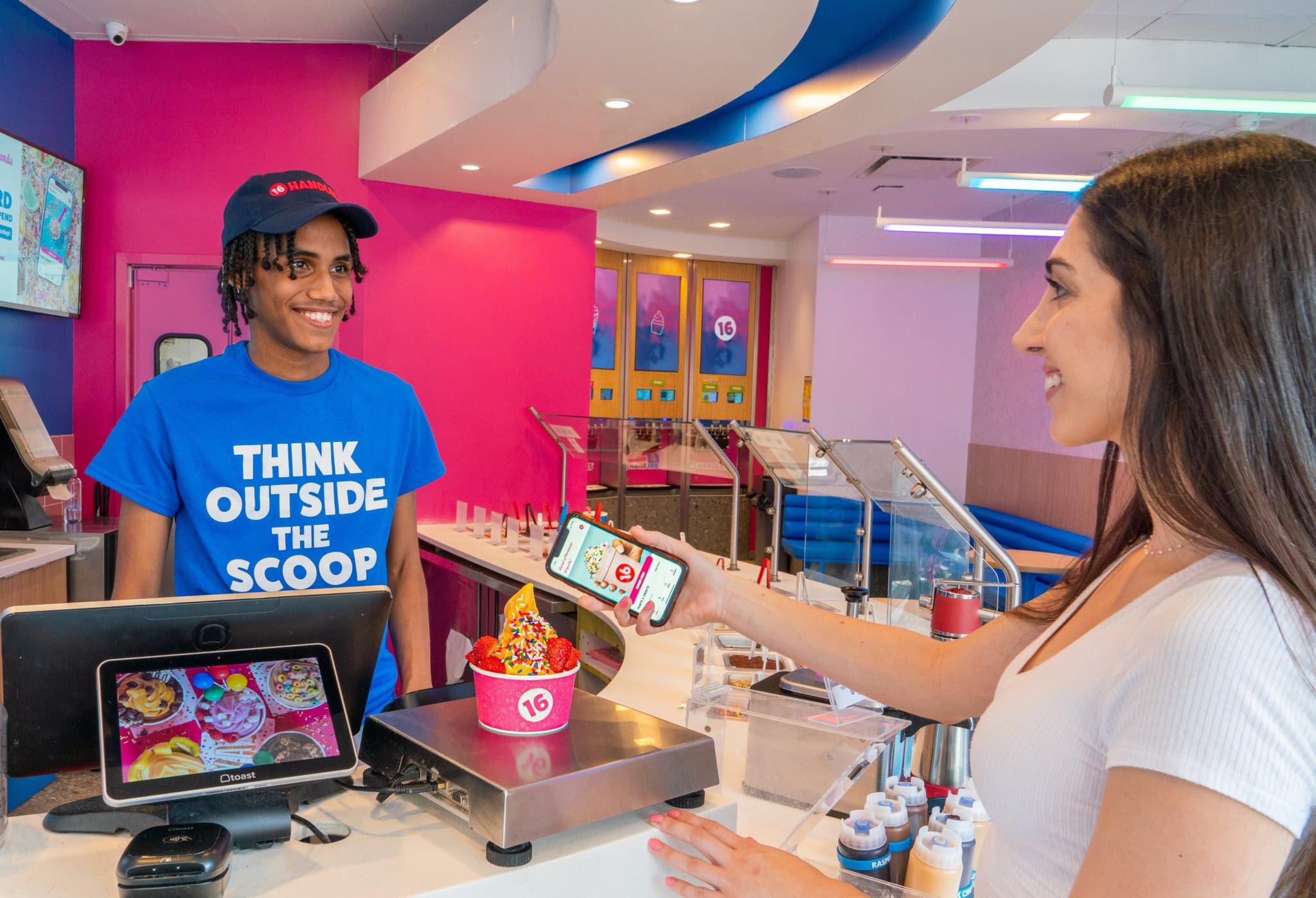
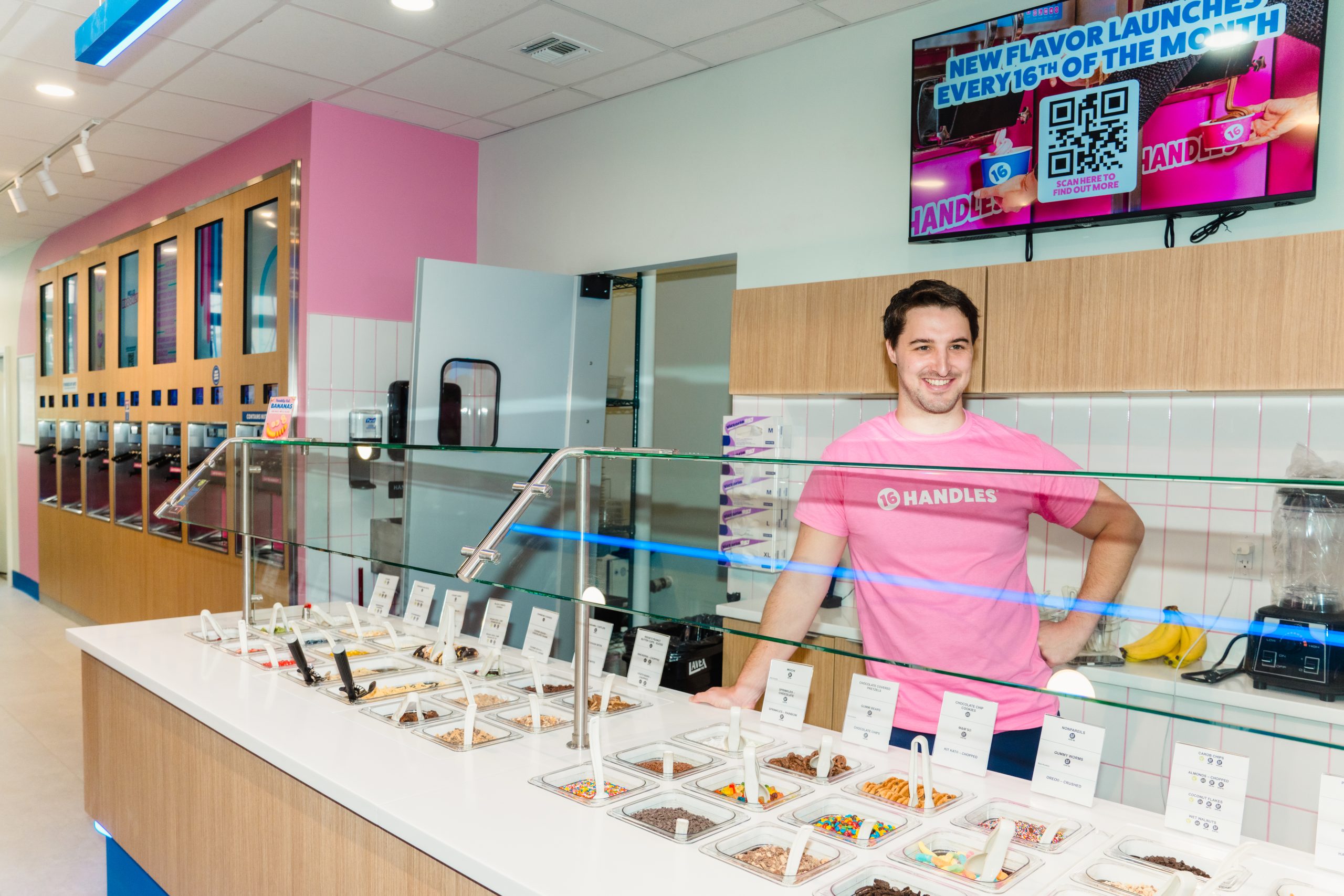
Hershman saw the void and moved toward it. New store designs were drawn from the visual language of Panera Bread and Starbucks: open, bright, modern, and clean in a way that reads as healthy without being sterile. Adjustable lighting and LEDs allow locations to shift their energy as the day shifts, welcoming families at 3 PM and creating a noticeably different feel for the nighttime crowd by 7. The stores are built to flex, and that flexibility is part of the brand’s competitive edge.
More Than a Dessert Stop
There is a reason people used to meet at coffee shops instead of bars, and it has less to do with caffeine than with comfort. The demand for social spaces that are affordable, relaxed, and welcoming without the pressure of alcohol culture has grown steadily across younger generations. 16 Handles, by design or by fortunate timing, landed in that space early, and Hershman has made it central to how the brand now defines itself.
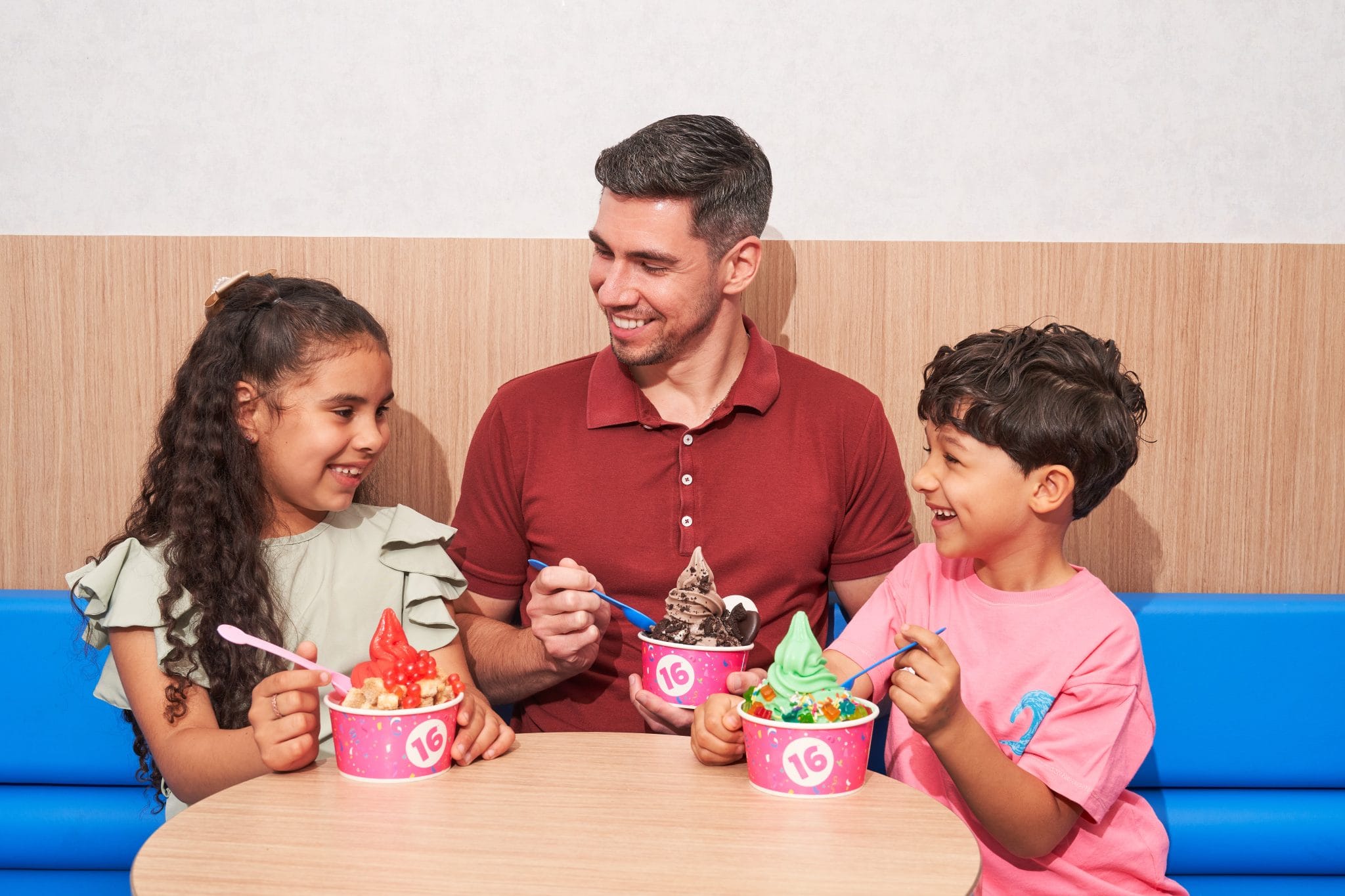
A visit to 16 Handles is not a transaction. It is a topping-bar experience built around customization, community, and the particular joy of choosing exactly what you want and exactly how much of it, down to whether you want two sprinkles or two hundred. The model is self-serve, but it should not feel like a buffet, Hershman is quick to note. Staff are trained to function less like cashiers and more like product enthusiasts, offering flavor recommendations, walking guests through combinations, and having actual conversations. “You shouldn’t feel like you got froyo on your own, even if you’re alone,” he said.
That experience compounds over time into something harder to manufacture: loyalty. Families build rituals around it. College students make it a study-break destination. Franchise owners partner with local soccer clubs, high school bands, and yes, even dentist offices that hand out coupons to kids who just had a tooth removed. The local touch that makes those moments possible is exactly why franchising is such a natural fit for this kind of brand. A corporate chain cannot do that at scale. A locally invested franchise owner can, and those small community moments are what turn a first visit into a decade of repeat traffic.
Product That Actually Evolves
16 Handles has always had a competitive advantage baked into its origins: New York City rents do not forgive mediocrity. To survive and thrive in that market, the product had to be genuinely good, not just serviceable. That culture of quality has carried forward, but what Hershman has layered on top is a relentless commitment to menu evolution that keeps even longtime fans engaged.
At any given moment, locations carry 16 flavors, hence the name, and that number is anything but arbitrary. Some are timeless anchors: vanilla, chocolate, birthday cake, cookies and cream. Others are strategic additions designed to attract customers who might never have considered a froyo stop. The brand now carries two oat milk flavors permanently, a direct response to the growth of dairy-free and vegan demand. Those flavors have proven so appealing that customers without any dietary restriction are choosing them anyway, which is exactly the kind of crossover Hershman was hoping for.
Most recently, 16 Handles introduced a kefir soft serve, a probiotic-rich option that sits slightly ahead of mainstream awareness but taps into a health-conscious consumer who knows exactly what they are ordering. And then there are the conversation starters: limited-run flavors like a Dubai chocolate offering or a forthcoming butter frozen yogurt that people cannot help but mention at dinner. These are not replacements for the classics. They are additions that generate energy, word-of-mouth, and measurable same-store traffic lifts in the week they launch.
The engine behind this is a new flavor launch on the 16th of every month, a cadence Hershman acknowledges is operationally demanding, but one that has meaningfully improved both marketing momentum and same-store sales. Customers follow along, wondering what is coming next. Even people who only visit once a month stay connected to the brand in between, which is a rare kind of passive engagement for a dessert concept. Ingredient quality gets the same attention: 16 Handles is actively moving away from artificial dyes and toward cleaner inputs, even when it adds a small cost premium. Frozen yogurt already carries a natural advantage as a lower-fat, lower-calorie option compared to many alternatives, and the brand intends to keep building on that positioning rather than quietly letting it erode.
The Operational Playbook, Built from the Inside
One of the more unusual things about how Hershman runs 16 Handles as a franchisor is that he still personally owns and operates six franchise locations. He is not theorizing about what works. He is living it alongside his franchisees, which shapes everything from how training materials are written to how he negotiates construction contracts alongside a new owner.
When he acquired the franchisor, the first year was almost entirely focused on improving same-store sales and rolling out the systems he had developed as an operator. Technology was modernized: outdated POS systems replaced, delivery integrations updated, and targeted digital marketing introduced where there had been none. SEO and paid search became precision tools rather than after-thoughts, focused on drawing in both new customers and people who had not thought about 16 Handles in years. Franchisees noticed. Many had owned locations for years and were already profitable, but the combination of higher same-store sales and reduced operating costs generated goodwill that set the tone for everything that followed. Manuals were then rewritten, not in a boardroom, but in direct conversation with the operators who would actually use them.
Real Estate as a Competitive Advantage
Site selection at 16 Handles is treated as one of the most consequential decisions a new franchisee will make, and Hershman approaches it accordingly. The target footprint is approximately 1,500 square feet, positioned inline within shopping centers that generate meaningful nighttime traffic. Surrounding tenants matter as much as the space itself: restaurants that draw families, neighborhoods with strong school districts, and markets with higher median incomes that align with a premium, health-oriented dessert brand.

Total buildout costs typically land around $500,000, a figure that includes the soft serve machines central to the model. These machines are, in Hershman’s framing, the closest thing food service has to robotics: precisely calibrated equipment that delivers consistent product at high volume without adding labor complexity. The brand has also developed modular millwork and a standardized topping bar that adapts to different space configurations without requiring custom design work on every buildout. That kind of value engineering reduces costs, shortens timelines, and prevents the quiet capital drain that can sink a new franchisee before they find their footing. Hershman reviews construction decisions personally, and he is willing to tell someone to find a new contractor rather than accept a substandard outcome for the sake of speed.
The Economics Behind the Simplicity
One of the structural advantages of the 16 Handles model is that its simplicity is not incidental. It is built in. Running a self-serve frozen yogurt store does not require a chef, a complex kitchen, or a large crew managing multiple stations. The soft serve machines handle the most technically demanding part of the product. What remains is operations, customer experience, and community presence, all things a motivated franchise owner can genuinely master. The unit economics are straightforward by design. A self-serve model keeps labor lean, and a focused menu built around a single core product keeps the cost of goods predictable. Together, they create a margin structure that is difficult to replicate in more complex food service formats.

According to Hershman, average unit volumes are approaching $850,000, with several newer locations on track to cross the $1 million mark within their first 12 months. That trajectory, in a category where seven-figure AUVs were once considered out of reach for a single-product dessert concept, reflects both the strength of the model and the momentum the brand has built.
Delivery adds another revenue layer, particularly during slower seasons or bad weather. In urban markets during off-peak periods, it can account for up to 20% of total sales. A blast chiller process prepares cups for transit, and while Hershman is candid that the in-store experience is better, customers tend to be forgiving. A slightly melted frozen dessert, he notes with some amusement, has its own appeal.
Growing Slowly, on Purpose
With roughly 40 locations open and 37 more under development, 16 Handles is in an active growth phase, but Hershman is deliberate about what that looks like. The goal is approximately 20 new store openings per year, a pace the support team can manage without cutting corners on the opening experience or the franchisee relationship. He describes his preferred model as a small number of highly successful owners who grow their territories over time, building real enterprise value rather than stretching resources across too many locations too quickly.
That philosophy puts 16 Handles at some distance from the private-equity-driven growth mentality that has come to define parts of the franchise industry, where unit count serves the narrative of a future exit rather than the reality of franchisee success. As Hershman puts it, “I want to create a few very successful franchisees who will then grow their territories,” a model he believes produces better outcomes for owners, for the brand, and for the communities they serve.
Franchise development is now led by Fred Frey, who joined approximately one year ago after building his career at Shipley Donuts and HTO, two recognized names in the snack and dessert category. His experience accelerated the pipeline considerably, and Hershman credits the combination of a refined system, stronger support infrastructure, and Frey’s development leadership with much of the momentum the brand has built over the past 12 to 18 months.
2026 represents the first year 16 Handles expects to open stores at the volume its pipeline now supports. The focus is on grand openings that generate real energy, on training programs that build genuine operators rather than just store managers, and on the sustained same-store sales growth that has continued every quarter since Hershman took ownership. Mainstream press coverage, including pieces from the New York Times and ABC, signals that the broader cultural conversation around frozen yogurt is back. For a brand that started in a single East Village shop and was quietly fading before someone who loved it too much to let that happen stepped in, the road ahead looks considerably sweeter than the road behind.
