
Franchising a business is not a single event. It is a series of decisions, each one made at a different stage of growth, each one carrying its own set of risks. For brands navigating that journey without a roadmap, the margin for error compounds quickly. For those who work alongside experienced advisors, the road narrows considerably.
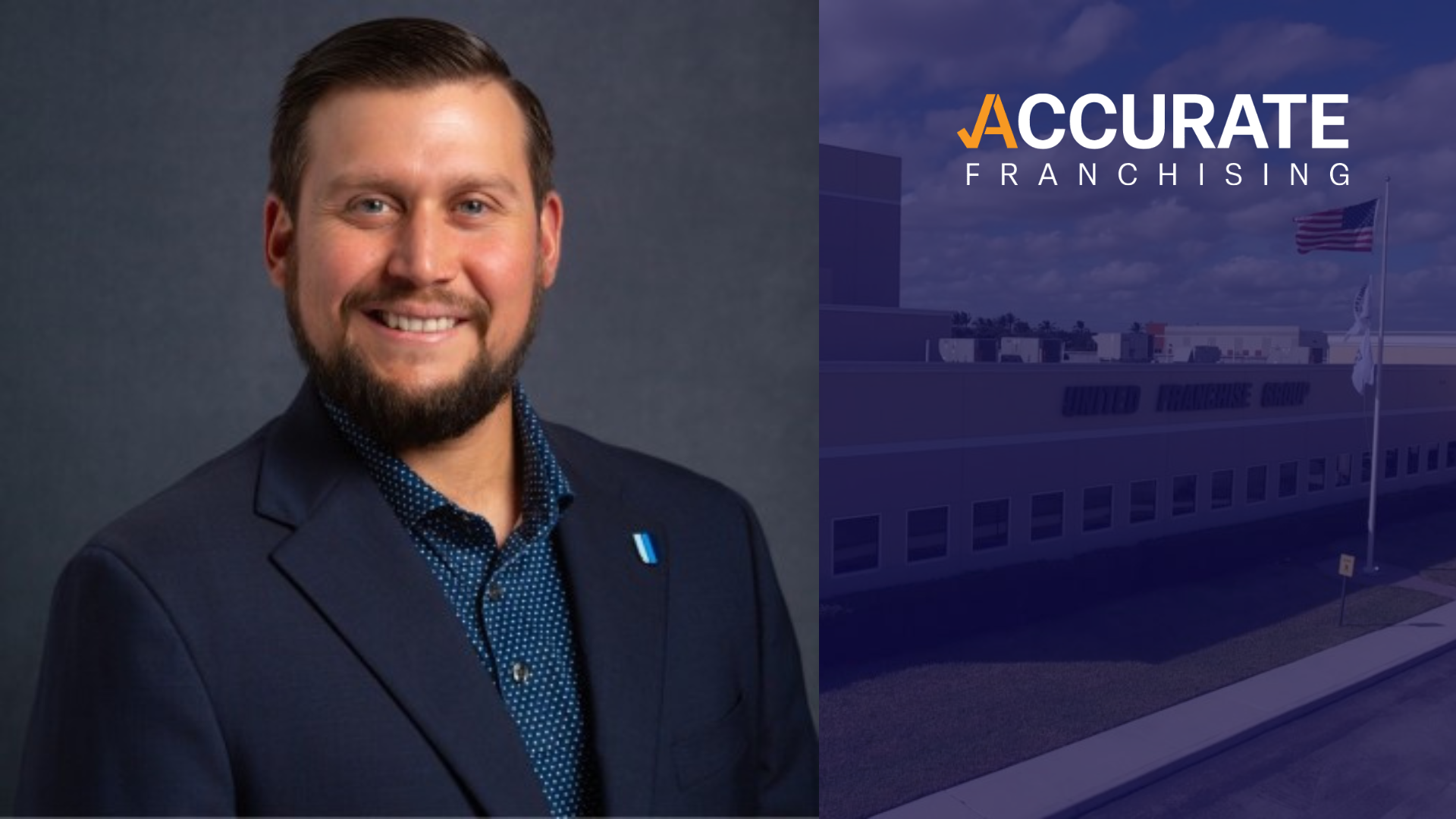
Austin Titus, who serves as president of Accurate Franchising, a consulting arm operating under United Franchise Group (UFG), has spent his career inside that dynamic. His background spans franchise sales, brand leadership, and the work of building emerging brands from the ground up within UFG, a multi-brand franchisor organization his father founded in 1986 with Signarama. Today, UFG operates roughly 1,800 locations across 80 countries, among 11 unique brands. Accurate Franchising, positioned within that ecosystem, helps outside brands do what UFG has done internally for decades.
That backstory matters, because it shapes how Titus and his team approach every client conversation. The advice they offer is drawn from firsthand operational experience, not theory.
Where Consulting and Operations Share a Roof
What sets Accurate Franchising apart is something relatively uncommon in the consulting world: the firm does not just advise franchise brands, it operates them. As a division of United Franchise Group, Accurate Franchising works out of the same 50,000-square-foot facility in West Palm Beach that houses UFG’s active brands, giving clients access to the same infrastructure, vendor relationships, financing contacts, real estate expertise, and operational resources that support a live, multi-brand franchise organization.
“We’re the only franchise consulting company that actually owns and operates our own franchise companies as well,” Titus said. “It’s not just from a franchise sales and franchise development perspective, it’s from getting financing, it’s real estate, it’s construction, it’s logistics, it’s royalties. All of that is under our roof.”

That shared infrastructure also creates a coaching dynamic that goes beyond deliverables. When Titus advises a startup franchisor on scaling operations or managing a team, he draws on how UFG navigated the same moment. The 50,000-square-foot facility did not materialize overnight, and Titus makes a point of reminding clients of that. It started in a small conference room, built one decision at a time.
Formation: Is This Business Actually Franchisable?
Before any consultant engages in strategy or structure, the first question has to be an honest one: Is this business ready to franchise at all?
Titus looks at a handful of core indicators. Financial performance is the starting point, but it is far from the only one. Just as important is whether the business is dependent on a single individual. If the owner’s personality, relationships, or personal involvement drive most of the revenue, the model is not yet transferable. Titus frames it simply: if the business cannot be run by a manager, it cannot be run by a franchisee.
Beyond those two filters, he pays close attention to where a concept sits on the spectrum of uniqueness. A highly distinctive brand can generate interest on novelty alone. A business in a well-established category offers the comfort of a proven industry. Both can work. What matters, in either case, is whether the model has a clear value proposition that holds up when delivered by someone other than the founder.
For concepts that clear those thresholds, Accurate Franchising can guide the full formation process: strategic business planning, operations manuals, training documentation, collaborating with franchise attorneys on the legal framework, and developing the marketing materials needed to present the franchise opportunity to prospective buyers. Titus describes that last piece as often underestimated. “We develop all different marketing materials that are focused on presenting that franchise opportunity to people interested in it,” he said, citing everything from websites and brochures to trade show materials and sales scripts.
The Emerging Stage: From One Business Emerges Two
Once the foundational work is done and the first franchisees are signed, many new franchisors make the same mistake. They treat the franchise company as an extension of the original business, applying the same instincts and priorities. Titus considers this one of the most costly errors a young franchisor can make.
The franchise company requires its own business plan, objectives, and definition of success. Titus uses a simple example to illustrate the shift:
“You’re in the business of not selling ice cream. You’re in the business of helping people sell ice cream successfully.”
Selling or awarding a franchise agreement is not the win. The real milestone is when those first franchisees are profitable. Titus is direct about why that matters so much in the early stages: “Those are the most important ones to you. If I was buying a franchise today and I was looking for a startup franchisor, I would see how passionate the leader is. Because if they’re so passionate, I know they’re going to make me successful.”
For brands in this phase, Accurate Franchising helps design development strategies appropriate to the size of the system, whether the goal is moving from five locations to twenty-five, or from twenty-five to fifty. Each stage carries different priorities, different resource requirements, and different risks.
Spending Before You’re Ready
One of the more counterintuitive pieces of advice Titus offers early-stage franchisors concerns their advertising spend. His recommendation: before a single dollar goes toward franchise sales advertising, brands should exhaust every opportunity within their existing customer base. The people who already know and love the brand are the most motivated buyers, and reaching them costs nothing.
“Don’t spend a dollar for the first three to six months,” Titus said. “Let’s go through all of the existing customer base first, and then we get into advertising.” He has seen clients sign three to five franchisees through their own networks before ever running a paid campaign. When advertising begins, the approach should be diversified across digital channels, social platforms, and in-person opportunities like trade shows, rather than concentrated in any single channel.
Another key takeaway from that conversation about development spend was that capital behind a franchise development effort matters, but it is not the whole equation. The strategy, the messaging, and the team carrying it forward have to be buttoned up first. More spend on a broken process moves the needle in the wrong direction.
Blind Spots: What Franchisors Miss at 20, 50, and 100 Units
Growth has a way of concealing structural problems until those problems become urgent. Titus sees a recurring pattern in franchise systems that scale past their initial momentum: the support infrastructure does not keep pace with the number of active franchisees.
In the early stages, one person often handles everything, training new franchisees, onboarding them, and providing ongoing support. That approach works for the first five or ten locations. Past that threshold, it starts to crack. When franchisors fail to separate those functions and hire dedicated people for each, the quality of support to existing franchisees deteriorates precisely when the brand is selling new ones. The franchisees who came later receive less attention, less follow-through, and less of the hands-on help that made the early ones successful.
Titus sees it happen in a predictable pattern. Early franchisees receive the full attention of a motivated founder and succeed because of it. As the system grows, new locations get added, but the same level of setup and support quietly erodes. What worked in Phase 1 does not automatically carry into Phase 2, and that gap is where franchise systems start to lose ground.
The solution is not glamorous. It is disciplined reinvestment in the support team, peeling off responsibilities as the brand grows and hiring people to carry them. Just like any business, it costs money to grow, and franchising is no exception.
Optimization: When Good Enough Stops Being Good Enough
Reaching 50 or more locations is a milestone worth celebrating, but it also marks the point where the gaps in a system become harder to ignore. What worked at 10 or 20 units often starts to show its limits at scale. For brands at this stage, optimization is not about starting over. It is about looking honestly at where effort and investment are producing returns, and where they are quietly draining both.
Accurate Franchising approaches this work by examining the system across three areas: operations, marketing, and unit-level support. Each one tends to develop blind spots as a brand scales, and each responds well to outside perspectives from advisors who have managed the same challenges within a live franchise organization.
Where to Look at the Unit Level
On the operations side, the leaks are not always obvious. Inconsistent franchisee performance, support processes that were never designed to stretch beyond 20 units, and team structures that have not kept pace with the size of the system are all common findings. The work is a clear-eyed assessment of what is holding the brand back at the location level, because lifting franchisee performance is what Titus calls a win-win-win: better results for the franchisee, more royalties for the franchisor, and stronger proof points for future franchise sales.
Unit-level marketing is another area that often matures alongside the system itself. In early stages, franchisee marketing tends to be locally driven and largely independent. As the network grows, more structured approaches begin to make sense, including cooperative marketing funds, regional advertising groups, and coordinated campaigns that give individual franchisees the benefit of collective spend. These structures do not emerge automatically. They require deliberate planning, franchisor leadership, and the kind of operational experience that comes from having built them before.
Where to Look at the Development Level
Marketing efficiency tends to surface real opportunities next. As a brand grows past 50 locations, the franchise development marketing budget naturally expands, but spending does not always scale with strategy. Titus is candid about how much money is wasted on franchise development advertising and how often the most effective lead sources are organic. He points to a meaningful shift already underway: in-restaurant QR codes, trade show appearances, and direct community relationships are producing results that digital campaigns increasingly struggle to match. With AI reshaping search behavior, the lead-generation patterns that held for years are being disrupted, and brands that relied too heavily on a single digital channel are feeling the effects first.
Another optimization lever comes from Accurate Franchising’s position inside a multi-brand environment. UFG’s shared services model, where employees support multiple brands simultaneously, offers a template for how growing franchisors can manage costs without sacrificing capability. It is the kind of structural insight that comes specifically from operating, not just advising.
Adapting as the Market Moves
Technology is moving faster than most franchise systems are built to absorb, and the brands that navigate it best are not necessarily the ones moving fastest. Titus approaches the topic practically, with a philosophy built around exploration and disciplined testing rather than early adoption for its own sake. The goal is to stay informed, run pilots, learn from them, and scale only what proves out. Diving in ahead of the market can pay off, but it can just as easily burn budget and organizational energy on tools that are not yet ready.
That mindset applies as much to consumer-facing technology as it does to back-end systems. Titus points to restaurant ordering technology as a clear example: COVID accelerated adoption across the industry, but it did not accelerate customer comfort at the same pace. Brands that built their model around digital ordering from the start tend to execute it well. Brands that added it after the fact often find the experience underwhelming and customers reluctant. The lesson carries beyond restaurants: technology works best when it is piloted carefully, refined based on real feedback, and integrated deliberately rather than retrofitted under pressure.
For franchisors wondering whether they have kept pace, Accurate Franchising can serve as an outside set of eyes, assessing digital advertising and marketing effectiveness, identifying where spend is working and where it is not, and helping brands build a technology roadmap grounded in what their system is actually ready to support.
Keeping a Pulse: The Outlook for Franchise Brands
Titus closed with a piece of advice that cuts across all the stages discussed: do not stay heads-down for too long. Franchisors who spend extended periods focused entirely on internal operations tend to look up one day and find that the market has moved around them. Events like the International Franchise Association convention offer a practical way to stay calibrated, seeing what vendors are promoting, which technologies are gaining traction, and where competitors are placing their bets.
“Keep a pulse on the competitors in your space and other people in the franchising space,” Titus said. “You’ll finally pick your head up one day and everybody will be using different technology or different systems, and you’ll have to scramble to figure it out.”
For brands at any stage, that kind of market awareness is what separates franchisors who adapt gracefully from those who are forced to catch up under pressure. Consulting partners like Accurate Franchising exist to shorten that gap, drawing on decades of operational experience to help brands see around the corners they have not yet reached.
The stages of franchise growth are not obstacles. They are opportunities to build something more durable. With the right guidance at each one, more brands stand a chance of getting it right.
