


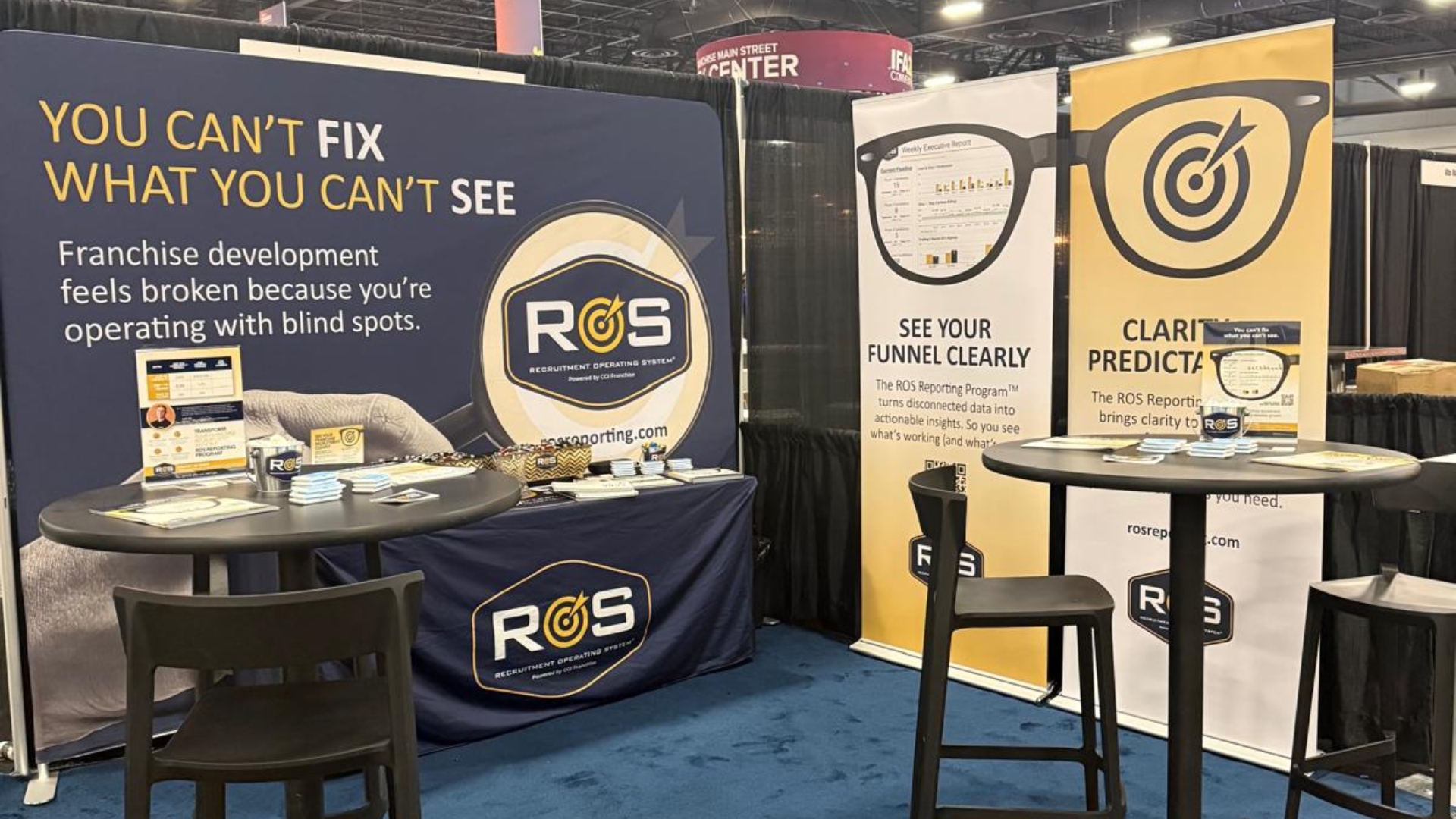
In franchise development, great brand concepts can stall when recruitment lacks structure, clarity, and cadence. CGI Franchise says its newly enhanced Recruitment Operating System (ROS) Reporting Program™ is designed to change that, offering a streamlined way to transform disconnected data into action. The platform packages expert analysis inside an accessible reporting rhythm; franchisors and executive teams can use it to benchmark pipelines, gauge pacing, and plan resources with greater certainty.
“Historically speaking, there has been a substantial gap in the franchise industry’s ability to access and gather reliable data and statistics,” stated Art Coley, CEO at CGI Franchise. “We bridged this gap by creating a centralized and standardized platform that draws upon hundreds of expert sources to provide brands with the most accurate data sets available. Ultimately, our enhanced ROS Reporting Program™ provides franchisors and executive leadership with real-time data into key operational and financial metrics, with a goal of transforming disconnected data into actionable insights.”
Why a Reporting Program Now
The stakes are not small. Across the last decade, many franchise systems fail to hit their intended scale; a significant share never cross milestones like 20, 50, or 100 units, and some brands do not survive beyond the first few years. Leaders often cite the same root causes: inconsistent lead handling, poor lead quality, limited analytics, and a lack of predictive visibility into where recruitment bottlenecks form. CRMs collect leads and track activity, yet executives still struggle to forecast outcomes or map activity thresholds to growth goals.
CGI Franchise’s view is pragmatic; recruiting can be measured, predicted, and scaled when leaders work from clean, comparable data and a fixed operating cadence. The enhanced ROS Reporting Program™ is the company’s answer; a reporting layer that sits above day-to-day activity and supplies leadership with trendlines, reality checks, and a math-first plan to hit unit goals.
Inside the Reporting Rhythm
The deliverables are structured to serve different leadership horizons, from immediate course corrections to long-range recalibration.
- Weekly Reports give real-time visibility into recruitment activity and pacing. Leaders can spot shortfalls early, rebalance outreach, or address conversion gaps before a month is lost.
- Monthly Executive Recruitment Reviews (ERRs) create a space to slow down, study trendlines, and make leadership-level decisions. These sessions translate metrics into plans, budgets, and accountability.
- Annual Reviews support long-term strategy. Brands can set goals with clearer math, revisit recruiting assumptions, and recalibrate the system for the year ahead.
- Recruitment Goal Engineering and Goal Planning Reports define the math behind growth targets. If the plan calls for a certain number of signed agreements, these reports back into required lead volume, qualification rates, and step-by-step activity.
- DataDash™ serves as the real-time backbone that keeps everyone on the same page between meetings. Instead of living in scattered spreadsheets, the data updates centrally, providing a single source of truth.
- Financial and Onboarding Reports connect recruitment outcomes to downstream performance. Leaders see how signed agreements move into ramping units, how cash flow patterns evolve, and where onboarding capacity needs adjustment.
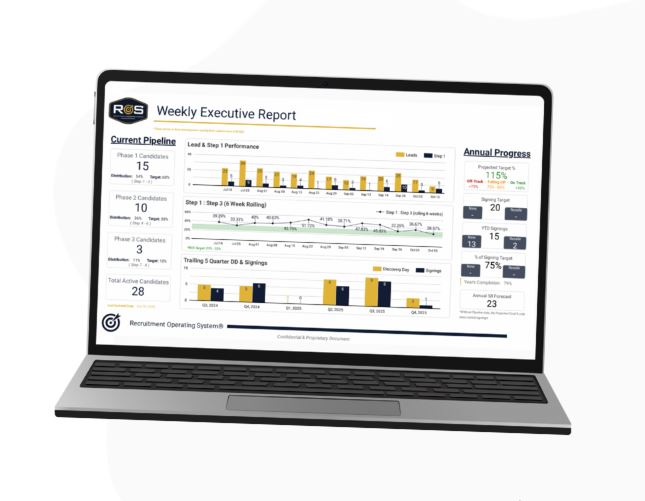
The ROS Reporting Program™ favors clarity over novelty. The value emerges when the same reports arrive on the same cadence, enabling consistent follow-through rather than one-off analytics projects.
Connecting Recruitment Outcomes to Financial Performance
CGI Franchise says the enhanced ROS Reporting Program™ is designed to show how stronger recruitment performance can translate into measurable financial impact. In the company’s view, the downstream benefits begin when a franchisor commits to a disciplined process supported by data and analytics; better decision-making can improve recruiting efficiency and increase the number of new units advancing into onboarding each year.
Art Coley described the compounding effect that can follow when more units move through onboarding and into operation on a steadier cadence. “EBITDA grows exponentially, because fixed costs for support now get divided by more units,” Coley said. He also pointed to the longer-range upside on the revenue side once those units open and begin contributing to systemwide performance: “The beautiful part that happens next is the exponential impact it starts to have on systemwide sales and royalty growth on the other side of the franchise agreement signing.”
Coley added that the reporting lens can also reveal what franchise companies are truly investing to win each new agreement, including the combined costs that sit across labor, lead generation, events, legal, commissions, and other fees. With that visibility, CGI Franchise says leaders can evaluate recruiting ROI more clearly, then align support staffing and onboarding resources with a growth plan that is driven by real numbers rather than assumptions.
From Data to Decisions
Franchise recruitment can feel unpredictable when teams work from instinct or fragmented reports. The enhanced ROS Reporting Program™ aims to reduce that unpredictability. By surfacing pacing indicators each week, leaders can decide whether to add campaigns, tighten qualification steps, or increase recruiter capacity. By reviewing trendlines each month, they can refine the narrative: which sources produce durable candidates, where candidates stall, and how the timeline from lead to signed agreement really behaves in their system.
This is also where the Financial and Onboarding Reports matter. Predictable recruitment is not only about signed agreements; it is about whether the organization can deliver training, support, and launch plans at the speed growth demands. When recruitment, finance, and operations share a dashboard, brands can align hiring, cash planning, and territory launches with fewer surprises.

Why CRMs Are Not Enough
CRMs remain essential for capturing and tracking activity; CGI Franchise argues they are not designed to supply predictive analytics or leadership-level forecasting on their own. The enhanced ROS Reporting Program™ is pitched as a complement that translates activity logs into a decision system. The emphasis is on comparability and context; a lead is not just a record; it is a person on a journey to small-business ownership who advances through a defined process. When the reporting mirrors that process and ties to outcomes, leadership can see which stages do the heavy lifting and where to intervene.
The company’s broader platform reflects that belief. Its Recruitment Operating System® combines process, training, coaching, and technology. Recruitment teams learn proven strategies rather than outsourcing development; they receive coaching, so they are not alone; and they gain access to ROSIE™, a cloud-based platform that analyzes brand metrics to flag improvement opportunities. The enhanced reporting program plugs into that ecosystem and gives executives a concise way to review it.
Benchmarks, Pace, and Predictability
Many leaders talk about predictability, yet recruiting outcomes may still swing quarter to quarter. CGI Franchise’s method leans on what it calls Recruitment Goal Engineering; it starts with the growth target and then calculates the activity levels required to reach it. That framing helps executives connect the dots; if the plan calls for a specific number of openings this year, the team needs a specific number of leads, a known conversion rate at each step, and an onboarding pipeline sized to the goal.
Weekly reports then track reality against that calculus. If the math says the brand needs a set number of qualified candidates entering each stage, but the actual pacing falls short, leaders can correct quickly. When monthly reviews confirm the trend, the team can expand campaigns or streamline steps. Annual reviews zoom out to ensure the strategy still fits the market and the brand’s capabilities.
Early Wins and Time Horizons
CGI Franchise’s message to franchisors is clear; measurable results can begin to show within a few weeks through 90 days, provided leaders act on the insights with consistency. Early cycles often uncover quick wins; improving speed-to-lead, tightening qualification criteria, or aligning recruiter calendars with the process steps that matter most. As the cadence takes hold, teams begin to trust the forecast because it reflects their activity and outcomes.
That visibility also supports healthier cash planning. When leaders have a more accurate sense of when agreements convert and when locations begin onboarding, they can better plan for support staffing, training schedules, and launch inventories. Predictability is not only about top-line growth; it is also about operating with fewer shocks to people and budgets.
The Bigger Picture
The franchise sector has long known that a great business model is not enough to guarantee growth. Without a recruiting process, pipelines dry up and unit expansion stalls. CGI Franchise’s enhanced reporting is a bet that discipline wins; when brands adopt a fixed cadence, trust a shared dashboard, and engineer goals with math rather than optimism, they give themselves a better chance to hit targets and support new owners well.
At its core, the enhanced ROS Reporting Program™ is less about software and more about leadership attention. Reports become a management habit; they anchor the conversation, reduce friction between teams, and make it easier to see cause and effect. In a landscape where many brands never reach the scale they envision, a clearer view of the pipeline can be the difference between plateau and progress.
